




























































Somalis have always regarded poetry as the pinnacle of their literary heritage but the elegance of the poetic expression came through singing in folklore dances. Before the arrival of the Arabian oud, the ears of the Somali people were trained in the sounds of African rhythms. Known as 'the Nation of Bards', the people found expression through rhythm and rhyme in dance and singing.
The founding of balwo
Somalis who lived before the 1960s and 1970s watched folklore dances like the xoogweyn, saddexley, dhaanto, hirwo, wilwile and the saylici. These existed alongside the light dance songs of Somali women, the heelo-yar-yar, and the lullabies of Somali mothers, the hees carruureed, as well as the ubiquitous hees-hawleed (work songs), which Somali herdsmen, farmers, builders and other workers sang.
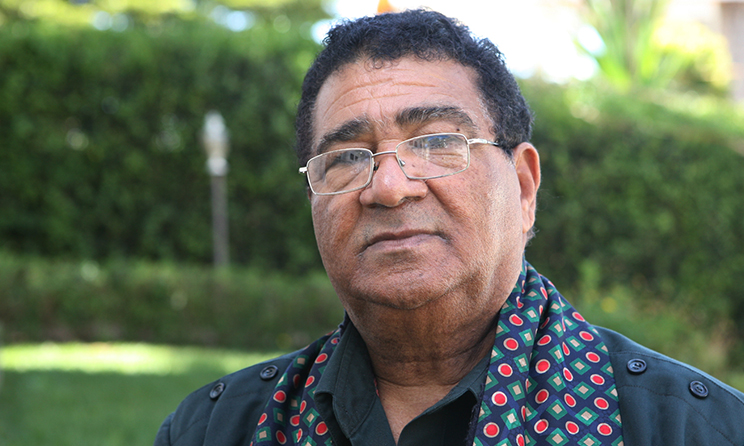
Abdi Deeqsi Warfaa, better known as Abdi Sinimo, emerged out of this rich background to create balwo, the genre that pioneered modern Somali song. As a young boy, Abdi Sinimo became acquainted with many genres of Somali poetry like the gabay, geeraar, jiib, jiifto and buraanbur. He reached adulthood during the 1930s, a time of change when classical Somali poetry began integrating jiifto quatrains of the dhaanto folk dance, which paved the way for the balwo.
Besides the jiifto, the reer-magaal (urban people) also listened to Arabic songs brought from Aden. Known as dunya diwani (دنيا ديواني), or ‘the world is my poetry book’, these songs were played on phonographs by kabacad (clean shoes) groups. They were performed by filling the music breaks with quick and rhythmic handclapping called kasrad.
Dunya diwani remained dominant in the years between 1939 and 1943, until balwo was born. In its final days, the Arabic words were replaced with Somali, while the music remained the same. These songs were enjoyed at majlises (kat chewing sessions) where men and women sat and sang together while the girls danced taxriig (a type of Arab dance).
In the 1940s, two sisters, Maryan and Khadiija Eyeh Dharaar, became the centre of attention in the town of Borama. It was at this time that Abdi Sinimo, then a lorry driver, fell under the spell of Khadiija, later known as Khadiija Balwo after becoming Abdi Sinimo’s partner in music and one of the first Somali women to partake in musical performance.
One day, as he was driving from Zeila to Borama, Abdi Sinimo's lorry broke down in the desert of Giryaad Dhagaxle near the village of Jidhi. With the help of his apprentices, he pulled the lorry to the shade of a kulan tree. Abdi Sinimo was seen for many days with rolled-up sleeves under the bonnet of the Ford lorry with his young helpers, Kamil and Gaydh.
Although passing vehicles provided them with food and other necessities, Abdi Sinimo felt depressed, as he missed Khadiija. He then ordered one of his helpers to bring him an empty kerosene tin from the lorry. He began to beat it like a drum while humming a tune. After some time, he stopped the beating, went into deep thought and, gripping his forelock, uttered the following lines that changed the course of Somali poetry and struck the first note of the modern Somali song in 1943: "Balwooy! hooy balwooy / Waxaa i baleeyey mooyaan" (Balwo! O balwo / I know not that made me suffer).
He later created the first Balwo Band in Borama in 1944. Members of the band were Cabdi Deeqsi Warfaa (Cabdi Sinimoo), Koobali Caashaad, Hussein Aare Meecaad, Xaashi Warsame, Khadiija Ciye Dharaar (Khadiija Balwo) and Nuuriya Catiiq.
Balwo quickly spread to other parts of British Somaliland but not without resistance from some religious men. Foremost among them was Hajji Manati, who composed many verses in the genre portraying music as sinful and blasphemous. The following lines are some of Hajji Manati’s rebuttal: "Nin waliba balwadii tumayey / Ma taydii baa la baal marayey" (Everyone sings his balwo / Oh, how come my own is ignored?).
The second Balwo Band created on the eve of the country’s independence changed the theme of balwo from love and longing to patriotism. Members of this bank included Cabdillahi Xuseen (Dabshid), Xuseen Madar (Suleex), Aadan Cashuur Cumar, Koobane and Farah Sufi Tubeec.
But the spread of balwo wasn’t complete until the third Balwo Band used the oud for the first time. Abdi Sinimo also reached another milestone by broadcasting his songs a cappella on Addis Ababa Radio, the first radio broadcast in history of a Somali song. Among the third Balwo Band were Cabdillahi Xuseen (Dabshid), Xuseen Madar (Suleex), Aadan Cashuur Cumar, Aw Muuse Indhamood Kaariye (Shafiiq), Cabdiilaahi Jaamac (Garab Yare), Axmad Aw Ibrahim Aw Cumar (Rodol), Bowki (an Oromo man from Jigjiga), and Arab musician Saalax Kuwaiti Al Cantari.
The third Balwo Band disbanded in 1946, but from its ashes sprang up a more sophisticated group by the French name Bons Bras (Good Arms/Hands). The new band made a breakthrough by staging the first modern play called Abiido (Eternity) in a theatre in 1955. Shortly after this, another historic event took place in Hargeisa with the creation of Walaalo Hargeisa (Hargeisa Brothers Band). It was formed by Abdillahi Qarshi, the first Somali to play oud while singing, and Hussein Aw Farah, a composer and playwright.
The situation at the height of struggle for independence demanded a new mode of expression to educate the people and rouse them to fight for their freedom. This new mode came in the form of the 'Jowhara Luul' song, which John William Johnson described as having become “a sort of ‘Marseillaise’ to the general public”. This forceful expression of musical patriotism – performed with an oud, drum, reed flute and handclapping – is also considered to have started the heello genre, a further modernised version of balwo. 'Jowhara Luul' was the collective work of a new generation of balwo aspirants: Abdillahi Maydhane (Fajac), Abdillahi Huseen (Dabshid) and Omar Subagle.
Walaalo Hargeisa
The Walaalo Hargeisa group further elevated the heello genre and Somali music in general on the back of the patriotic tide. Heello made use of patterned refrains sometimes sung by male and female choirs. Walaalo Hargeisa and later the first official band of Radio Hargeisa produced some of the biggest names of Somali music of all time. They are credited with the addition of the flute, violin and tambourine to the traditional drum and initiating the qaraami genre, which has become a generic name for classic Somali music, mostly performed with the oud and drum.
Waaberi and the golden days of Somali music
Somali music again progressed in the 1970s with the creation of the Waaberi Group of Radio Mogadishu, which comprised famous names of the Hargeisa Group and a new generation of singers and composers from all parts of the country. The Education Ministry’s ensemble, Iftin, and military and police music groups all had their lasting input on the Somali music bonanza of the 1970s.
Private ensembles such as Shareero and Dur-Dur Band blended Arab music, American jazz, Afrobeat and reggae with Somali music. And according to Brian Simkowitz, the curator of Awesome Tapes from Africa (ATFA), "the way Somali musicians internalised and renegotiated American soul music and jazz is striking ... The land's geographic location at a crossroads of so many worlds has contributed to a unique flavour".
Radio stations in Addis Ababa, Djibouti, Cairo, London, Moscow and 'Peking' featured Somali music and poetry, while Somali artists toured Sudan, Egypt and Nigeria.
Among the country's greatest female singers were Magool, Maandeeq, Dalays, Hibo Nura, Maryan Mursal, Fadumo Qasim, Sahra Ahmed, Khadra Dahir, Baxsan, Amina Abdillahi and Saado Ali. Leading male singers were Mohamed Suleiman, Omar Dhuule, Osman Gacanlo, Mohamed Ahmed, Ahmed Ali Egal, Ahmed Naji, Saleh Qaasim and Hassan Adan Samatar, as well as the Mooge brothers.
The crowning moment of Somali music and artistic expression came with the participation of Waaberi at the Second World Black and African Festival of Arts and Culture (FESTAC '77) in Lagos, Nigeria. The band's performances at the festival were some of the most admired and memorable.
With the collapse of the Somali state in 1991, Somali music and artists were among the worst affected. The onerous task of preserving and collecting Somali music largely fell on the shoulders of conscientious individuals such as the late Maryam Omar Ali (Ariyette) who digitised and categorised the more than 9 000 songs and plays she collected over the years and gifted these to Amoud University. The Redsea Cultural Foundation at the Hargeisa Cultural Centre also played a role in the preservation. It claims to have salvaged the largest single collection of Somali music.
A great deal of preservation was, however, done by the staff of Radio Hargeisa and Radio Mogadishu, who risked their lives and stayed put despite the war to save priceless collections of Somali music.
Conclusion
From its groundbreaking origins in balwo, modern Somali music of the late 20th Century phased through many genres including heello, waddani, qaraami, benadiri, jazz, reggae and others. Although music will continue to be created by Somalis wherever they set foot in the world, it is undeniably the music of the 1960s through the 1980s that remains the epitome of the potential of Somali music, as it encapsulates the collective musical memory of the Somali people.
References
- The Concise Garland Encyclopedia of World Music, Vol. 1, Routledge, 2008
- Man’s Work and Leisure, Nels Anderson, University of New Brunswick, Canada, 1974.
- Heelloy: Modern Poetry and Songs of Somalis, John William Johnson, Indiana University Press, 1998.
- Magool: The Inimitable Nightingale of Somali Music, Bashir Goth, Bildhaan: An International Journal of Somali Studies: Vol. 14, Article 5.
- Battling on Two Fronts: Introducing Maryan Omar Ali, Ahmed I. Samatar, Macalester College, Bildhaan: An International Journal of Somali Studies
- Somali Music Between Maryan Ali’s Refined Taste and Al Shabab’s Philistine Manners, Bashir Goth.
- A Short History Of Modern Somali Music (www.okayafrica.com/audio/somali-music-history)
- Somali Music And Poetry: A Threatened Tradition (https://theculturetrip.com/africa/somalia/articles/somali-music-and-poetry-a-threatened-tradition/)
- Interviews conducted by the writer, Bashir Goth.
This article is part of the Music In Africa Connects project, a multifaceted development initiative aiming to support the music sectors of African countries affected by conflict. To find out more about Music In Africa Connects, click here.


Most popular

Top Naija songs of 2026
31 Mar 2026

Ghana: Mr Eazi and MOLIY’s ‘Comfort’ earns Urban Music Awards nomination
21 Oct 2026

Top Afrobeats songs of 2026
19 Mar 2026

Top amapiano songs of 2026
16 Feb 2026

Open call: CANEX Music Business Lab and Songwriting Camp
15 Oct 2026

Nigeria: CANEX WKND unveils 2026 programme
21 Oct 2026
Disclaimer: Music In Africa provides a platform for musicians and contributors to embed music and videos solely for promotional purposes. If any track or video embedded on this platform violates any copyrights please inform us immediately and we will take it down. Please read our Terms of Use for more.

Subscribe to our monthly Newsletter
Follow us on social media


Please log in to post a comment.