







































NEFCISA
NEFCISA

The Music In Africa Foundation (MIAF) is proud of its partnership with the Industrial Development Corporation (IDC) as a Strategic Implementing Partner (SIP) for its Social Employment Fund (SEF). Through this collaboration, MIAF is running a national programme that is creating jobs, addressing skills gaps, and strengthening South Africa's creative industries — in line with the SEF's overarching goal to generate work for the common good and build community value through employment, social contribution, and inclusive economic participation. Operating under the banner NEFCISA (National Employment Facility for Creative Industries in South Africa), the initiative is recruiting and training participants, matching them with host organisations, and has already placed 1 500 workers across the country — surpassing its original target of 1 000. NEFCISA is delivered through a network of 20 host organisations spanning five provinces, who are actively hosting participants and contributing to work for the common good across South Africa's creative and cultural industries. Key Objectives: Support employment and entrepreneurship in the creative industries. Offer skills development and training programmes. Foster partnerships between public and private creative sectors. Promote South African creativity at both provincial and national levels Foster community development through social contribution.

ACCES
ACCES

ACCES Conference and Showcase Festival is Africa's leading music industry gathering, bringing together the people shaping the future of the continent's music business. Artists, entrepreneurs, executives, investors, policymakers and cultural leaders from across Africa and around the world come to ACCES to build partnerships, exchange ideas, discover talent and create new business opportunities. Since its launch in 2017, ACCES has become the continent's premier platform for professional exchange and music market development. Combining a high-level conference with a curated showcase festival, networking, exhibitions and industry programmes, ACCES offers a unique space where creativity meets business and where African music connects with the global industry.

Gender@Work
Gender@Work

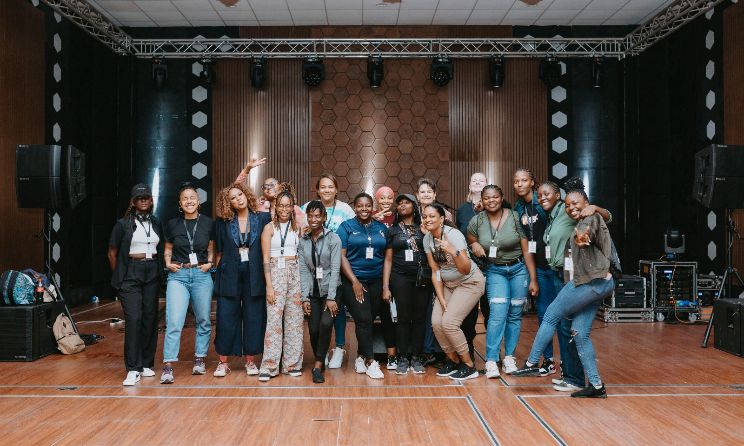
Music In Africa Gender @ Work is a three-year training programme aimed at upskilling and increasing the participation of female professionals in the African music sector. Launched by the Music In Africa Foundation (MIAF) in April 2019, the programme is connected to the MIAF’s ACCES music conference – a pan-African event held in a different African country every year. This connection enables the programme to reach new participants in a different African country every year. The programme marks the beginning of a more concerted effort by the Foundation to support the participation and inclusion of women in all facets of its programmes and the music sector in Africa as a whole. Over the three years, the programme will aim to address gender imbalances in the sector through training, lobbying, facilitating knowledge exchange and dialogues that foster the interest of women. The broader objectives of the programme are to: Provide industry training for women on critical music industry skills, focusing on: Stage management Electronic music production and recording Music business management Technical knowledge Provide an opportunity for both professional and aspiring women to benefit from the Music In Africa network and its broad range of activities in 2019, 2020 and 2021. Provide a solution-based platform in the form of a round table at ACCES with a view to identify challenges, discuss opportunities and lobby for the interests of female practitioners. Offer participants the opportunity to benefit from programmes offered by MIAF’s partners. Increase access to educational materials. Integrate participants in the broader ACCES programme to maximise experience and exposure to the industry. Record and present training materials on the www.musicinafrica.net, including but not limited to tutorials, templates and other best-practice materials. Communicate women-based themes that support the initiatives and messages of the programme. MAIN TRAINING ACTIVITIES Training in first country (Ghana): In the first year, participants will be trained on all aspects of stage management by a team of experienced stage managers from 10 to 17 November 2019. The programme will offer robust classroom training as well as practical, hands-on training in which participants will also be given the opportunity to manage various aspects of the ACCES performance programme. Training in second country: The second training iteration will take place at ACCES 2020 when the programme will diversify its course to include music production lessons and training on other music business topics. A round-table platform will also be introduced to coincide with the ACCES programme. Training in third country: The third training iteration will take place at ACCES 2021 in a different country, offering an advanced course. HOW DO YOU GET INVOLVED?  As a participant, facilitator or trainer: The programme enrolls up to 12 trainees every year. All opportunities are advertised publicly on this website, and will be added to this page. Please keep checking this page for new calls (below under UPDATES & CURRENT OPPORTUNITIES). As a partner Please contact Claire Metais at [email protected]. APPLY The call for applications for 2020 will be announced soon. The Music In Africa Gender @ Work programme is made possible with the support of the Prince Claus Fund, Siemens Stiftung and Goethe-Institut.

Sound Connects Fund
Sound Connects Fund

For cultural and creative practitioners and organisations operating in southern Africa, access to funding remains a major challenge. The COVID-19 pandemic has also had a massive impact on government policy, spending and the economy in general, and has seen spending on culture being moved further down the list of priorities. Further, the cultural and creative industries repeatedly cite four main areas where investment is needed for growth, which are increased visibility, mobility including access to new markets, finance and support structures.

Instrument Building And Repair Project

Experience the Vibrations African Instruments Exhibition online in 3D

Features

The sound you never see: Inside the world of a Foley assistant
18 Mar 2026 - 09:28

cc-img

By Sean Radford

A character steps onto gravel. We hear the crunch. A jacket sleeve brushes against fabric. A lighter flicks open in the silence, and the audience holds its breath.
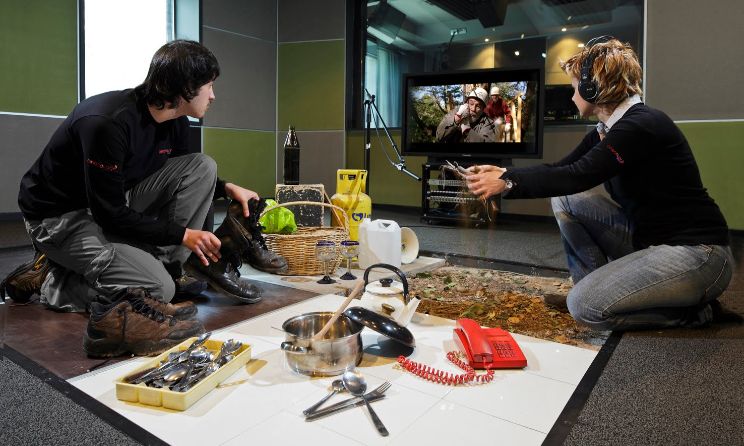
The job is both physical and precise. At its simplest, a Foley assistant supports the artist performing live sound effects to the picture.

None of those sounds was captured on set.

They were built later, in a studio, by people most audiences will never know exist. Among them is the Foley assistant, the quiet operator responsible for making film feel real.

The job is both physical and precise. The work is meant to be felt, not heard. If the audience notices the Foley, something has gone wrong. When it works, it becomes part of the story.

At its simplest, a Foley assistant supports the artist performing live sound effects to the picture. That means preparing props, resetting surfaces, swapping shoes for different characters, checking sync points, and ensuring every on-screen movement has a believable counterpart. It is repetitive and detailed work that demands stamina.

It also requires imagination.

In one session, the breaking of a delicate wine glass stem became a subtle motif for an antagonist. Each time the sound was heard in the background, the audience grew uncomfortable and restless, anticipating the antagonist's presence. Most viewers would never consciously register it, but they would feel it. That is the craft at its best. This is storytelling through texture.

Then there are the materials. A head impact might be recreated with a frozen cabbage. Crushed vegetables can stand in for broken bones. Layers of leather, sand, and gravel are tested until footsteps carry the right emotional weight. It is imagination with purpose. Not chaos and certainly not guesswork. Think of it as controlled experimentation in service of the frame.

The job is also collaborative. A Foley stage can be intense. Timing must be exact. Performances are recorded live, often in multiple passes. If the rhythm is off by a fraction, the illusion collapses. Musical timing helps, and so does patience.

Foundational audio training offered by recognised institutions matters. Understanding acoustics, signal flow, microphones, and editing tools means you step into a session prepared rather than overwhelmed. You need to know why something works, not just that it works.

The discipline extends beyond the stage. Organisation is everything. Props must be catalogued. Surfaces reset. Sessions documented. A single oversight can cost hours in post-production.

And yet, despite its demands, the role remains largely invisible.

If Foley disappeared from film tomorrow, audiences might not immediately know why something felt wrong. Scenes would seem hollow. Action would carry less weight. Characters would move like ghosts across silent floors. Half of what makes cinema immersive lives in these constructed sounds.

That is the paradox of the profession. The better you are, the less you are noticed.

And that is the point. The reward lies in knowing that a moment landed exactly as intended, that a subtle texture deepened tension, that a footstep grounded a character, and that an audience believed what they heard.

Behind every convincing on-screen movement is a person who made it sound real.

Sean Radford is a lecturer at The Academy of Sound Engineering. The opinions and views expressed herein are solely his own and do not reflect the position or stance of the publication.

Please log in to post a comment.

Most popular

Disclaimer: Music In Africa provides a platform for musicians and contributors to embed music and videos solely for promotional purposes. If any track or video embedded on this platform violates any copyrights please inform us immediately and we will take it down. Please read our Terms of Use for more.

newsletter banner

Subscribe to our monthly Newsletter

Follow us on social media