




































NEFCISA
NEFCISA

The Music In Africa Foundation (MIAF) is proud of its partnership with the Industrial Development Corporation (IDC) as a Strategic Implementing Partner (SIP) for its Social Employment Fund (SEF). Through this collaboration, MIAF is running a national programme that is creating jobs, addressing skills gaps, and strengthening South Africa's creative industries — in line with the SEF's overarching goal to generate work for the common good and build community value through employment, social contribution, and inclusive economic participation. Operating under the banner NEFCISA (National Employment Facility for Creative Industries in South Africa), the initiative is recruiting and training participants, matching them with host organisations, and has already placed 1 500 workers across the country — surpassing its original target of 1 000. NEFCISA is delivered through a network of 20 host organisations spanning five provinces, who are actively hosting participants and contributing to work for the common good across South Africa's creative and cultural industries. Key Objectives: Support employment and entrepreneurship in the creative industries. Offer skills development and training programmes. Foster partnerships between public and private creative sectors. Promote South African creativity at both provincial and national levels Foster community development through social contribution.

ACCES
ACCES

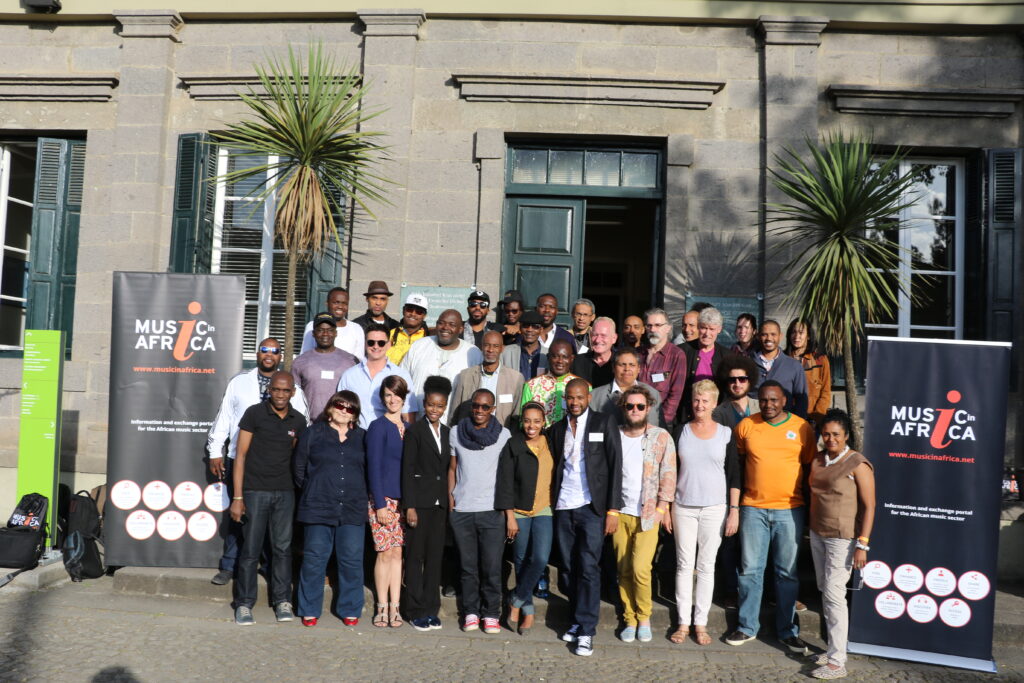
ACCES Conference and Showcase Festival is Africa's leading music industry gathering, bringing together the people shaping the future of the continent's music business. Artists, entrepreneurs, executives, investors, policymakers and cultural leaders from across Africa and around the world come to ACCES to build partnerships, exchange ideas, discover talent and create new business opportunities. Since its launch in 2017, ACCES has become the continent's premier platform for professional exchange and music market development. Combining a high-level conference with a curated showcase festival, networking, exhibitions and industry programmes, ACCES offers a unique space where creativity meets business and where African music connects with the global industry.

Gender@Work
Gender@Work

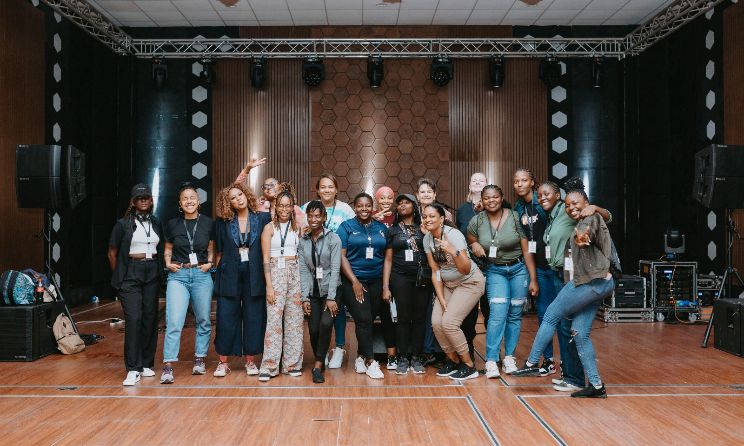
Music In Africa Gender @ Work is a three-year training programme aimed at upskilling and increasing the participation of female professionals in the African music sector. Launched by the Music In Africa Foundation (MIAF) in April 2019, the programme is connected to the MIAF’s ACCES music conference – a pan-African event held in a different African country every year. This connection enables the programme to reach new participants in a different African country every year. The programme marks the beginning of a more concerted effort by the Foundation to support the participation and inclusion of women in all facets of its programmes and the music sector in Africa as a whole. Over the three years, the programme will aim to address gender imbalances in the sector through training, lobbying, facilitating knowledge exchange and dialogues that foster the interest of women. The broader objectives of the programme are to: Provide industry training for women on critical music industry skills, focusing on: Stage management Electronic music production and recording Music business management Technical knowledge Provide an opportunity for both professional and aspiring women to benefit from the Music In Africa network and its broad range of activities in 2019, 2020 and 2021. Provide a solution-based platform in the form of a round table at ACCES with a view to identify challenges, discuss opportunities and lobby for the interests of female practitioners. Offer participants the opportunity to benefit from programmes offered by MIAF’s partners. Increase access to educational materials. Integrate participants in the broader ACCES programme to maximise experience and exposure to the industry. Record and present training materials on the www.musicinafrica.net, including but not limited to tutorials, templates and other best-practice materials. Communicate women-based themes that support the initiatives and messages of the programme. MAIN TRAINING ACTIVITIES Training in first country (Ghana): In the first year, participants will be trained on all aspects of stage management by a team of experienced stage managers from 10 to 17 November 2019. The programme will offer robust classroom training as well as practical, hands-on training in which participants will also be given the opportunity to manage various aspects of the ACCES performance programme. Training in second country: The second training iteration will take place at ACCES 2020 when the programme will diversify its course to include music production lessons and training on other music business topics. A round-table platform will also be introduced to coincide with the ACCES programme. Training in third country: The third training iteration will take place at ACCES 2021 in a different country, offering an advanced course. HOW DO YOU GET INVOLVED?  As a participant, facilitator or trainer: The programme enrolls up to 12 trainees every year. All opportunities are advertised publicly on this website, and will be added to this page. Please keep checking this page for new calls (below under UPDATES & CURRENT OPPORTUNITIES). As a partner Please contact Claire Metais at [email protected]. APPLY The call for applications for 2020 will be announced soon. The Music In Africa Gender @ Work programme is made possible with the support of the Prince Claus Fund, Siemens Stiftung and Goethe-Institut.

Sound Connects Fund
Sound Connects Fund

For cultural and creative practitioners and organisations operating in southern Africa, access to funding remains a major challenge. The COVID-19 pandemic has also had a massive impact on government policy, spending and the economy in general, and has seen spending on culture being moved further down the list of priorities. Further, the cultural and creative industries repeatedly cite four main areas where investment is needed for growth, which are increased visibility, mobility including access to new markets, finance and support structures.

Instrument Building And Repair Project

Experience the Vibrations African Instruments Exhibition online in 3D

News

Streaming platforms introduce policies to manage AI-generated music
09 Mar 2026 - 12:04

cc-img

Major music streaming platforms have introduced a range of policies to address the growing presence of artificial intelligence (AI) in music creation and distribution.

AI is reshaping music, and streaming platforms are introducing rules for handling AI-generated content.

As AI tools become increasingly common in the music industry, streaming services have begun implementing rules governing how AI-generated or AI-assisted content is handled on their platforms. These measures vary widely, from disclosure requirements and content labelling to outright bans on fully AI-generated tracks.

Different approaches across platforms

Amazon Music does not currently have a detailed public policy specifically addressing AI-generated music. However, the platform hosts AI-created tracks while focusing on maintaining what it describes as “catalogue integrity”. The company has also partnered with record labels to address issues such as unlawful voice cloning and misleading releases.

The platform integrated the AI music generator Suno into its Alexa Plus assistant in 2025. The tool has been the subject of a copyright lawsuit filed by the Recording Industry Association of America and major record labels. Some artists have reported that tracks suspected of infringing intellectual property rules have been quietly removed from the service.

Apple Music has introduced metadata tags requiring labels and distributors to disclose when AI has been used in music, artwork or other related assets. The platform has left it to its partners to determine what qualifies as AI-generated content, focusing on transparency and labelling rather than prohibiting such works.

Spotify has adopted the DDEX metadata standard to identify AI-assisted tracks in its credits. The service has also introduced filters to detect and remove mass-produced or fraudulent content, including unauthorised AI voice clones and vocal impersonations.

Disclosure and moderation

YouTube Music applies rules that also extend to its parent platform, YouTube. Under its policy, audio created largely by AI with minimal human involvement may be treated as low-value content and could be removed or made ineligible for monetisation. The platform emphasises disclosure of AI use and expects significant human contribution, such as performance or commentary.

Bandcamp has taken a stricter approach by banning music it believes to be produced entirely or mainly by AI. The platform states that music hosted on its service should be created by humans and allows users to report suspected generative content.

Deezer has developed tools to detect and label fully AI-generated tracks within its catalogue. Songs identified as AI-generated are marked for transparency and excluded from algorithmic and editorial recommendations. The company has also introduced systems to remove fraudulent AI streaming activity from royalty calculations.

Focus on rights and catalogue protection

Other streaming services have focused on protecting artists’ catalogues rather than restricting AI-assisted music.

Pandora has not published a detailed AI policy but has highlighted broader industry concerns about low-quality AI-generated content and its impact on recommendation systems. The platform generally allows AI-assisted music provided that rights are cleared and the content is not deceptive.

SoundCloud has updated its terms of use to state that creators’ uploads will not be used to train generative AI systems that replicate another artist’s voice, music or likeness without explicit consent. While AI-assisted tracks can still be uploaded, the platform says it will not use user catalogues for AI training without permission.

Tidal has adopted a similar stance, stating that uploaded music will not be used to train AI models. The service uses AI internally for moderation and metadata tools and offers an AI-assisted lyrics generator for artists, but has not banned AI-assisted tracks from appearing on the platform.

Meanwhile, Qobuz has introduced an “AI Charter” alongside a proprietary detection tool designed to identify AI-generated recordings in its catalogue. The service maintains a human-led editorial approach and excludes AI-generated material from curated playlists and featured sections.

Industry adjusting to AI’s impact

The introduction of these policies reflects wider efforts by streaming services to balance technological innovation with concerns about copyright, authenticity and artist protection.

While most platforms allow some form of AI-assisted music, the rules surrounding disclosure, monetisation and promotion differ significantly, indicating that the industry is still developing common standards for handling AI-generated content.

Please log in to post a comment.

Most popular

Disclaimer: Music In Africa provides a platform for musicians and contributors to embed music and videos solely for promotional purposes. If any track or video embedded on this platform violates any copyrights please inform us immediately and we will take it down. Please read our Terms of Use for more.

newsletter banner

Subscribe to our monthly Newsletter

Follow us on social media