













































NEFCISA
NEFCISA

The Music In Africa Foundation (MIAF) is proud of its partnership with the Industrial Development Corporation (IDC) as a Strategic Implementing Partner (SIP) for its Social Employment Fund (SEF). Through this collaboration, MIAF is running a national programme that is creating jobs, addressing skills gaps, and strengthening South Africa's creative industries — in line with the SEF's overarching goal to generate work for the common good and build community value through employment, social contribution, and inclusive economic participation. Operating under the banner NEFCISA (National Employment Facility for Creative Industries in South Africa), the initiative is recruiting and training participants, matching them with host organisations, and has already placed 1 500 workers across the country — surpassing its original target of 1 000. NEFCISA is delivered through a network of 20 host organisations spanning five provinces, who are actively hosting participants and contributing to work for the common good across South Africa's creative and cultural industries. Key Objectives: Support employment and entrepreneurship in the creative industries. Offer skills development and training programmes. Foster partnerships between public and private creative sectors. Promote South African creativity at both provincial and national levels Foster community development through social contribution.

ACCES
ACCES

ACCES Conference and Showcase Festival is Africa's leading music industry gathering, bringing together the people shaping the future of the continent's music business. Artists, entrepreneurs, executives, investors, policymakers and cultural leaders from across Africa and around the world come to ACCES to build partnerships, exchange ideas, discover talent and create new business opportunities. Since its launch in 2017, ACCES has become the continent's premier platform for professional exchange and music market development. Combining a high-level conference with a curated showcase festival, networking, exhibitions and industry programmes, ACCES offers a unique space where creativity meets business and where African music connects with the global industry.

Gender@Work
Gender@Work

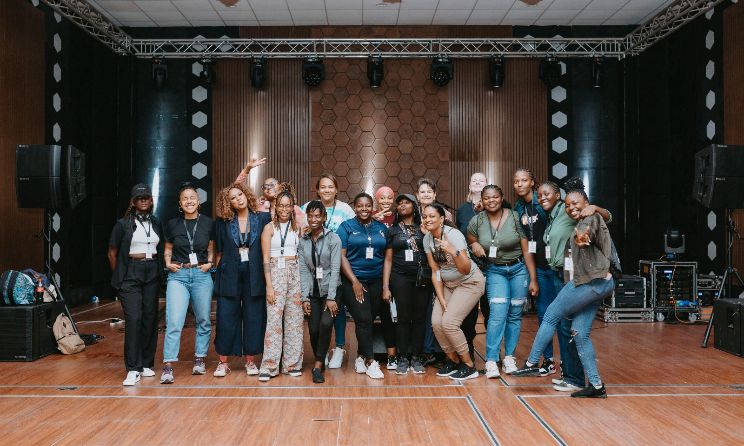
Music In Africa Gender @ Work is a three-year training programme aimed at upskilling and increasing the participation of female professionals in the African music sector. Launched by the Music In Africa Foundation (MIAF) in April 2019, the programme is connected to the MIAF’s ACCES music conference – a pan-African event held in a different African country every year. This connection enables the programme to reach new participants in a different African country every year. The programme marks the beginning of a more concerted effort by the Foundation to support the participation and inclusion of women in all facets of its programmes and the music sector in Africa as a whole. Over the three years, the programme will aim to address gender imbalances in the sector through training, lobbying, facilitating knowledge exchange and dialogues that foster the interest of women. The broader objectives of the programme are to: Provide industry training for women on critical music industry skills, focusing on: Stage management Electronic music production and recording Music business management Technical knowledge Provide an opportunity for both professional and aspiring women to benefit from the Music In Africa network and its broad range of activities in 2019, 2020 and 2021. Provide a solution-based platform in the form of a round table at ACCES with a view to identify challenges, discuss opportunities and lobby for the interests of female practitioners. Offer participants the opportunity to benefit from programmes offered by MIAF’s partners. Increase access to educational materials. Integrate participants in the broader ACCES programme to maximise experience and exposure to the industry. Record and present training materials on the www.musicinafrica.net, including but not limited to tutorials, templates and other best-practice materials. Communicate women-based themes that support the initiatives and messages of the programme. MAIN TRAINING ACTIVITIES Training in first country (Ghana): In the first year, participants will be trained on all aspects of stage management by a team of experienced stage managers from 10 to 17 November 2019. The programme will offer robust classroom training as well as practical, hands-on training in which participants will also be given the opportunity to manage various aspects of the ACCES performance programme. Training in second country: The second training iteration will take place at ACCES 2020 when the programme will diversify its course to include music production lessons and training on other music business topics. A round-table platform will also be introduced to coincide with the ACCES programme. Training in third country: The third training iteration will take place at ACCES 2021 in a different country, offering an advanced course. HOW DO YOU GET INVOLVED?  As a participant, facilitator or trainer: The programme enrolls up to 12 trainees every year. All opportunities are advertised publicly on this website, and will be added to this page. Please keep checking this page for new calls (below under UPDATES & CURRENT OPPORTUNITIES). As a partner Please contact Claire Metais at [email protected]. APPLY The call for applications for 2020 will be announced soon. The Music In Africa Gender @ Work programme is made possible with the support of the Prince Claus Fund, Siemens Stiftung and Goethe-Institut.

Sound Connects Fund
Sound Connects Fund

For cultural and creative practitioners and organisations operating in southern Africa, access to funding remains a major challenge. The COVID-19 pandemic has also had a massive impact on government policy, spending and the economy in general, and has seen spending on culture being moved further down the list of priorities. Further, the cultural and creative industries repeatedly cite four main areas where investment is needed for growth, which are increased visibility, mobility including access to new markets, finance and support structures.

Instrument Building And Repair Project

Experience the Vibrations African Instruments Exhibition online in 3D

Features

Tony Allen: A master of musical diversity

08 May 2020 - 15:00

cc-img flag-img

The music world lost a prolific and borderless drummer last week when Afrobeat co-creator Tony Allen died at the age of 79.
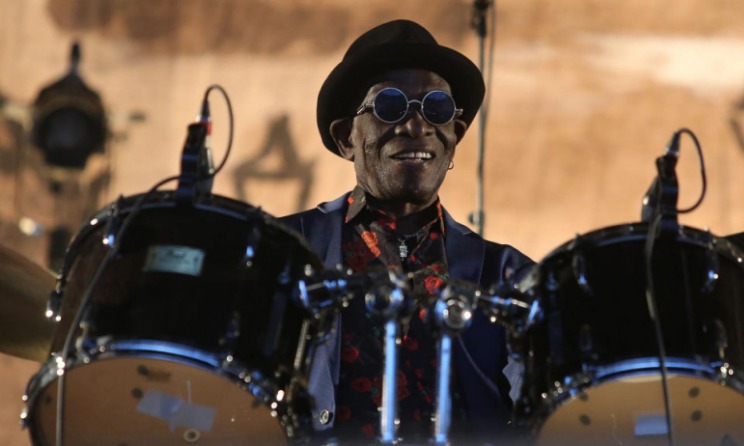
Tony Allen died on 30 April 2020. Photo: Chiaki Nozu

Best known as Fela Kuti's drummer and musical director, his skill and ferocity revolutionised the art of drums and created the canvas for Fela to present his message of pan-Africanism.

Although 10 songs could never account for Allen’s incredible career, they do represent a musician who had an immense influence in the world of rock, punk, indie, electro, hip hop and pop.

Moanin

Allen was an admirer of American jazz giant Art Blakey and the Jazz Messengers. He often cited him as an inspiration while perfecting his craft in Nigeria. So it came as no surprise when Allen honoured Blakey in 2017 with the album A Tribute To Art Blakey and the Jazz Messengers, which is an interpretation of jazz standards through the Afrobeat prism.

Roforofo Fight

This song is off Fela Kuti's 1972 album Roforofo Fight. The 13-minute composition is a great example of the complexity of Allen's drumming. The James Brown influence is strongly heard in the lean, nervous guitar strums as Allen takes centre stage with his relentless groove, which plays counter to Fela's forceful lyrics.

The Good, the Bad & the Queen (full album)

Blur and Gorillaz singer Damon Albarn invited Allen to join his 2007 project The Good, the Bad & the Queen. Taking up the role of timekeeper and pacesetter while adding his shimmering, polyrhythmic West African flourishes showed Allen's brilliance and versatility as a drummer.

Never (Lagos Never Gonna Be the Same)

The song is off Rejoice, the album that Allen and South African jazz trumpeter Hugh Masekela recorded in 2010 in London. The project was left unfinished but after Masekela passed away in 2018, Allen and producer Nick Gold dug up the original recordings and finished the album in the summer of 2019, in the same London studio where they had started recording nine years earlier. The album was released in March 2020. Before his death, Allen was planning a tour to promote the album “along with Hugh’s classics and some of my own stuff,” he told The Guardian.

Sounding Lines 1

Techno producer and percussionist Moritz von Oswald teams up with Allen and modular synth guru Max Loderbauer on the intriguingly ambiguous Sounding Lines album. One of Allen’s trademarks is his ability to keep the grooves interesting and steady during long jams, and this is illustrated in this new-age composition.

Wolf Eats Wolf

While working with musicians in many genres, Allen was known to tackle rhythmic mazes like a walk in the park. On ‘Wolf Eats Wolf’, Allen is comfortably experimental with his Afrobeat groove and jazz influences. This track is off The Source – his first album of original compositions as a bandleader under the Blue Note label. The personnel on The Source features Parisian jazz musicians and Cameroonian guitarist Indy Dibongue.

Zombie

The 1978 release was a result of Kuti’s outspokenness on issues surrounding the military regime in Nigeria. Allen’s snappy and thudding foundation complements Kuti’s sax lines perfectly. While the album was a huge hit with the people, the government was outraged and intensified its attacks on Kuti and his family. His Kalakuta Republic compound was raided and razed by soldiers, who raped multiple women and threw his elderly mother from a window, which led to her death a few months later.

Rocket Juice and the Moon (full album)

Five years after the release of The Good, the Bad & the Queen, Albarn reconnected with Allen and recruited Red Hot Chili Peppers bassist Flea for Rocket Juice and the Moon. The collaboration resulted in a highly enjoyable album of Afrobeat accented with edgy basslines and artsy guitar-synth melodies. Albarn also enlists a handful of African rappers and singers, including a few from the Africa Express exchange programme, like Ghanaians M.anifest and M3nsa, as well as Mali's amazing Fatoumata Diawara.

Water No Get Enemy

This is one of the many songs that prove Kuti was a bold pioneer of self-liberation. Allen plays independent bass drum and snares drum patterns. The song, released in 1975, was inspired by Kuti’s experience with the police when they allegedly planted marijuana on the musician to incriminate him. He uses the imagery of water to outline methods of resistance to Nigeria’s reactionary government.

Tomorrow Comes the Harvest

This was a 2018 project between Allen and techno pioneer Jeff Mills. The record has a wonderfully loose, improvisatory feel as Allen’s shuffle floats beneath Mills’s distorted sub-bass. Even in the gridwork of Mills’ techno, Allen manages to swing. Before this release, the two had been playing improvisational live sets together since 2016. The album was released in two versions: a European one with four tracks and an expanded Japanese release that includes an extra track and alternative edits.

Please log in to post a comment.

Most popular

Disclaimer: Music In Africa provides a platform for musicians and contributors to embed music and videos solely for promotional purposes. If any track or video embedded on this platform violates any copyrights please inform us immediately and we will take it down. Please read our Terms of Use for more.

newsletter banner

Subscribe to our monthly Newsletter

Follow us on social media