




















































What is poetry these days? Soyinka’s ‘Telephone Conversation’ had humour. Wordsworth’s ‘Intimations of Mortality’ had the heft of reasoned retrospection. What do today’s poets have?
Rupi Kaur has over a million followers on Instagram. Nigerian poet Efe Paul Azino has a festival known perhaps by a few hundreds. At the most recent Ake festival, South Africa’s Koleka Putuma was hailed by a roomful numbering to the mid or high tens.
Is the difference, then, that the poets of yore had qualitative merit and today’s have quantitative? The jury is still out on that one. What is clear is that for many followers—a word now hijacked by social media—poetry has become inseparable from performance or e-performance. And the idea might have taken hold in academia since last year the literary critic Adam Bradley published The Poetry of Pop, a suitably titled book.
This quality, of poetry as inextricable from performance, of course takes us back to ancient times when recitals were the rage—but don’t tell this to the reading-in-tranquillity elite who seem to approach history from halfway.
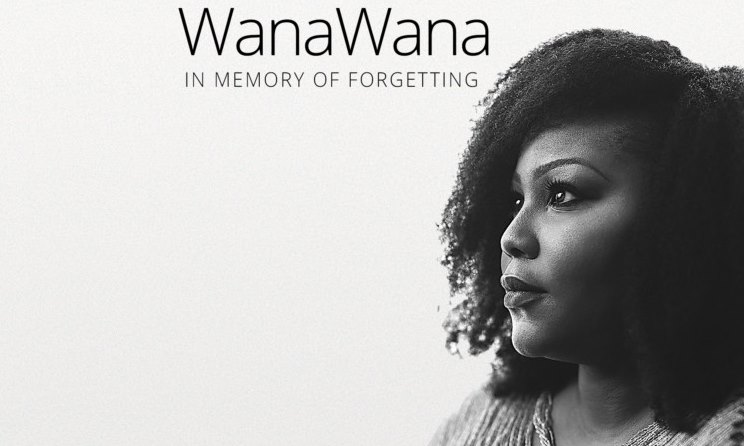
No need telling that to Wana Udobang (Twitter: 36,000 followers) however, who, having enjoyed fame as radio personality Miss Wana Wana and now as spoken-word poet WanaWana in Lagos, has has released In Memory of Forgetting, a second poetry album with music.
The opener, ‘Showgirl’, is backed by such explosive aural detail that it sounds less like poetry than a Broadway number. The verses on ‘Showgirl’ might raise the curtain but what is within is hardly fit for a song-and-dance routine. Our narrator is emphatically not a showgirl; if she’s anything, she’s an exhibitionist of grimness. “Sometimes,” she says, “I soak [my pain] in red lipstick.”
Although that intro is delivered in the first person, it is by the second track that narrator properly becomes indistinguishable from protagonist. Using free verse, as a thousand and one poets are wont to these days, Udobang speaks of a childhood violation by an uncle on ‘Untitled’. But where the less secure might overplay their hand in seeking to let rhetoric reach trauma, Udobang tells it straight:
Between childhood memories of
Terrahawks and Thundercats
These memories are struggling to fade
And I am failing to forget
You might ask: Is this poetry?
Not if you believe poems must use the iambic pentameter and end-of-line rhyme. But the war against that tradition is long won, and the argument long worn. A few years ago, Warsan Shire, perhaps the most influential of millennial poets, expressed the trouble with the iambic pentameter. “[I]f you don’t speak in that accent,” she said, “or that’s not your actual language, the meter doesn’t fit your work and so therefore they tell you you’re wrong and that’s bullshit.”
If you insist on seeking traditional elements of poetry, within those four lines quoted above, there is alliteration and there is rhythm. Above all, in an age favouring the confessional mode of self-expression, there is a perceptible sincerity in Udobang’s conveyance of sorrow. For several minutes encompassing more or less the first half of this 11-tracker album, Udobang is a subtle trumpeter of female pain.And she is never more convincing as when the notion of her verses is absolute pain.
But subtlety departs her work on occasion and her lines become more sermon than poetry, as happens in these lines from ‘Dorathy’ and ‘Open Letter’ respectively:
“You will not leave the warmth of your home even if the heat will kill you.”
“Allow the tears cascade over the concaves of your belly… Your belly will birth greatness.”
But the poet knows her audience. Arranged like this, these words do not do a lot for a serious reader of page-poetry, but they might serve a live audience. The lines “a new kind of normal” and “I caught your reflection in a pool of your tears…” from ‘For Didi’ and ‘Open Letter’ have the charm of accessibility but move too close to cliché; a page-poet’s reputation could scarcely survive such hackneyed formulations.
While she escapes full-fledged commitment to cliché, Udobang sometimes flirts with sentimentality in a way that reveals the difference between speaking words to a live audience and keeping them—in the pages of a book or encoded in a disc. Much of the power of performance poetry derives from three sources: the form’s ephemerality, the corporeal presence of the poet, and the community of listeners. These three—plus the politeness that is encouraged in public spaces—might move a live audience to applause. Alloyed with live music, it is always a winner.
With a book or disc, those extra-textual pressures are dispensed with. What might be amusing accompanied by a poet’s body language might provoke an eye-roll without it—as is the case with the first few lines of the ode to young love, ‘20’. Luckily the sweet-sick sensation of that piece’s first few lines disappears when ‘20’’s narrator moves on to considering the fate of the girl child her affair might birth:
She will not inherit my woes
Not atone for your sins
Again, here, is the sound of church-speak within those lines, but this time Udobang has borrowed the poetry of the more sophisticated and solemn forms of the Nigerian Christian prayer (you hear the less sophisticated forms in Nigerian pop music). And as these contemplative lines are the most effective portion of ‘20’, they confirm the popular aphorism “happiness writes white”: Joy doesn’t show up on the page. “[T]he poet,” observed Clive James, “will exploit grief when it comes.”
It might be expected that on some occasions the music threatens to overwhelm Udobang’s words, but that doesn’t happen—even if on ‘The Banquet’, the soft backing music can be enjoyed separately. Instead a union of singing, speaking and strings produces the album’s highlight, ‘Dorathy’, an excellent piece that is both an account of domestic abuse and a tribute to the poet’s mother.
The singer Cat Mayel works a melody of Yoruba and English, surrounding Udobang’s paean to her own mother, a woman “who will never make the history books” and “whose survival is a puzzling miracle”. It is the piece that most rewards replay and confirms In Memory of Forgetting as a tender document of a woman's survival. Her survival through a series of assaults inflicted by a host of men—notably a husband, a father and an uncle. (Though patriarchy goes unmentioned throughout the album, it is the villain here, and family is its enabler. But by speaking out, especially on the potent paralipsis deploying 'This is not a Feminist Poem', the victim has seized the narrative. Poetry laced with music gives the artist and her narrator the last word.
Udobang’s work is connected with an unfortunate zeitgeist: In the west, the Harvey Weinstein scandal has brought out several reports of what supposedly the most liberated women in the world encounter at the workplace; at home, the rescue of the Chibok girls is yet incomplete. As In Memory of Forgetting adds to the chronicles of female misery, it seems about right to wonder if in failing to dismantle misogyny the world has made it impossible for women to imagine making art—or making the news—without experiencing trauma.
By piling episode on painful episode, In Memory of Forgetting and similar works compel society to fix its gaze on what it has caused, makes it “smell the pus,” as Udobang says. And yet one wonders if it isn’t possible to use poetry, to employ spoken word, to tell of happiness. If the power of poetry is linked to language, to words, isn’t it possible to find a sequence of words that will connect to an audience regardless of subject? Tragedy might have intrinsic poetry, but there is value in joy as well.
That said, it is praiseworthy that Udobang provides no soft landing for her grim verses, even when backed with the strings on ‘Open Letter’. The album has no “it is well” valediction. Her insight is hard to take but true: why provide redemption when the world is yet to give that to a large number of women?
We might have to wait for the woman who tells of the pleasures of being a woman even with patriarchal restrictions—akin to the luxurious indulgence Maya Angelou took in her own womanhood in ‘Phenomenal Woman’, the famous poem from 1995. It is yet possible that that piece of poetry will come, mostly because the nineties were no less misogynistic than our time.
But in 2017, besides the inexorable sexual demands of female pop artists like Seyi Shay and Tiwa Savage, what we have is Wanawana’s sophomore poetry album. It is frequently compelling in a way you wish it wasn’t.
By the end of In Memory of Forgetting, questions of whether this is poetry are moot. The album is a composite portrait of a woman’s life drawn by one woman. And while Wanawana’s portrait is inevitably incomplete, neither Wordsworth nor Soyinka could have produced anything fuller—because whatever their merits as poets, none of those gifted men can know the way women live now.
Buy In Memory of Forgetting on iTunes
Artist: WanaWana
Album: In Memory of Forgetting
Label, Year: Wanawana, 2017


Most popular
Open call: 2026 Gender@Work music industry training in Johannesburg
09 Oct 2026

Top amapiano songs of 2026
16 Feb 2026
Gambia: Suntou Susso announce UK tour for ‘The Path of a Griot’
09 Oct 2026

Top Afrobeats songs of 2026
19 Mar 2026

Top Naija songs of 2026
31 Mar 2026
Call for applications: ACCES 2026 Emerging Artist Spotlight Competition
01 Oct 2026
Disclaimer: Music In Africa provides a platform for musicians and contributors to embed music and videos solely for promotional purposes. If any track or video embedded on this platform violates any copyrights please inform us immediately and we will take it down. Please read our Terms of Use for more.

Subscribe to our monthly Newsletter
Follow us on social media


Please log in to post a comment.