



































NEFCISA
NEFCISA

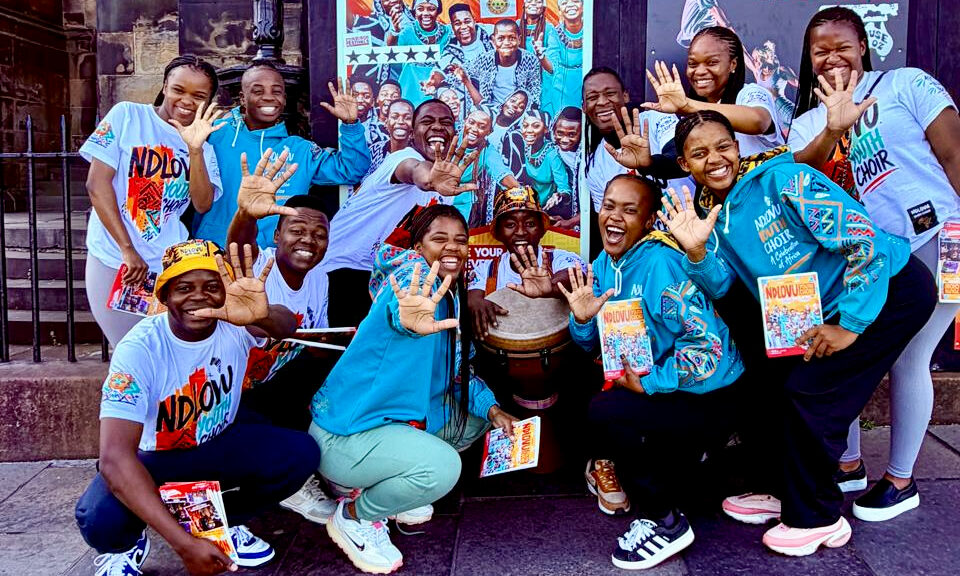
The Music In Africa Foundation (MIAF) is proud of its partnership with the Industrial Development Corporation (IDC) as a Strategic Implementing Partner (SIP) for its Social Employment Fund (SEF). Through this collaboration, MIAF is running a national programme that is creating jobs, addressing skills gaps, and strengthening South Africa's creative industries — in line with the SEF's overarching goal to generate work for the common good and build community value through employment, social contribution, and inclusive economic participation. Operating under the banner NEFCISA (National Employment Facility for Creative Industries in South Africa), the initiative is recruiting and training participants, matching them with host organisations, and has already placed 1 500 workers across the country — surpassing its original target of 1 000. NEFCISA is delivered through a network of 20 host organisations spanning five provinces, who are actively hosting participants and contributing to work for the common good across South Africa's creative and cultural industries. Key Objectives: Support employment and entrepreneurship in the creative industries. Offer skills development and training programmes. Foster partnerships between public and private creative sectors. Promote South African creativity at both provincial and national levels Foster community development through social contribution.

ACCES
ACCES

ACCES Conference and Showcase Festival is Africa's leading music industry gathering, bringing together the people shaping the future of the continent's music business. Artists, entrepreneurs, executives, investors, policymakers and cultural leaders from across Africa and around the world come to ACCES to build partnerships, exchange ideas, discover talent and create new business opportunities. Since its launch in 2017, ACCES has become the continent's premier platform for professional exchange and music market development. Combining a high-level conference with a curated showcase festival, networking, exhibitions and industry programmes, ACCES offers a unique space where creativity meets business and where African music connects with the global industry.

Gender@Work
Gender@Work

Music In Africa Gender @ Work is a three-year training programme aimed at upskilling and increasing the participation of female professionals in the African music sector. Launched by the Music In Africa Foundation (MIAF) in April 2019, the programme is connected to the MIAF’s ACCES music conference – a pan-African event held in a different African country every year. This connection enables the programme to reach new participants in a different African country every year. The programme marks the beginning of a more concerted effort by the Foundation to support the participation and inclusion of women in all facets of its programmes and the music sector in Africa as a whole. Over the three years, the programme will aim to address gender imbalances in the sector through training, lobbying, facilitating knowledge exchange and dialogues that foster the interest of women. The broader objectives of the programme are to: Provide industry training for women on critical music industry skills, focusing on: Stage management Electronic music production and recording Music business management Technical knowledge Provide an opportunity for both professional and aspiring women to benefit from the Music In Africa network and its broad range of activities in 2019, 2020 and 2021. Provide a solution-based platform in the form of a round table at ACCES with a view to identify challenges, discuss opportunities and lobby for the interests of female practitioners. Offer participants the opportunity to benefit from programmes offered by MIAF’s partners. Increase access to educational materials. Integrate participants in the broader ACCES programme to maximise experience and exposure to the industry. Record and present training materials on the www.musicinafrica.net, including but not limited to tutorials, templates and other best-practice materials. Communicate women-based themes that support the initiatives and messages of the programme. MAIN TRAINING ACTIVITIES Training in first country (Ghana): In the first year, participants will be trained on all aspects of stage management by a team of experienced stage managers from 10 to 17 November 2019. The programme will offer robust classroom training as well as practical, hands-on training in which participants will also be given the opportunity to manage various aspects of the ACCES performance programme. Training in second country: The second training iteration will take place at ACCES 2020 when the programme will diversify its course to include music production lessons and training on other music business topics. A round-table platform will also be introduced to coincide with the ACCES programme. Training in third country: The third training iteration will take place at ACCES 2021 in a different country, offering an advanced course. HOW DO YOU GET INVOLVED?  As a participant, facilitator or trainer: The programme enrolls up to 12 trainees every year. All opportunities are advertised publicly on this website, and will be added to this page. Please keep checking this page for new calls (below under UPDATES & CURRENT OPPORTUNITIES). As a partner Please contact Claire Metais at [email protected]. APPLY The call for applications for 2020 will be announced soon. The Music In Africa Gender @ Work programme is made possible with the support of the Prince Claus Fund, Siemens Stiftung and Goethe-Institut.

Sound Connects Fund
Sound Connects Fund

For cultural and creative practitioners and organisations operating in southern Africa, access to funding remains a major challenge. The COVID-19 pandemic has also had a massive impact on government policy, spending and the economy in general, and has seen spending on culture being moved further down the list of priorities. Further, the cultural and creative industries repeatedly cite four main areas where investment is needed for growth, which are increased visibility, mobility including access to new markets, finance and support structures.

Instrument Building And Repair Project

Experience the Vibrations African Instruments Exhibition online in 3D

banner image

Women in the music industry in Togo

Home/Non classé/Women in the music industry in Togo

Female artists

Togolese music was recognized towards the 1960s and 1970s with the emergence of female artists. Bella Bellow is the most internationally recognized Togolese female artist, re-energizing Togolese music through her performances on stage. She is a highly charismatic, avant-gardist woman of the older generation of Togolese artists, namely Afia Mala, Fifi Rafiatou, Akofa Akoussa, Nimon Toki Lala and Yta Jourias.

“These ladies gave an identity to Togolese music,” says Carlos Danklou, director of All That Production studio. “They exported Togolese music internationally. Nimon Toki Lala, Fifi Rafiatou, and Afia Mala are still alive today, inspiring the new generation to make Togolese music shine beyond its borders. As a producer, I thank them, thank you because they mapped out the path for the young generation.”

Bella Bellow, the precursor

Bella Bellow paved the way for numerous generations of Togolese artists. She was the flagship of African music during a time when female Togolese artists hesitated to take the stage, especially in French-speaking Africa.

In 1965, on the Independence Day of ex-Dahomey (current Benin), she sang for the late President Hubert Maga. In April 1966, she participated in the 1st World Festival of Negro Arts held in Dakar, Senegal, which launched her international career.

Bella Bellow was one of the rare Africans to perform at the Olympia in Paris, then the most prestigious stage where every African artist dreamt of performing. She performed in Greece, former Yugoslavia, Germany and Belgium.

She was named “the African blues woman” in the Antilles (Guadeloupe and Guyana) and was applauded by more than 100,000 spectators at the Festival of Popular Music in Rio de Janeiro, Brazil. She passed away in a tragic road accident on 10 December 1973, in Lilikopé, 50 km from Lomé.

The new generation

In the ’90s, a new generation of female artists took over from the queens of Togolese music, following the example of Santy Dorim, Edith Fever, Amy Coco, Djenny Djella and others.

Fifi Rafiatou, Akofa Akoussa, Nimon Toki Lala, Afia Mala and Yta Jouria toured the African continent and were welcomed by crowds in Cotonou, Bamako, Dakar, Ouagadougou, Douala, Libreville, Brazzaville, and Kinshasa.

This young generation took advantage of new developments in audio-visual recording to conquer the music markets of Togo and the sub-region of West Africa, leading to many collaborative projects.

It was at the peak of the new wave that artists such as Mirlinda, Reynia, and Finiki etc were noticed. These young artists released singles that were successful in Togo and beyond.

“They are to be congratulated because good music requires colossal investments. Today, you cannot organize a show in Togo without inviting artists like Almok, Dyana, Hat Queen, and Abitoramongst many others.There are new female talents emerging every year,” said Kevin Dieudonné, who hosts Africa Hit on LCF Television.

The future was bright between 2005 and 2010 with artists like Adjoa Sika, Hat Queen, Shandy, the sisters Rosine, Almok, Kezita, Madame Abitor etc.
This success extended beyond Togolese borders allowing artists to collaborate with artists from the region and continent.

Today, more and more Togolese female artists, like Almok, Hat Queen, Kezita, Dyana, Sikavi Lauress, Christel Johnson and Mirlinda, take part in major festivals, which has earned them several distinctions at national and regional levels.

Since 2014, many female artists have joined to fight for Togolese music. Many albums and singles were released as well as concerts organized. Their presence on the African musical scene is now well established as they have performed at major events such as the Kora Awards, Femua etc.

“Competition is fierce between female and male artists and every artist who wants to make it has to offer high-quality productions. Today, Toofan is calling all the shots but female artists are our pride when it comes to Togolese music,” said Dyana, a Togolese artist.


newsletter banner

Subscribe to our monthly Newsletter

Follow us on social media
