



































NEFCISA
NEFCISA

The Music In Africa Foundation (MIAF) is proud of its partnership with the Industrial Development Corporation (IDC) as a Strategic Implementing Partner (SIP) for its Social Employment Fund (SEF). Through this collaboration, MIAF is running a national programme that is creating jobs, addressing skills gaps, and strengthening South Africa's creative industries — in line with the SEF's overarching goal to generate work for the common good and build community value through employment, social contribution, and inclusive economic participation. Operating under the banner NEFCISA (National Employment Facility for Creative Industries in South Africa), the initiative is recruiting and training participants, matching them with host organisations, and has already placed 1 500 workers across the country — surpassing its original target of 1 000. NEFCISA is delivered through a network of 20 host organisations spanning five provinces, who are actively hosting participants and contributing to work for the common good across South Africa's creative and cultural industries. Key Objectives: Support employment and entrepreneurship in the creative industries. Offer skills development and training programmes. Foster partnerships between public and private creative sectors. Promote South African creativity at both provincial and national levels Foster community development through social contribution.

ACCES
ACCES

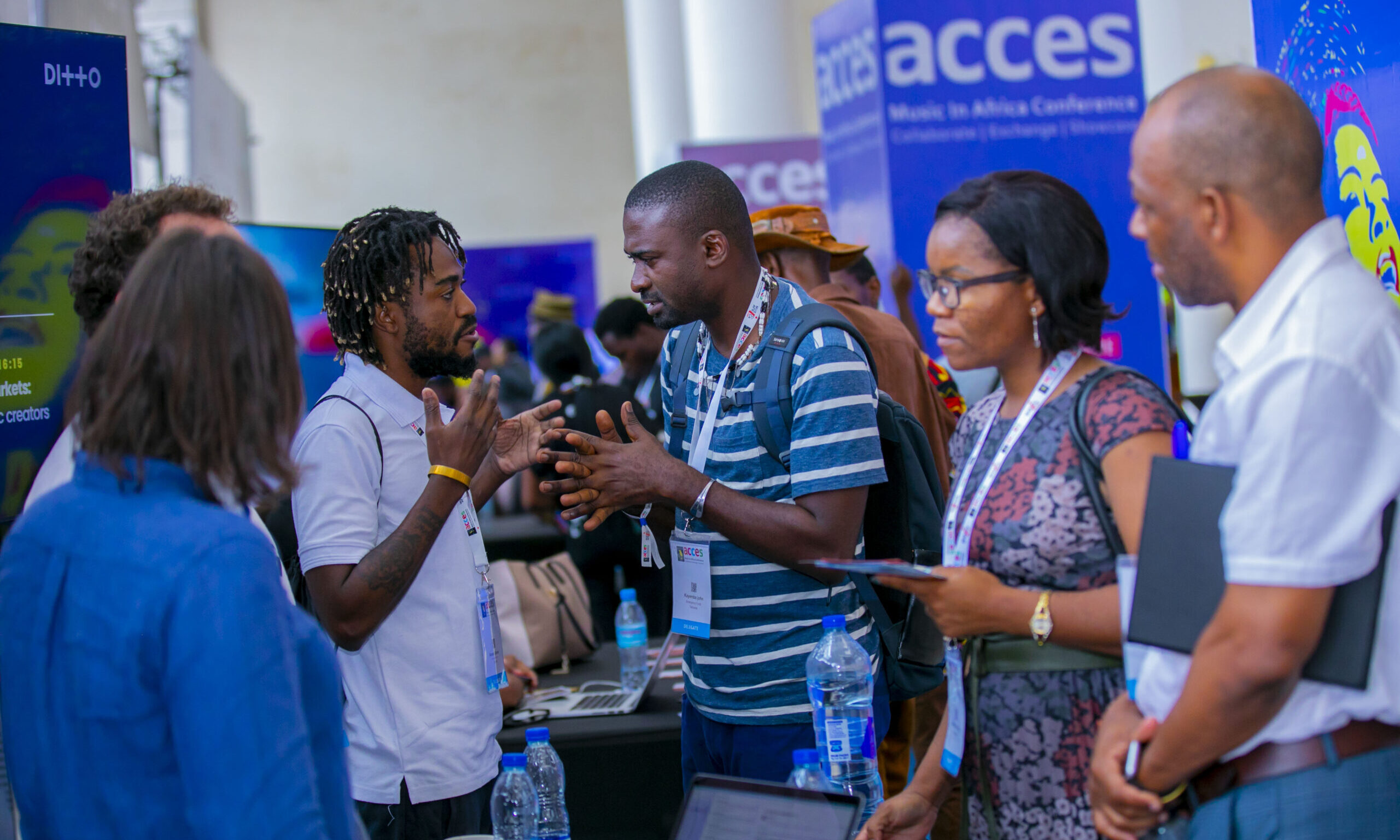
ACCES Conference and Showcase Festival is Africa's leading music industry gathering, bringing together the people shaping the future of the continent's music business. Artists, entrepreneurs, executives, investors, policymakers and cultural leaders from across Africa and around the world come to ACCES to build partnerships, exchange ideas, discover talent and create new business opportunities. Since its launch in 2017, ACCES has become the continent's premier platform for professional exchange and music market development. Combining a high-level conference with a curated showcase festival, networking, exhibitions and industry programmes, ACCES offers a unique space where creativity meets business and where African music connects with the global industry.

Gender@Work
Gender@Work

Music In Africa Gender @ Work is a three-year training programme aimed at upskilling and increasing the participation of female professionals in the African music sector. Launched by the Music In Africa Foundation (MIAF) in April 2019, the programme is connected to the MIAF’s ACCES music conference – a pan-African event held in a different African country every year. This connection enables the programme to reach new participants in a different African country every year. The programme marks the beginning of a more concerted effort by the Foundation to support the participation and inclusion of women in all facets of its programmes and the music sector in Africa as a whole. Over the three years, the programme will aim to address gender imbalances in the sector through training, lobbying, facilitating knowledge exchange and dialogues that foster the interest of women. The broader objectives of the programme are to: Provide industry training for women on critical music industry skills, focusing on: Stage management Electronic music production and recording Music business management Technical knowledge Provide an opportunity for both professional and aspiring women to benefit from the Music In Africa network and its broad range of activities in 2019, 2020 and 2021. Provide a solution-based platform in the form of a round table at ACCES with a view to identify challenges, discuss opportunities and lobby for the interests of female practitioners. Offer participants the opportunity to benefit from programmes offered by MIAF’s partners. Increase access to educational materials. Integrate participants in the broader ACCES programme to maximise experience and exposure to the industry. Record and present training materials on the www.musicinafrica.net, including but not limited to tutorials, templates and other best-practice materials. Communicate women-based themes that support the initiatives and messages of the programme. MAIN TRAINING ACTIVITIES Training in first country (Ghana): In the first year, participants will be trained on all aspects of stage management by a team of experienced stage managers from 10 to 17 November 2019. The programme will offer robust classroom training as well as practical, hands-on training in which participants will also be given the opportunity to manage various aspects of the ACCES performance programme. Training in second country: The second training iteration will take place at ACCES 2020 when the programme will diversify its course to include music production lessons and training on other music business topics. A round-table platform will also be introduced to coincide with the ACCES programme. Training in third country: The third training iteration will take place at ACCES 2021 in a different country, offering an advanced course. HOW DO YOU GET INVOLVED?  As a participant, facilitator or trainer: The programme enrolls up to 12 trainees every year. All opportunities are advertised publicly on this website, and will be added to this page. Please keep checking this page for new calls (below under UPDATES & CURRENT OPPORTUNITIES). As a partner Please contact Claire Metais at [email protected]. APPLY The call for applications for 2020 will be announced soon. The Music In Africa Gender @ Work programme is made possible with the support of the Prince Claus Fund, Siemens Stiftung and Goethe-Institut.

Sound Connects Fund
Sound Connects Fund

For cultural and creative practitioners and organisations operating in southern Africa, access to funding remains a major challenge. The COVID-19 pandemic has also had a massive impact on government policy, spending and the economy in general, and has seen spending on culture being moved further down the list of priorities. Further, the cultural and creative industries repeatedly cite four main areas where investment is needed for growth, which are increased visibility, mobility including access to new markets, finance and support structures.

Instrument Building And Repair Project

Experience the Vibrations African Instruments Exhibition online in 3D

banner image

The Remedies serve nostalgia at Afropolitan Vibes

Home/Non classé/The Remedies serve nostalgia at Afropolitan Vibes

It was the second show of the Afropolitan Vibes in its new Muri Okunola Park location. The first, in June, was interrupted by rain. That act of nature combined with the increased time between shows raised questions about the quality of Afropolitan Vibes. It was not strange to hear people refer to the show’s time in Freedom Park with wistfulness. Therefore, there was pressure on the organisers to deliver a memorable show, the kind to turn its fans from past to future.

LasGiidi, first act of the night, was most energetic of all who climbed the stage, a feat, considering the energy the BANTU band performs with. He pranced around singing songs including the new single ‘Bottles’ featuring rapper Olamide. BANTU matched his energy, accompanying him with its usual German efficiency.

Mayorkun’s time on stage was a snapshot of the elements that made the night: a medley of past and present. He has gained prominence on the back of pop singles on the theme of love, and favours tungba music, a brand of danceable Yoruba pop music modeled on juju music. He has also joined the wave of what is popular today with his recent single ‘Mama’, which uses the laid-back beat that is the rave among Nigerian pop musicians. The song’s catchy line “All of your problems I know say solution na ego” might end up one of pop music’s lines of the year, alongside “30 billion for the account” from ‘If’ by Davido, boss of Mayorkun’s record label. The height of his performance presented a cliff from which the next act of the night, Simi, was bound to struggle from falling off.

Plagued by a misbehaving microphone, Simi got off to a slow start as she opened with ‘Aimasko’ from her new album Simisola. Perhaps the crowd hadn’t listened to the album enough, but the reception was too tepid for a song that samples juju legend Ebenezer Obey well. That problem was banished once she started ‘Joromi’, an obvious crowd-pleaser judging from its raucous reception.

For all the energy and invention of the first three artists, the night belonged to D’Remedies trio. Tony Tetuila, Eddie Remedy, and Eedris Abdulkareem, with their ageing but well-preserved faces, growing paunches and arsenal of late 1990s and early 2000s’ pop hits, were the perfect embodiment of nostalgia.

They jumped around the stage, shook hands and waved to the crowd as they switched from song to song. There was a chance Tony Tetuila had forgotten some of his lyrics, and almost a certainty that Eedris Abdulkareen couldn’t repeat his rapid-fire lines, but precision wasn’t demanded by a crowd content to see them onstage. Eedris tried to test the crowd’s memory with ‘Shako mo’, but if he was thinking himself forgotten, he shouldn’t have bothered. Time has turned his group’s class of Nigerian musicians into a desirable ideal before younger folk to whom they represent a certain heyday of pop inventiveness. Shortly after, the stage became a time machine, with Daddy Showkey and Konga popping out to the delight of an ecstatic crowd.

“I wish we could do this every month, but see this people,” Ade Bantu said, pointing towards his band, “they want to tour.”

By the end, his wish had become the crowd’s desire. By reaching into the past, the concert fed the human need for nostalgia. And for all present, the next Afropolitan Vibes, in December, couldn’t come soon enough.

newsletter banner

Subscribe to our monthly Newsletter

Follow us on social media