









































NEFCISA
NEFCISA

The Music In Africa Foundation (MIAF) is proud of its partnership with the Industrial Development Corporation (IDC) as a Strategic Implementing Partner (SIP) for its Social Employment Fund (SEF). Through this collaboration, MIAF is running a national programme that is creating jobs, addressing skills gaps, and strengthening South Africa's creative industries — in line with the SEF's overarching goal to generate work for the common good and build community value through employment, social contribution, and inclusive economic participation. Operating under the banner NEFCISA (National Employment Facility for Creative Industries in South Africa), the initiative is recruiting and training participants, matching them with host organisations, and has already placed 1 500 workers across the country — surpassing its original target of 1 000. NEFCISA is delivered through a network of 20 host organisations spanning five provinces, who are actively hosting participants and contributing to work for the common good across South Africa's creative and cultural industries. Key Objectives: Support employment and entrepreneurship in the creative industries. Offer skills development and training programmes. Foster partnerships between public and private creative sectors. Promote South African creativity at both provincial and national levels Foster community development through social contribution.

ACCES
ACCES

ACCES Conference and Showcase Festival is Africa's leading music industry gathering, bringing together the people shaping the future of the continent's music business. Artists, entrepreneurs, executives, investors, policymakers and cultural leaders from across Africa and around the world come to ACCES to build partnerships, exchange ideas, discover talent and create new business opportunities. Since its launch in 2017, ACCES has become the continent's premier platform for professional exchange and music market development. Combining a high-level conference with a curated showcase festival, networking, exhibitions and industry programmes, ACCES offers a unique space where creativity meets business and where African music connects with the global industry.

Gender@Work
Gender@Work

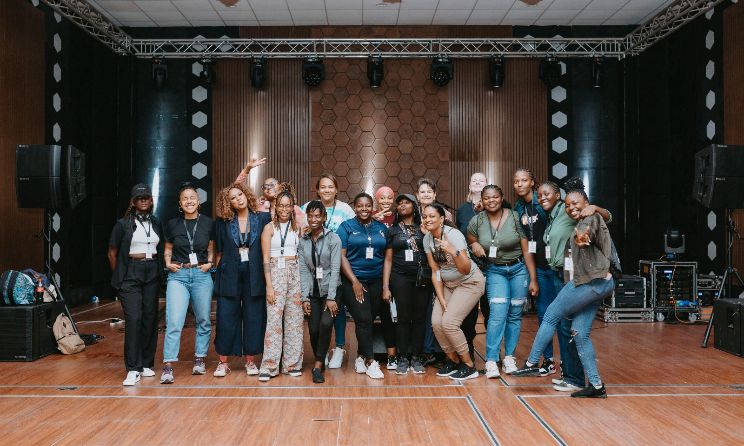
Music In Africa Gender @ Work is a three-year training programme aimed at upskilling and increasing the participation of female professionals in the African music sector. Launched by the Music In Africa Foundation (MIAF) in April 2019, the programme is connected to the MIAF’s ACCES music conference – a pan-African event held in a different African country every year. This connection enables the programme to reach new participants in a different African country every year. The programme marks the beginning of a more concerted effort by the Foundation to support the participation and inclusion of women in all facets of its programmes and the music sector in Africa as a whole. Over the three years, the programme will aim to address gender imbalances in the sector through training, lobbying, facilitating knowledge exchange and dialogues that foster the interest of women. The broader objectives of the programme are to: Provide industry training for women on critical music industry skills, focusing on: Stage management Electronic music production and recording Music business management Technical knowledge Provide an opportunity for both professional and aspiring women to benefit from the Music In Africa network and its broad range of activities in 2019, 2020 and 2021. Provide a solution-based platform in the form of a round table at ACCES with a view to identify challenges, discuss opportunities and lobby for the interests of female practitioners. Offer participants the opportunity to benefit from programmes offered by MIAF’s partners. Increase access to educational materials. Integrate participants in the broader ACCES programme to maximise experience and exposure to the industry. Record and present training materials on the www.musicinafrica.net, including but not limited to tutorials, templates and other best-practice materials. Communicate women-based themes that support the initiatives and messages of the programme. MAIN TRAINING ACTIVITIES Training in first country (Ghana): In the first year, participants will be trained on all aspects of stage management by a team of experienced stage managers from 10 to 17 November 2019. The programme will offer robust classroom training as well as practical, hands-on training in which participants will also be given the opportunity to manage various aspects of the ACCES performance programme. Training in second country: The second training iteration will take place at ACCES 2020 when the programme will diversify its course to include music production lessons and training on other music business topics. A round-table platform will also be introduced to coincide with the ACCES programme. Training in third country: The third training iteration will take place at ACCES 2021 in a different country, offering an advanced course. HOW DO YOU GET INVOLVED?  As a participant, facilitator or trainer: The programme enrolls up to 12 trainees every year. All opportunities are advertised publicly on this website, and will be added to this page. Please keep checking this page for new calls (below under UPDATES & CURRENT OPPORTUNITIES). As a partner Please contact Claire Metais at [email protected]. APPLY The call for applications for 2020 will be announced soon. The Music In Africa Gender @ Work programme is made possible with the support of the Prince Claus Fund, Siemens Stiftung and Goethe-Institut.

Sound Connects Fund
Sound Connects Fund

For cultural and creative practitioners and organisations operating in southern Africa, access to funding remains a major challenge. The COVID-19 pandemic has also had a massive impact on government policy, spending and the economy in general, and has seen spending on culture being moved further down the list of priorities. Further, the cultural and creative industries repeatedly cite four main areas where investment is needed for growth, which are increased visibility, mobility including access to new markets, finance and support structures.

Instrument Building And Repair Project

Experience the Vibrations African Instruments Exhibition online in 3D

Features

Remembering Ras Kimono

14 Jun 2018 - 09:42

cc-img flag-img

My relationship with reggae was inherited from my father, whose collection was guarded even in his absence by warnings decreed in clear terms.
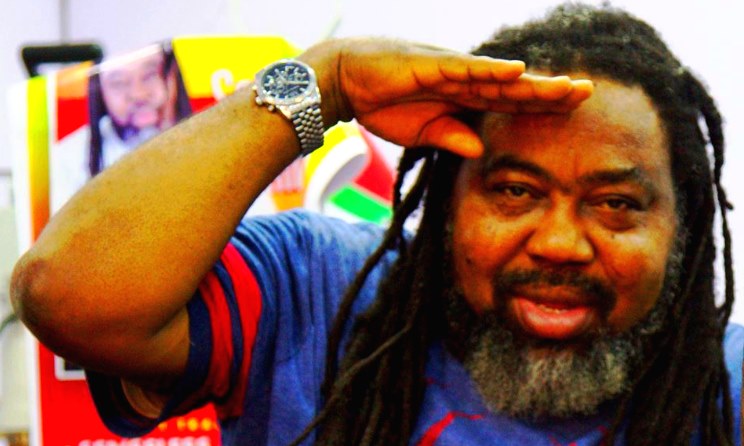
Ras Kimono played reggae music until his death. Photo: Immanuel James

One evening during our stay in Woji, Port Harcourt, he returned from work with a new cassette, the words 'Ras Kimono' on it. Encased in virgin plastic, it found rest on that brown centre table, awaiting an official launch by father. Instead, the patriarch slept sitting on a sofa, and the night swallowed my expectation for new music. As soon as he left for work the next morning, I carefully opened the plastic and helped Kimono into the stereo.

“Ayaga-yaga-yaga-yoo!” he yelled, to my exuberant bounce. On wanting to rewind the track when its first play ended, I looked up and saw the patriarch standing by the door, his anger numbed by the silent joy of a son following fatherly example.

That induction led me into the entire reggae philosophy that is Ras Kimono. Before his death at 60, Kimono’s last undertakings, in hindsight, seem executed with an urgency suggestive of premonition. His interview with me, perhaps his last, was exhaustive and, in a way, valedictory.

“I’m the last man standing...And we just have to make our mark in life”, he said about why he was still busy with music projects. His last couple of months had seen a lot of shows, including an Evening with Ras Kimono at Freedom Park in Lagos. A month earlier, his last birthday carried a tinge of climax.

There was also a fairly new album, Senseless Killings, denouncing literal and symbolic killings by Nigerian sectarian forces. It received depressing airplay. His vision of the conscious mandate of music and its agency for political intervention was unilateral—unshared by the media and the people on whose behalf he worked his art.

Today’s music instead speaks “on behalf of sex, money and designer brands—and the people consent”. Sometimes Kimono shared the album by hand for free. There was a man compelled by evangelical zeal rather than money, a man who loved the people and lived with them, consistent in message and ideals.

Ras Kimono contributed to a wave of Rastafarianism that dominated the airwaves of my childhood in the 1980s. His songs were regular intoxicants to uncles old enough to be free. They frolicked like lambs and jumped for dance. A continental sensation, Kimono was stateless in principle, contemptuous of the colonial boundaries that tore Africa into geographical shreds. He was simply a black man rooted in Nigeria, he often said, and his message targeted all Babylonians—all systems of black oppression. “Shit-Stem,” he called them. Black politicians, colonialists, the military. Kimono will be remembered for uniting the hungry and the oppressed with music, stirring in them a passion that set Babylon on fire.

He will also be remembered for his discipline, humility and cheer. He led a vegetarian lifestyle and neither smoked nor drank. He answered calls from unknown numbers and called back if he missed them, sometimes apologetic. He lived an ascetic life. A genuine hospitality drew people to him and his love was large enough to go round. His modesty disagreed with a world that has grown too messy with rot.

He left behind a family invested in reggae music. He married his manager and influenced a daughter who today carries the torch with a career in reggae. Oge Kimono performed with her father at the Freedom Park concert in what showed a family’s true devotion to the art.

“She will do better than me,” he promised during the interview, dismissing my lament of young people's apathy for the genre. Nigerian pop borrows reggae to blend new forms that keep the past alive, he said. A triumphant smile settled on his face in an apparent sense of congratulation: the labour had not been in vain, and would yield more if only the broadcast media could improve on reggae airplay.

While his Under Pressure album brought him fame in the 1990s, the song ‘Rastafarian’ declared his mission in the world. He’s a Rastafarian, he sings, and he’s not crazy; he’s here to preach the word of Jaja, the word of freedom, and he did just that. Slow-paced and soulful, the track recalls in hindsight the lost glory of reggae.

As he performed on stage at Freedom Park during an Evening with Ras Kimono, the crowd erupted. It was a modest pack of the older, middle-class generation. They were among the poor for whom he spoke in his heyday. They had come to give back, to support a man whose art helped forge their conscience for nation-building.

Ras Kimono performed with muted energy, but the people were with him singing along, lighting up the place in flames of memory. It was a gathering of people grateful for their luck, putting their voices up for a man who is the face of a vibrant past.

Please log in to post a comment.

Most popular

Disclaimer: Music In Africa provides a platform for musicians and contributors to embed music and videos solely for promotional purposes. If any track or video embedded on this platform violates any copyrights please inform us immediately and we will take it down. Please read our Terms of Use for more.

newsletter banner

Subscribe to our monthly Newsletter

Follow us on social media