






















































Each year, Africa loses musicians from a generation that helped shape the continent's musical identity. Many began their careers when recording studios were scarce, technology was limited and there was little infrastructure to help artists reach audiences beyond their immediate surroundings. They learnt instruments, experimented with the sounds around them and developed music that became closely associated with particular artists, cities and countries. Some were among the first African musicians to take those sounds to international audiences.

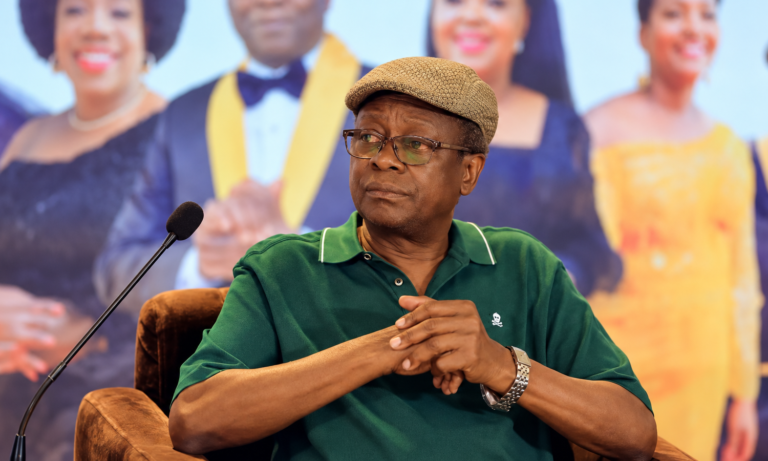
The late Moses Matovu.
Their careers demanded discipline, originality and the ability to create opportunities where few existed.
Ugandan musician Moses Matovu belonged to that generation. His death on 24 September, aged 77, marked the loss of another musician whose career was built through more than five decades of practice and performance. Yet Matovu leaves behind not only an extensive body of music, but also Afrigo Band, an institution that has survived generations of musicians and profound changes in the music industry.
Through my work in the music sector, I had the opportunity to interact with Mzee Matovu on several occasions and watch him perform with Afrigo. He was warm, soft-spoken and easy to speak to. He carried himself without fuss. On stage, his musicianship spoke for itself, but I often found myself paying as much attention to the friendship among the Afrigo musicians as I did to the music. There was an ease that comes from people who have spent much of their lives playing together.
It is difficult to keep a band together for five years. Afrigo did it for 50.
There were disagreements. Musicians left, others joined and some returned. The industry around them changed almost beyond recognition. Yet the band continued to rehearse, record and perform. Matovu once described the bond simply: “Sometimes when you grow together, it becomes a family.”
Longtime Afrigo member Rachael Magoola remembered years of travelling, rehearsing, performing and laughing together, describing Matovu as “the heartbeat of the Afrigo story”. Behind five decades of records and concerts were musicians who had spent an extraordinary amount of their lives making music together.
Learning the craft
Matovu's musical development began in ensembles. He sang as a child and was part of the Namirembe Cathedral choir before moving through the Thunderbirds Band, Police Band and Cranes Band. These were environments where musicians learnt from other musicians. Playing in an ensemble required more than knowing an instrument. It demanded an ability to listen, understand an arrangement and recognise where one's contribution fitted within the whole.
In 1975, Matovu joined Charles Ssekyanzi, Jeff Ssewava, Paddy Nsubuga, Paulo Sserumaga, Fred Luyombya, Anthony Kyeyune and Geoffrey Kizito to form Afrigo Band. The name, derived from “Africa Go”, suggested an ambition for the music to travel.
Over the decades that followed, Afrigo became one of East Africa's longest-running bands and helped take Ugandan music beyond the country's borders.
The band developed during a period when Congolese rumba was already deeply influential across East Africa. Records circulated widely, Congolese musicians travelled through the region and bands moved between cities. Nairobi became home to groups such as Les Mangelepa, Orchestra Virunga and Les Wanyika, while Congolese guitar styles became an important component of Tanzania's muziki wa dansi.
Matovu spoke openly about Congolese music's influence on Uganda. He recalled a period when Ugandan bands performed a great deal of Western music before increasingly turning towards African music, particularly Congolese music, alongside their own compositions.
Afrigo absorbed those influences without simply reproducing them.
The band developed its own approach, combining Ugandan rhythms and percussion with rumba guitar, Matovu's saxophone and carefully developed vocal arrangements. Its musicians composed their own songs, often sang in local languages and continued to introduce new influences into the repertoire.
Matovu called the result “originality”. He believed Afrigo had developed a signature sound through its own compositions, to the extent that listeners could recognise the band from its rhythm or identify him through his saxophone playing.
That idea of originality remains relevant.
Learning without becoming an imitation
Kenyan producer, author and Ketebul Music founder Tabu Osusa has argued that African musicians need to develop a strong grounding in their own musical environments. He has particularly criticised the tendency among some East African musicians to reproduce sounds that have become successful in Nigeria and South Africa before fully developing their own musical identities.
The concern is understandable. When musicians across different countries follow the same successful production formula, African music can begin to sound increasingly uniform, reducing some of the distinctions between musical cultures.
There is a harder truth behind that argument, however. Nigerian Afrobeats did not appear from nowhere. Its contemporary forms developed from Nigeria's own musical history and successive generations of musicians who continually reshaped it. The same applies to South African sounds that eventually contributed to the rise of amapiano.
So why should a Ugandan or Kenyan musician aim simply to sound Nigerian or South African?
There is more creative ground to explore by learning from those successes and then doing the harder work of developing something rooted in one's own environment.
This is where musicians such as Matovu deserve greater recognition.
Afrigo could play rumba, jazz, soul, reggae and other styles, but its musicians had sufficient command of their instruments and their own musical identity to absorb those influences without allowing the band itself to disappear into them.
That lesson is particularly relevant today.
Afrobeats and amapiano travel across Africa at extraordinary speed. Their success has created significant opportunities for African musicians, but commercially successful sounds can also become easy templates. At times, I hear a song and assume the artist is Nigerian or South African, only to discover that they are from somewhere else. The beat, vocal delivery and production have followed the source so closely that there is little left to tell me where the musician comes from.
For me, this is where Afrigo's 50 years become relevant to a younger generation.
Originality was part of the band's longevity. Afrigo changed with the times without having to become somebody else.
The value of taking time
Songwriting is another part of that longevity.
Today, a song can be written, recorded and released within hours. Digital production has made recording cheaper and more accessible, removing many of the barriers that Matovu's generation faced. But speed can also leave little time for composition, arrangement and lyrics to develop.
I sometimes encounter songs with millions of views and then look at the lyrics, only to find fewer than 10 lines repeated throughout the track.
Repetition itself is not the problem. It is a longstanding songwriting technique and an important part of many African musical traditions. The concern arises when there is little beyond the repetition: limited development of an idea, little storytelling, minimal lyrical variation and an arrangement that gives the listener little reason to return once the hook has passed.
Some of these songs become enormous hits and disappear almost as quickly as they arrived.
Millions of streams or views tell us how widely a song travelled at a particular moment. Longevity asks a different question: will people still want to hear it in 10, 20 or 40 years?
Afrigo's catalogue gives us something to consider. ‘Teri Mubi’, for example, reportedly took the band four years to prepare. Matovu explained that musicians could record something, believe it was ready, listen to it again later and discover something that needed changing.
Four years may sound excessive in an industry where artists are under constant pressure to release music and remain visible online. The lesson is not that every song should take years to make. It is that the ability to make music quickly should not replace the work required to make it well.
I remember watching Matovu rehearse Afrigo. He was firm and precise, stopping to give instructions and listening closely to what each musician was playing. What struck me most was how attentively the band members listened when he spoke.
There was something almost parental about it, like a father guiding his children, except these were accomplished musicians, some of whom had shared stages with him for years. He knew the sound he wanted, and they understood what he was asking of them.
That level of musical discipline is difficult to replicate through technology alone.
A legacy beyond the saxophone
Matovu's musicianship also mattered to musicians who came after him. Ugandan saxophonist Isaiah Katumwa has written about watching Matovu while developing his own career as a young musician. For Katumwa, Matovu demonstrated that music could be treated as a serious profession and that a sustainable career was possible in Uganda.
That may be one of Matovu's most important contributions: not simply the music he made, but the possibility he represented to musicians who followed.
Now Afrigo faces perhaps its most difficult transition.
Great bands have disappeared after the death of the person who held their vision together. Sometimes the songs remain, but the institution around them does not. Matovu was so closely associated with Afrigo that it is difficult to imagine the band without him.
My hope, however, is that his death will not bring that story to an end.
If Afrigo's 50 years tell us anything, it is that a band can become bigger than any one line-up. The standards and working methods Matovu helped establish have been passed through generations of musicians. His influence may therefore be measured not only by what he did himself, but by what those around him learnt and continue to carry.
A leader can direct every rehearsal while he is in the room. What he has built becomes clearer when he is no longer there to give the instructions.
Matovu was still performing until the end. On 23 September, he played at the Kampala Sheraton. The following morning came news of his death.
His passing sends us back to the recordings, but it should also turn our attention towards the musicians of his generation who are still here.
Malian writer and ethnologist Amadou Hampâté Bâ is remembered for the observation: “In Africa, when an old man dies, it is a library that burns.” He was speaking about knowledge carried through oral tradition. Music has its own libraries.
There is knowledge in Matovu's generation that recordings alone cannot preserve. We need spaces where older musicians can make music alongside younger musicians. Commemorative concerts and masterclasses have their place, but musicians also need to rehearse, compose, record and perform together.
A conversation about music is useful. Making music together reveals things that cannot always be explained in conversation.
There is also the question of what happens to the music itself.
Much of this generation's work was recorded long before streaming and today's systems of music discovery. Having the recordings somewhere is not enough if younger listeners cannot easily find them, if the information attached to them is incomplete, or if recommendation systems rarely bring them into the paths of new audiences.
As technology changes the way people discover music, African catalogues such as Afrigo's need to remain visible within those systems. Artificial intelligence will increasingly influence search, recommendations and how listeners explore music. If older catalogues are poorly documented or difficult to discover digitally, an important part of African music history risks becoming less visible even while the recordings themselves remain available.
Perhaps this is the moment to return to ‘Afrigo Batuuse’, one of the songs through which Afrigo announced itself.
Batuuse: they have arrived.
Fifty years later, Afrigo is still here.
I hope the band keeps playing, continues introducing this music to another generation and finds its way through life without the man, friend and brother who led it for so long.
Papa Moses, thank you for the music and for everything your generation pioneered for those who came after you.
I have seen the questions about whether Afrigo can continue without you, and I understand the concern. We have seen many great bands disappear after losing the person who founded or led them.
But I remain optimistic about Afrigo.
It was never simply a band built around one man. It was a group of musicians led by one, and there is a difference.
To Afrigo: disagreements will come, as they have over the past 50 years. I only hope you never lose the sense of togetherness, joy and passion that we see on your faces when you play.
As fans, we feel it too.
Keep playing.
Lucy Ilado is a cultural policy specialist, researcher and programme manager working across Africas’s cultural and creative industries. Her work focuses on cultural policy, research, ecosystem building and programme design.


Most popular

Top Naija songs of 2026
31 Mar 2026

Visa appoints Fally Ipupa as face of Visa Pay in Democratic Republic of Congo
23 Sep 2026

Top Afrobeats songs of 2026
19 Mar 2026

Top amapiano songs of 2026
16 Feb 2026

AFRIMA 2026: All the winners
12 Jan 2026
Moses Matovu and the art of making music that lasts
30 Sep 2026
Disclaimer: Music In Africa provides a platform for musicians and contributors to embed music and videos solely for promotional purposes. If any track or video embedded on this platform violates any copyrights please inform us immediately and we will take it down. Please read our Terms of Use for more.

Subscribe to our monthly Newsletter
Follow us on social media


Please log in to post a comment.