









































NEFCISA
NEFCISA

The Music In Africa Foundation (MIAF) is proud of its partnership with the Industrial Development Corporation (IDC) as a Strategic Implementing Partner (SIP) for its Social Employment Fund (SEF). Through this collaboration, MIAF is running a national programme that is creating jobs, addressing skills gaps, and strengthening South Africa's creative industries — in line with the SEF's overarching goal to generate work for the common good and build community value through employment, social contribution, and inclusive economic participation. Operating under the banner NEFCISA (National Employment Facility for Creative Industries in South Africa), the initiative is recruiting and training participants, matching them with host organisations, and has already placed 1 500 workers across the country — surpassing its original target of 1 000. NEFCISA is delivered through a network of 20 host organisations spanning five provinces, who are actively hosting participants and contributing to work for the common good across South Africa's creative and cultural industries. Key Objectives: Support employment and entrepreneurship in the creative industries. Offer skills development and training programmes. Foster partnerships between public and private creative sectors. Promote South African creativity at both provincial and national levels Foster community development through social contribution.

ACCES
ACCES

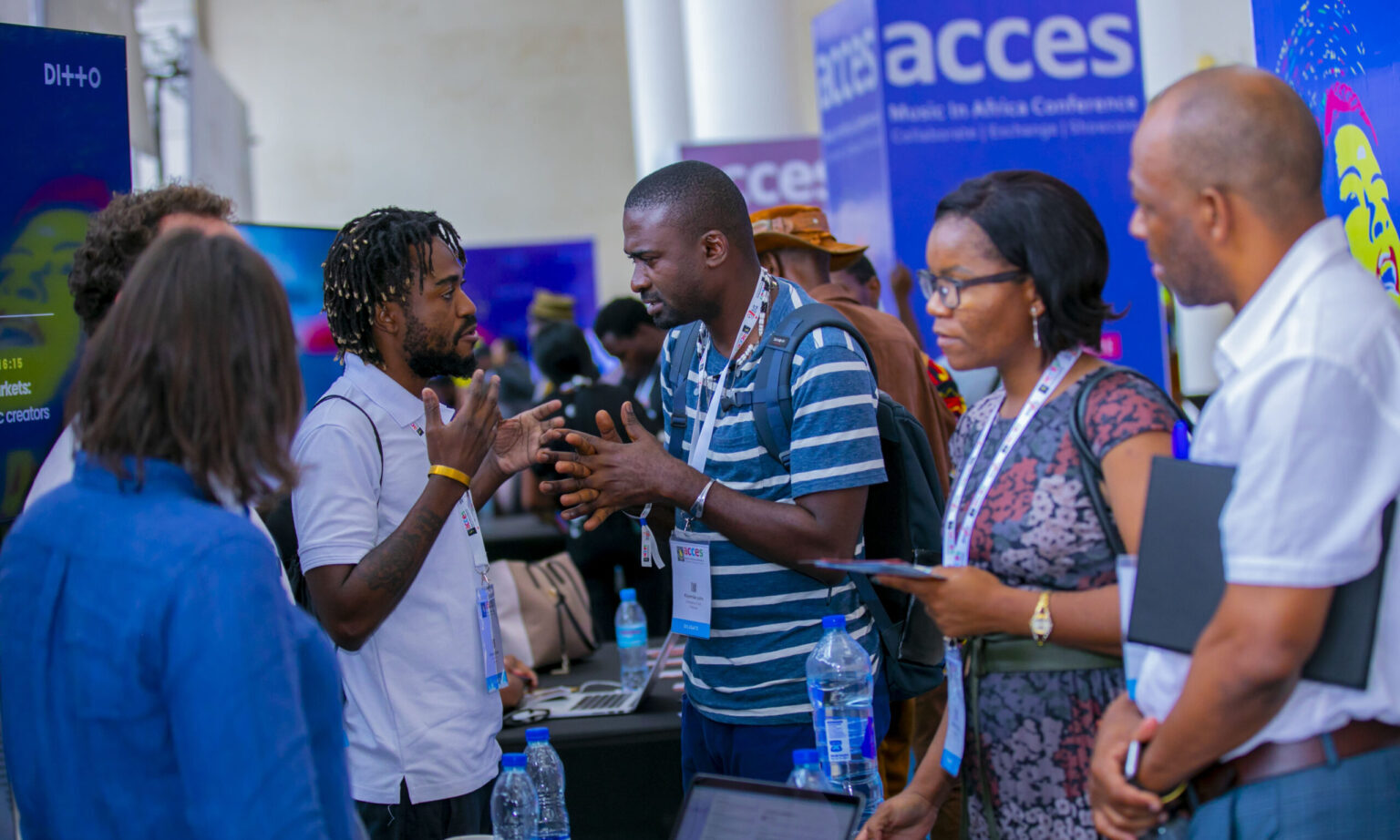
ACCES Conference and Showcase Festival is Africa's leading music industry gathering, bringing together the people shaping the future of the continent's music business. Artists, entrepreneurs, executives, investors, policymakers and cultural leaders from across Africa and around the world come to ACCES to build partnerships, exchange ideas, discover talent and create new business opportunities. Since its launch in 2017, ACCES has become the continent's premier platform for professional exchange and music market development. Combining a high-level conference with a curated showcase festival, networking, exhibitions and industry programmes, ACCES offers a unique space where creativity meets business and where African music connects with the global industry.

Gender@Work
Gender@Work

Music In Africa Gender @ Work is a three-year training programme aimed at upskilling and increasing the participation of female professionals in the African music sector. Launched by the Music In Africa Foundation (MIAF) in April 2019, the programme is connected to the MIAF’s ACCES music conference – a pan-African event held in a different African country every year. This connection enables the programme to reach new participants in a different African country every year. The programme marks the beginning of a more concerted effort by the Foundation to support the participation and inclusion of women in all facets of its programmes and the music sector in Africa as a whole. Over the three years, the programme will aim to address gender imbalances in the sector through training, lobbying, facilitating knowledge exchange and dialogues that foster the interest of women. The broader objectives of the programme are to: Provide industry training for women on critical music industry skills, focusing on: Stage management Electronic music production and recording Music business management Technical knowledge Provide an opportunity for both professional and aspiring women to benefit from the Music In Africa network and its broad range of activities in 2019, 2020 and 2021. Provide a solution-based platform in the form of a round table at ACCES with a view to identify challenges, discuss opportunities and lobby for the interests of female practitioners. Offer participants the opportunity to benefit from programmes offered by MIAF’s partners. Increase access to educational materials. Integrate participants in the broader ACCES programme to maximise experience and exposure to the industry. Record and present training materials on the www.musicinafrica.net, including but not limited to tutorials, templates and other best-practice materials. Communicate women-based themes that support the initiatives and messages of the programme. MAIN TRAINING ACTIVITIES Training in first country (Ghana): In the first year, participants will be trained on all aspects of stage management by a team of experienced stage managers from 10 to 17 November 2019. The programme will offer robust classroom training as well as practical, hands-on training in which participants will also be given the opportunity to manage various aspects of the ACCES performance programme. Training in second country: The second training iteration will take place at ACCES 2020 when the programme will diversify its course to include music production lessons and training on other music business topics. A round-table platform will also be introduced to coincide with the ACCES programme. Training in third country: The third training iteration will take place at ACCES 2021 in a different country, offering an advanced course. HOW DO YOU GET INVOLVED?  As a participant, facilitator or trainer: The programme enrolls up to 12 trainees every year. All opportunities are advertised publicly on this website, and will be added to this page. Please keep checking this page for new calls (below under UPDATES & CURRENT OPPORTUNITIES). As a partner Please contact Claire Metais at [email protected]. APPLY The call for applications for 2020 will be announced soon. The Music In Africa Gender @ Work programme is made possible with the support of the Prince Claus Fund, Siemens Stiftung and Goethe-Institut.

Sound Connects Fund
Sound Connects Fund

For cultural and creative practitioners and organisations operating in southern Africa, access to funding remains a major challenge. The COVID-19 pandemic has also had a massive impact on government policy, spending and the economy in general, and has seen spending on culture being moved further down the list of priorities. Further, the cultural and creative industries repeatedly cite four main areas where investment is needed for growth, which are increased visibility, mobility including access to new markets, finance and support structures.

Instrument Building And Repair Project

Experience the Vibrations African Instruments Exhibition online in 3D

Features

5 of the best: Songs of the Poor Man

19 Jun 2017 - 15:19

cc-img flag-img

The 1980s saw a wave of African music, which would later come to be known as ‘world music’, hit Europe and the UK. Leading record companies began releasing outstanding albums by African musicians, and Europeans who earlier only associated black musicians with jazz now began to turn their gaze south.
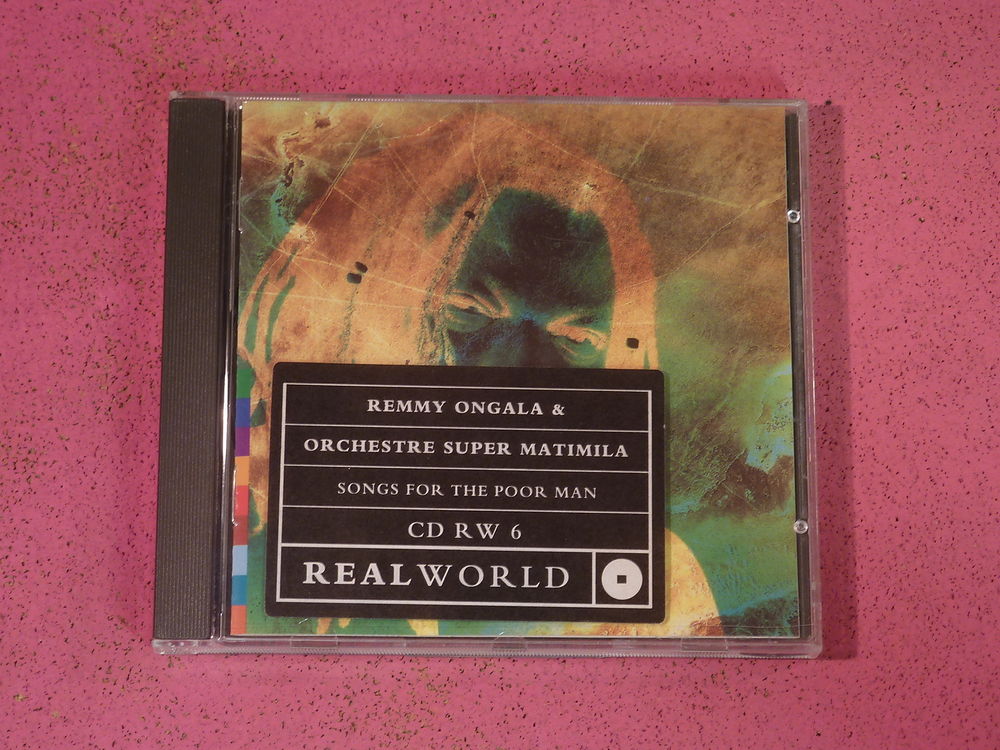
Album art for Songs of the Poor Man.

In 1989, Tanzania’s Remmy Ongala and his Orchestre Super Matimila travelled to the UK for a recording session with Peter Gabriel’s Real World Records. It was then that the album ‘Songs for the Poor Man’ was born. At the time, artists like Baaba Maal, Salif Keita and King Sunny Ade had already released several songs with Virgin Records, another UK label. After its release, the ten-track Swahili ‘Songs for the Poor Man’ became known in Tanzania and the DRC, where Ongala was born, for its socially conscious lyrics and virtuoso playing. The album also spoke of Africa’s socio-political problems, which earned Ongala the nickname ‘The Doctor’, a title that exalted him to the rank of a traditional healer who could ameliorate the issues faced by ordinary people.

Music In Africa caught up with veteran Kenyan music producer and the director of Ketebul Music, Tabu Osusa, who spoke about the impact Ongala had made on the East African music scene.

“When Remmy came to Kenya in 2003 I was out of the country,” Osusa said. “I would have loved to attend his live performance because I loved his music. It had a wider reach because he also embraced the Tanzanian culture, which made him a man of the people. He was more Tanzanian than Congolese. There were many musicians from Tanzania at the time of his existence but what made him stand out was his use of percussion and traditional instruments.”

1. ‘Karola’

When it comes to percussion, as mentioned by Osusa, ‘Karola’, Swahili for Carol, has to be our first pick. In this composition, Saidi Tumba’s percussion carries the song through its parts to provide the flams that define the rumba style. Here Ongala talks to the fictitious Carol, who he warns not to trust everyone who comes her way. In life there are good and bad people, and the irony is that we cannot know our own character better than those who interact with us on a daily basis.

2. ‘Kipenda Roho’

‘Kipenda Roho’, Swahili for ‘what the heart loves’, talks about the relationships between men and women. There is no real love any more, he says, you are loved because of what you have. The song also talks about the risks of HIV and the prevalence of the disease in marriages that are defined by infidelity. But there are a few who still know the real meaning of love. Once again, the percussion makes a big appearance around the four-minute mark.

3. ‘Kifo’

‘Kifo’, Swahili for ‘death’, was played repeatedly on Kenyan radio in the aftermath of the 1998 US embassy bombings in Nairobi and Dar es Salaam, which resulted in 224 people losing their lives. Indeed, death does not discriminate on the basis of social status. But ignore this message and enjoy the melody.

4. ‘Muziki Asili Yake Wapi’

In this song Ongala talks about the various functions of music in society and how music is played for all occasions, whether happy or sad. “At the end will all know our fate once we hear the sound of the trumpet,” he sings in reference to the last ‘occasion’ of life. Another reference to death but at least this one isn’t solely dedicated to it.

5. ‘Sauti ya Mnyonge’

Meaning “voice of an underdog” in Swahili, ‘Sauti ya Mnyonge’ is a story of the oppressed: orphans, the destitute – all who have no one to defend them. ‘Mama uko wapi mama nateseka’ (Mother, I am suffering, where are you?) is the memorable line in this song.

Ongala’s fame spread throughout East Africa thanks to his steady, melodic drive of Zairean soukous and infectious guitar licks. He is considered a national hero in Tanzania. He was once quoted saying, "I am successful in Tanzania because I write songs about serious topics. My music is known as 'ubongo beat', because in Swahili ubongo means brain and my music is heavy thinking music". In 2010 he died aged 63 in Dar es Salaam.

For Osusa, and the rest of us who never saw him play live, here’s another reminder of the musical presence that was Remmy Ongala.

Please log in to post a comment.

Most popular

Disclaimer: Music In Africa provides a platform for musicians and contributors to embed music and videos solely for promotional purposes. If any track or video embedded on this platform violates any copyrights please inform us immediately and we will take it down. Please read our Terms of Use for more.

newsletter banner

Subscribe to our monthly Newsletter

Follow us on social media