

























































Anyango Nyar Japan: Keeping heritage alive through language and music
03 Aug 2026 - 11:09


Hours before taking to the stage at Bamba Restaurant in Nairobi, Anyango Nyar Japan had just finished her soundcheck. The restaurant, which transforms into an intimate live music venue after dark, was still settling into the evening as we sat down over coffee. Our conversation moved between identity, language, indigenous knowledge and the unlikely journey that led a Japanese musician to become one of the world's foremost ambassadors of the Luo people's nyatiti tradition.
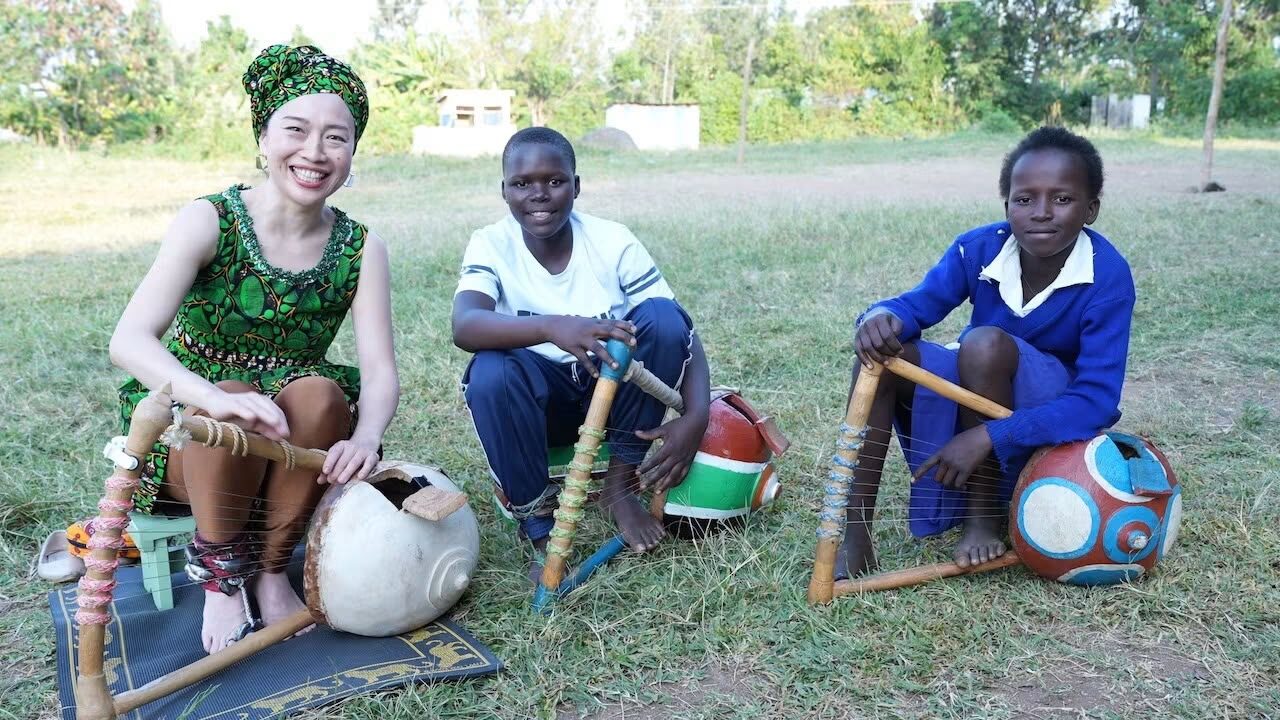
Anyango Nyar Japan.
By the time the first notes of the evening performance filled the room, many of those conversations had already begun to reveal themselves through the music. Seated on a low stool in the performance posture taught to her by her late mentor, nyatiti maestro Okumu K’Orengo, Anyango allowed the acoustic nyatiti to establish its voice before gradually introducing a modified electric version later in the evening. The transition reflected the balance that has come to define her musicianship: deeply rooted in tradition while remaining open to contemporary interpretation.
Her journey began thousands of kilometres away in Tokyo. Drawn to the sound of the nyatiti, she travelled to rural Siaya, where she spent a year immersing herself in the language, customs and everyday life of the Luo community. As she recounts in her autobiography, Anyango Nyar Siaya (Nyatiti Queen), learning the instrument was inseparable from understanding the traditions of the people who had preserved it for generations. Before the late K’Orengo accepted her as his disciple, she first had to earn the trust of the community whose musical heritage she had travelled so far to understand.
That experience continues to shape both her music and her philosophy.
“Culture is our identity. Without identity, we cannot truly live.”
Language, in particular, occupies a central place in her understanding of heritage.
“Language is spirit. Language is history. Language is the essence. If there is no language, there is no spirit.”
For Anyango, learning Dholuo was never simply an academic exercise or a practical necessity for performing traditional songs. It was the point at which music ceased to be something she played and became something she understood. The lyrics carried meanings that could not always be translated directly, while expressions reflected relationships with land, ancestors and community. The deeper her understanding of the language became, the clearer it was that the nyatiti could not be separated from the people and cultural worldview that had shaped it.
That understanding also informs her perspective on artificial intelligence. She does not dismiss the technology's role in the creative industries, nor does she regard it as a threat in itself. Her concern is the growing tendency to separate creativity from the cultural experiences that give it meaning. AI can generate melodies, imitate voices and assist artistic production, she acknowledges, but it cannot inherit language, memory or the lived experiences through which music acquires its identity. Those remain deeply human, carried by communities and transmitted across generations. Technology may become another instrument in the creative process, but it cannot replace the cultural knowledge that allows music to speak with authenticity.
The relationship between language and music often receives less attention than technical mastery, yet it lies at the heart of many African musical traditions. Songs preserve histories that may never have been written down, while instruments embody systems of knowledge refined over centuries. Performance practices transmit values, customs and collective memory alongside rhythm and melody. When the cultural context is removed, much of the music's meaning can disappear with it.
Watching Anyango perform made those connections visible. She opened the evening with the acoustic nyatiti before introducing a modified electric instrument later in the performance. Trained in jazz, she expanded the instrument's harmonic language through carefully measured improvisation, extending its tonal possibilities without disturbing its musical identity. Innovation emerged from tradition rather than replacing it.
Her performance brought to mind a conversation with Kenyan music producer, author and Ketebul Music founder Tabu Osusa, who has worked closely with Anyango since her arrival in Kenya and organised several tours in the country. Osusa often speaks of the importance of artists being both musically and culturally literate. Musical literacy, he argues, encompasses an understanding of rhythm, harmony, phrasing, dynamics, ensemble playing and the ability to interpret rather than merely reproduce music. Cultural literacy, meanwhile, requires an understanding of the histories, languages, symbolism and social contexts from which the music emerges.
Anyango’s performance reflected both forms of knowledge. Her technical command of the instrument was evident in the precision of her playing, while her interpretation reflected years spent understanding the nyatiti's repertoire, performance practices and the community that preserved the tradition across generations.
Years of performing across Africa, Europe, Japan and North America have also given Anyango a distinctive perspective on how musical traditions travel beyond their places of origin. While West and Southern Africa have achieved considerable international visibility through their musical exports, she believes much of East Africa's cultural heritage remains less visible despite its richness and diversity. The challenge, she suggests, is to share its histories, languages and traditions with the same confidence and consistency. Every performance therefore becomes part of a wider effort to introduce audiences to the cultural worlds from which the music emerges.
That depth of understanding explains the conviction with which she speaks about culture. Throughout our conversation, she repeatedly returned to the responsibility of passing knowledge from one generation to the next. Her perspective is not rooted in nostalgia or a desire to preserve culture as a relic of the past, but in the belief that traditions remain relevant when they continue to be practised, understood and reinterpreted by each generation.
Young people, she believes, should encounter culture as a living experience rather than simply as a historical subject. Learning a language, hearing traditional music performed within its cultural setting or understanding the story behind an instrument can create a connection that no textbook can replicate. Heritage survives not merely because it is remembered, but because it continues to be lived.
Anyango's journey reflects a wider conversation about the future of Africa’s cultural heritage. Across the continent, indigenous languages, musical traditions and oral knowledge face pressures from urbanisation, displacement and changing patterns of cultural transmission. Much of this knowledge remains undocumented, while other traditions depend on a diminishing number of master practitioners.
Her story demonstrates why that continuity matters. The nyatiti has reached audiences across four continents because one tradition continued to be practised, one master chose to teach and one student committed herself to understanding far more than an instrument. Heritage is therefore not simply a record of the past; it is the cultural foundation from which contemporary creativity continues to grow.
Safeguarding that heritage depends not only on communities that continue to practise it, but also on institutions responsible for documenting, protecting and transmitting it. Museums, archives, cultural centres and government ministries all have a role to play in ensuring that the languages, knowledge systems and artistic traditions that shape Africa's cultural identity remain living traditions for future generations.
The significance of Anyango’s journey extends beyond one musician or one instrument. Every language that falls silent carries ways of understanding the world that may never be recovered. Every musical tradition that disappears takes with it histories, philosophies and performance practices refined across generations. Preserving these traditions is therefore not simply about protecting the past; it is also about safeguarding the cultural foundations from which new artistic expression can emerge.
Her story offers a different perspective on the relationship between heritage and creativity. Much of the discussion surrounding Africa's creative economy focuses on investment, entrepreneurship and expanding access to international markets. Those ambitions remain essential, but creativity does not emerge in isolation. It grows from inherited knowledge, shared memory and cultural identity. The songs of tomorrow will continue to draw from the languages spoken today, just as new musical expressions will be shaped by traditions that are still practised, taught and understood.
Anyango did not travel to Kenya to reinvent the nyatiti or reshape Luo musical traditions. She came to understand them. The years she spent learning Dholuo, living in Siaya and studying under Okumu K’Orengo reflected a belief that cultural knowledge must first be approached with patience, humility and respect before it can be interpreted or shared with others. This commitment has allowed her to innovate without becoming detached from the traditions that first inspired her.
The journey has also come full circle. Today, she introduces African music to young people across Japan through performances, lectures and educational programmes in schools and universities. The work reflects the same commitment that first brought her to Siaya more than two decades ago: creating spaces where cultural knowledge can be encountered, understood and shared across generations. In doing so, she has become not only a performer of the nyatiti, but also one of its most dedicated ambassadors.
The nyatiti has carried Anyango far beyond the village where she first learnt to play it. It has travelled to concert halls, festivals, classrooms and universities, introducing audiences to a musical tradition rooted in the language, philosophy and cultural worldview of the Luo people. Each performance extends that journey, reminding audiences that an instrument is never simply an object. It carries the people who shaped it, the stories that sustained it and the generations that entrusted it to those who would come next.
As Africa continues to strengthen its creative and cultural industries, Anyango’s journey serves as a reminder that creativity does not emerge in isolation. It is rooted in the languages, musical traditions and indigenous knowledge systems that continue to shape artistic expression across the continent. Ensuring that these living traditions survive and evolve may prove just as important as nurturing the next generation of artists they inspire.
Lucy Ilado is a cultural policy specialist, researcher and programme manager working across Africa's cultural and creative industries. Her work focuses on cultural policy, research, ecosystem building and programme design.


Most popular

Top amapiano songs of 2026
16 Feb 2026

Top Afrobeats songs of 2026
19 Mar 2026

Top Naija songs of 2026
31 Mar 2026
Open call: 2026 Gender@Work music industry training in Johannesburg
09 Oct 2026

Gambia: Suntou Susso announce UK tour for ‘The Path of a Griot’
09 Oct 2026

R&B collective Both Worlds targets SA market
16 Oct 2026
Disclaimer: Music In Africa provides a platform for musicians and contributors to embed music and videos solely for promotional purposes. If any track or video embedded on this platform violates any copyrights please inform us immediately and we will take it down. Please read our Terms of Use for more.

Subscribe to our monthly Newsletter
Follow us on social media


Please log in to post a comment.