






















































By Charles Amoah
Music royalties are the payments collected and distributed to a song’s copyright owners, as members of a collection society, for the use of their creative works. Since accurate monitoring of usage can be impossible, blanket licenses are issued in most cases to consumers such as TV and radio companies. There are various types of royalties and amounts also differ depending on the country. With the emergence of new channels of distribution and usage of music such as the internet, there has been the need for variation of licenses agreements and royalty payments.
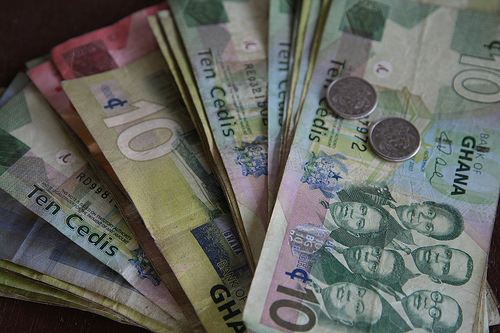
A simple description of a collection society is a licensing agency or organization that manages the copyrights and other rights of their members. They enforce the assigned rights of their members by negotiating licensing agreements for usage of their works, collecting the royalties and distributing the payments to their members. They also enter into reciprocal agreements with other collecting societies, enabling the collection of royalties on behalf of foreign counterparts. The members of a collection society are typically composers, lyricists/authors and publishers. They are required to register their songs and assign their rights to the organization to manage these works on their behalf[i].
Most countries now have some form of a collection society. The type of royalty collection and the environment or country they operate in defines their functions.
For instance the United States has three organizations: ASCAP, BMI and SESAC, which are performance rights organizations or PROs that deal with works that are performed. The UK, on the other hand, has several organizations that collect different types of royalties, whereas in Germany only one society, GEMA, collects all the royalties. Currently in Ghana, the Ghana Music Rights Organization (GHAMRO) is the only collection society[ii].
Royalty Collection in Ghana
In Ghana, the relatively late establishment of the first collection society, the Copyright Society of Ghana (COSGA), in the 1980s makes it still necessary today for more education on defining its operations, membership and requirements. The Ghana Music Rights Organization (GHAMRO) was granted approval to manage the rights of music owners in Ghana in 2011, taking over from COSGA[iii]. Many agitations and allegations of malpractices had plagued COSGA and its management. It therefore became necessary for the proper drafting of the copyright law and the formation of an interim board to aid in the setting up of a more effective organization. GHAMRO got the certification and was mandated to restructure and establish standard operating systems in order to achieve this. This major development was welcomed because COSGA had fallen under the ambit of the Attorney General[iv] and managed by the Ghana Copyright Office[v], instead of being recognized as an independent body and managed by its stakeholders. The Copyright Office’s functions now include enforcing the copyright law, registering creative works and helping in the education of copyright and other rights. The office also serves as an arbitrator and a liaison between the Attorney/Registrar General’s office and the creative arts industry.
Challenges
Now in its third year of operation, some of the same agitations and allegations leveled at COSGA now plague GHAMRO. Issues raised by stakeholders include: a lack of transparency and accountability; the need for the interim board to hand over to a substantive policy board; and the legitimacy of the current constitution[vi]. Its current board was sued earlier in 2014[vii]. Although this seems to have hindered the progress of GHAMRO, this time the agitations or awakened interests of stakeholders are perhaps steps in the right direction. It has called for questions, clarification and accountability - and simply for the right thing to be done. Here are some of the setbacks that have crippled the Ghanaian music scene, which are now being brought to the forefront to be addressed:
- Lack of recognition
In the past, most Ghanaian musicians got their start by joining bands. Their development and growth in creativity came from that environment. This brought about the practice of songs being credited to band leaders and owners. The general acceptance and misleading assumption was that, the composer/lyricist worked for the band leader/owner and therefore was being paid for all his/her contributions. Some band breakups resulted when composers/lyricists of commercially successful works felt cheated and started demanding recognition and better compensation for their works. Many of these unresolved issues have led to the reluctance to collaborate amongst songwriters/publishers, resulting in missed opportunities both locally and abroad.
It has also throughout the years encouraged more “work for hire” (work on songs were contracted and paid for). Even though this seems to be a safer alternative in owning works, it possibly limits the need for people to offer their absolute best if their creativity is dependent on the amount of compensation. Some hired record producers and studio engineers who double up as session musicians have adapted the practice of sampling themselves on tracks, even after being paid - a practice that demonstrates, still, the importance of recognition for creative works.
The question is, if some of our great and successful works cannot be correctly attributed to their composers, lyricists/authors and publishers, how can their works be appropriately registered, copyrighted and managed by a collection society? Most importantly, how can they rightly be compensated for the usage of their works?
- Payola
Another very destructive and improper marketing practice that needs to be tackled effectively is known as “payola” – where radio presenters or stations demand money from musicians and producers to play their music on air. There has been the call to keep exposing its negative effects on the sales of good music which ultimately deters much needed investors, further impoverish and discourage songwriters and promote dangerous manipulation of the inappropriate usage of creative works.
- Barcoding
Mechanical Royalty is determined anytime works are reproduced (vinyl, CDs, etc). In Ghana when it comes to the music industry, there is no barcoding or system of properly documenting information of the owners/contributors of the works to be reproduced. The absence of these globally accepted methods of monitoring, tracking and calculating royalties makes it impossible to pay mechanical royalties. COSGA’s earlier attempt to resolve this by the issuance of stickers called Banderole and Ghamugram to executive producers and manufacturers as a way of monitoring the number of CDs being printed failed. Criticisms of its poor implementation, a lack of transparency and its tendency to promote fraud were some of the reasons for its failure.
- Piracy
There is also the worldwide industry problem of piracy. In Ghana, however, the obvious dire effects of it were not generally acknowledged until quite recently. Appropriate measures were therefore not implemented timely enough to deter culprits. Enforcers of laws to protect and help control the problem needed more education themselves and even perpetrators did not understand why it was considered a crime. Punitive damages imposed by the courts were not stringent enough to be effective. Therefore, dangerous and desperate practices - such as musicians negotiating terms and compensations with the agents of these practices - became more appealing than attempting to prosecute them.
One of the early initiatives of GHAMRO was to team up with the authorities to set up taskforces to go after the culprits. A need for more effective approach became evident though, when culprits sometimes bolted before prosecution.
- Logging systems
Ghana’s collection society has been somehow effective in collection of royalties from the Ghana Independent Broadcasters Association (GIBA)[viii], major hotels and restaurants. But critics believe that until proper logging systems are put in place and most users/consumers rightly identified, maximizing the full potential of royalty collection in Ghana cannot be realized. These setbacks are now resulting in the distribution of paltry amounts of royalties for lifetime investments of songwriters and publishers.
Conclusion
Changing industry trends, coupled with economic challenges, are pushing the Ghanaian music industry to conform to global standards in order to be successful. Currently panel discussions through media channels, workshops and organized educational seminars sponsored by organizations such as Goethe Institut[ix] are making a tremendous impact. The benefits of a collection society, extending beyond the management of copyright works and the distribution of royalties, are now becoming apparent.
If proper structures are put in place, advocates believe that it will rectify many of the problems facing the music industry today and further create sustainable employment in other related sectors of the economy. GHAMRO, or any future collection society in Ghana, owes its survival and success to acknowledging what has gone wrong in the past, improving on what has worked and identifying the enormous amount of work and resources required to ultimately get things right.
[i] For more information on copyrights and royalties, see “What Exactly is a Music Copyright?” (www.legaljungleguide.com/resourc/musician/articles/musiccopyright.htm); "How Music Royalties Work" (entertainment.howstuffworks.com/music-royalties2.htm); and “What About Royalties? A Sound Guide for Musicians” (www.venturenavigator.co.uk/content/royalties_guide_for_musicians).
[iv] http://www.ghana.gov.gh/index.php/2012-02-08-08-18-09/ministries/259-ministry-of-justice-attorney-general
[v] http://www.copyright.gov.gh/
[vi] “GHAMRO Under Pressure To Elect Substantive Executives”. Ghana Showbiz, 06/11/2013. Available online from
[vii] “GHAMRO SPLITS…Goes to court”. GhanaWeb, 21/06/2014. Available online from
[viii] http://www.ibagh.org/
[ix] http://www.goethe.de/ins/gh/acc/enindex.htm


Most popular

Call for applications: ACCES 2026 Emerging Artist Spotlight Competition
01 Oct 2026

Top amapiano songs of 2026
16 Feb 2026

Top Naija songs of 2026
31 Mar 2026
Open call: 2026 Gender@Work music industry training in Johannesburg
03 Oct 2026

Top Afrobeats songs of 2026
19 Mar 2026

AFRIMA 2026: All the winners
12 Jan 2026
Disclaimer: Music In Africa provides a platform for musicians and contributors to embed music and videos solely for promotional purposes. If any track or video embedded on this platform violates any copyrights please inform us immediately and we will take it down. Please read our Terms of Use for more.

Subscribe to our monthly Newsletter
Follow us on social media


Please log in to post a comment.