





























































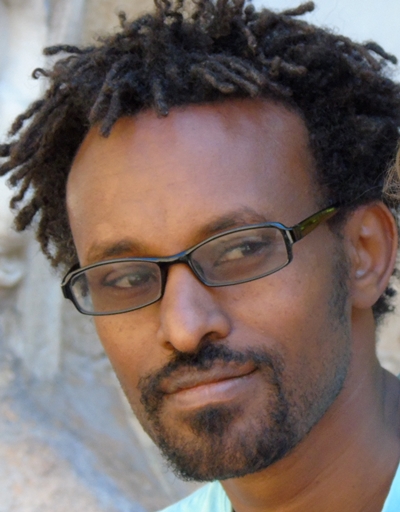


Fans of the Ethiopian masenqo player Getamesey Abebe were plunged into mourning following the death of the renowned instrumentalist on 17 April. He died aged 80 from a brain tumour.
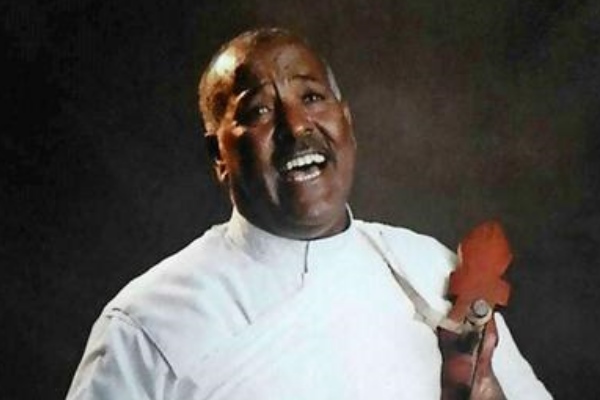
Getamesey is regarded as one of Ethiopia’s finest players and a key figure in the development of traditional music in the country. He was also a member of the influential yet long-dissolved Orchestra Ethiopia.
As a singer-songwriter in his own right, Getamesay will be remembered for his 36-year career at the Hager Fikir Theatre in Addis Ababa. He was a very melodic and accessible player, a master of the rhomboid-shaped wooden sound-box of the masenqo (an instrument with a long wooden neck bearing the tuning peg of a single string, played with a bow). He started at the age of six and played at weddings and various occasions before joining the Ethiopian National Theatre, where he enjoyed national recognition.
An admirer of esteemed composer, choreographer and conductor Tesfaye Lemma, Getamesay's reputation was cemented during the 1970s, when he joined Orchestra Ethiopia. Here he was able to demonstrate a forceful, highly rhythmic flair blending intricate harmonies with a tizita (reminiscence) style on his one-string fiddle.
Founded in 1963 at the Creative Arts Center of the then Haile Selassie (now Addis Ababa) University by Egyptian-born American composer and ethnomusicologist Halim El-Dabh, Orchestra Ethiopia begun as a forum for staging orchestral songs through traditional musical modes and instruments, which made it appealing for Getamesay and other like-minded musicians. Playing along with fellow members such as Tesfaye Lemma, Melaku Gelaw, Yohannes Afewerq and others, the folkloric dance company lasted for 13 years and the results of their musical collaborations are considered among the finest in the field. Under the direction of Tesfaye Lemma, Orchestra Ethiopia strived to be the lone representative folkloric group in the country and acted as archivists of the country’s own indigenous music. Solo musicians were recruited from different regions and played a pan-Ethiopian repertoire, performed both live in concert and on television.
In 1969, Getamesay accompanied Orchestra Ethiopia (re-christened the Blue Nile Group for the trip), on a concert tour of the USA, during which they performed in 20 cities, introducing the American public to Ethiopian music. The tour proved a great success, winning standing ovations and favourable comment from several newspapers, including the New York Times.
Orchestra Ethiopia released two LP recordings, one in 1969 and the other in 1973. In 2007, their old tracks were reissued by French label Buda Musique for the Ethiopiques series.
Tributes pour in for a mentor, colleague and friend
While playing with Orchestra Ethiopia, Getamesay met Peace Corps volunteer Charles Sutton, who would later become a major contributor to the legacy of the group. Sutton’s interest amazed Getamesay and he became a faithful pupil of masenqo. “I had never met anyone with such curiosity and willingness to learn,” Getamesay later said of Sutton. Even though Orchestra Ethiopia disbanded in 1975 and the members went their separate ways, Getamesay’s friendship with Sutton would survive and they re-united in 2007 to release a recording, entitled Zoro Gettem (reunion) along with Tesfaye Lemma (who passed away three years ago in exile after being confined to a nursing home for 13 years) and Melaku Gelaw.
“Getamesay holds a special place in my heart, both as the person who by teaching me to play the mesenko opened up to me 50 years ago the wonderful world of Ethiopian traditional music, and also as my faithful and beloved friend during all the time since,” wrote Sutton, who today performs as a jazz pianist in Connecticut in the US, following news of the death.
Another surviving member of the orchestra, Yohannes Afewerq, who specialized in washint (end-blown flute with finger holes), is today retired from the erchestra and living in Addis Ababa. He said the death of his long-time friend and associate saddened him greatly. “We’ve just been very, very close for a lot of years. He was remarkable for his pursuit of originality and openness to new ideas,” said Afewerq, who fondly recalled theirs tour to Kenya, Nigeria, the former Soviet Union and Italy and the many treasured souvenirs from those journeys.
Adugna Chekol, the current leader of the Yod Abyssinia Musical Group, worked at the Hager Fikir Theatre for 32 years under Getamesay. Chekol has a great deal of admiration and respect for the late artist and teacher, who he credits as his mentor and later a colleague who taught him the value of subtlety, both in his drumming and composing. “He meant so much to me in expanding my vocabulary and learning how to be musical,” recalled Chekol. “Getmamesay worked so hard. He was committed to his masenqo. It was an attachment that was hard to explain. He loved it. If one tried to take it and misplace it, he would be furious!”
Getamesay’s legacy was undoubtedly the masenqo. Though there were others who had played this instrument before him, there were not many who could match the lyricism and authentic earthiness of his style. Evidence of this is that in later years several of Getamesay’s melodies from his early years have turned out to be remarkably durable. Songs such as ‘Tizita’, ‘Yene Ayal’ and ‘Tiz Alegn Hager’ have survived to become popular standards today.


Most popular

Gambia: Suntou Susso announce UK tour for ‘The Path of a Griot’
09 Oct 2026

Top amapiano songs of 2026
16 Feb 2026

Top Afrobeats songs of 2026
19 Mar 2026
Open call: 2026 Gender@Work music industry training in Johannesburg
09 Oct 2026

Top Naija songs of 2026
31 Mar 2026

Deezer to let users filter out fully AI-generated music
14 Oct 2026
Disclaimer: Music In Africa provides a platform for musicians and contributors to embed music and videos solely for promotional purposes. If any track or video embedded on this platform violates any copyrights please inform us immediately and we will take it down. Please read our Terms of Use for more.

Subscribe to our monthly Newsletter
Follow us on social media


Please log in to post a comment.