












































NEFCISA
NEFCISA

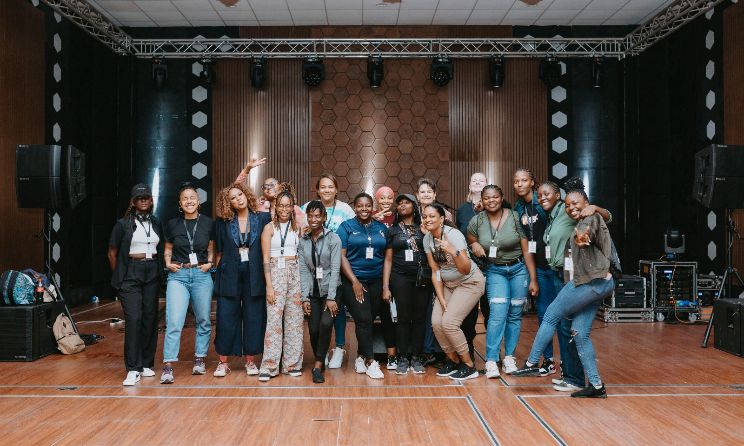
The Music In Africa Foundation (MIAF) is proud of its partnership with the Industrial Development Corporation (IDC) as a Strategic Implementing Partner (SIP) for its Social Employment Fund (SEF). Through this collaboration, MIAF is running a national programme that is creating jobs, addressing skills gaps, and strengthening South Africa's creative industries — in line with the SEF's overarching goal to generate work for the common good and build community value through employment, social contribution, and inclusive economic participation. Operating under the banner NEFCISA (National Employment Facility for Creative Industries in South Africa), the initiative is recruiting and training participants, matching them with host organisations, and has already placed 1 500 workers across the country — surpassing its original target of 1 000. NEFCISA is delivered through a network of 20 host organisations spanning five provinces, who are actively hosting participants and contributing to work for the common good across South Africa's creative and cultural industries. Key Objectives: Support employment and entrepreneurship in the creative industries. Offer skills development and training programmes. Foster partnerships between public and private creative sectors. Promote South African creativity at both provincial and national levels Foster community development through social contribution.

ACCES
ACCES

ACCES Conference and Showcase Festival is Africa's leading music industry gathering, bringing together the people shaping the future of the continent's music business. Artists, entrepreneurs, executives, investors, policymakers and cultural leaders from across Africa and around the world come to ACCES to build partnerships, exchange ideas, discover talent and create new business opportunities. Since its launch in 2017, ACCES has become the continent's premier platform for professional exchange and music market development. Combining a high-level conference with a curated showcase festival, networking, exhibitions and industry programmes, ACCES offers a unique space where creativity meets business and where African music connects with the global industry.

Gender@Work
Gender@Work

Music In Africa Gender @ Work is a three-year training programme aimed at upskilling and increasing the participation of female professionals in the African music sector. Launched by the Music In Africa Foundation (MIAF) in April 2019, the programme is connected to the MIAF’s ACCES music conference – a pan-African event held in a different African country every year. This connection enables the programme to reach new participants in a different African country every year. The programme marks the beginning of a more concerted effort by the Foundation to support the participation and inclusion of women in all facets of its programmes and the music sector in Africa as a whole. Over the three years, the programme will aim to address gender imbalances in the sector through training, lobbying, facilitating knowledge exchange and dialogues that foster the interest of women. The broader objectives of the programme are to: Provide industry training for women on critical music industry skills, focusing on: Stage management Electronic music production and recording Music business management Technical knowledge Provide an opportunity for both professional and aspiring women to benefit from the Music In Africa network and its broad range of activities in 2019, 2020 and 2021. Provide a solution-based platform in the form of a round table at ACCES with a view to identify challenges, discuss opportunities and lobby for the interests of female practitioners. Offer participants the opportunity to benefit from programmes offered by MIAF’s partners. Increase access to educational materials. Integrate participants in the broader ACCES programme to maximise experience and exposure to the industry. Record and present training materials on the www.musicinafrica.net, including but not limited to tutorials, templates and other best-practice materials. Communicate women-based themes that support the initiatives and messages of the programme. MAIN TRAINING ACTIVITIES Training in first country (Ghana): In the first year, participants will be trained on all aspects of stage management by a team of experienced stage managers from 10 to 17 November 2019. The programme will offer robust classroom training as well as practical, hands-on training in which participants will also be given the opportunity to manage various aspects of the ACCES performance programme. Training in second country: The second training iteration will take place at ACCES 2020 when the programme will diversify its course to include music production lessons and training on other music business topics. A round-table platform will also be introduced to coincide with the ACCES programme. Training in third country: The third training iteration will take place at ACCES 2021 in a different country, offering an advanced course. HOW DO YOU GET INVOLVED?  As a participant, facilitator or trainer: The programme enrolls up to 12 trainees every year. All opportunities are advertised publicly on this website, and will be added to this page. Please keep checking this page for new calls (below under UPDATES & CURRENT OPPORTUNITIES). As a partner Please contact Claire Metais at [email protected]. APPLY The call for applications for 2020 will be announced soon. The Music In Africa Gender @ Work programme is made possible with the support of the Prince Claus Fund, Siemens Stiftung and Goethe-Institut.

Sound Connects Fund
Sound Connects Fund

For cultural and creative practitioners and organisations operating in southern Africa, access to funding remains a major challenge. The COVID-19 pandemic has also had a massive impact on government policy, spending and the economy in general, and has seen spending on culture being moved further down the list of priorities. Further, the cultural and creative industries repeatedly cite four main areas where investment is needed for growth, which are increased visibility, mobility including access to new markets, finance and support structures.

Instrument Building And Repair Project

Experience the Vibrations African Instruments Exhibition online in 3D

News

EU launches in-depth probe into UMG’s planned acquisition of Downtown Music

22 Jul 2025 - 16:03

cc-img

The European Commission (EC) has opened a full-scale Phase II investigation into Universal Music Group’s (UMG) proposed $775 million acquisition of Downtown Music Holdings, citing concerns about potential harm to competition in Europe’s music distribution and artist services sectors.
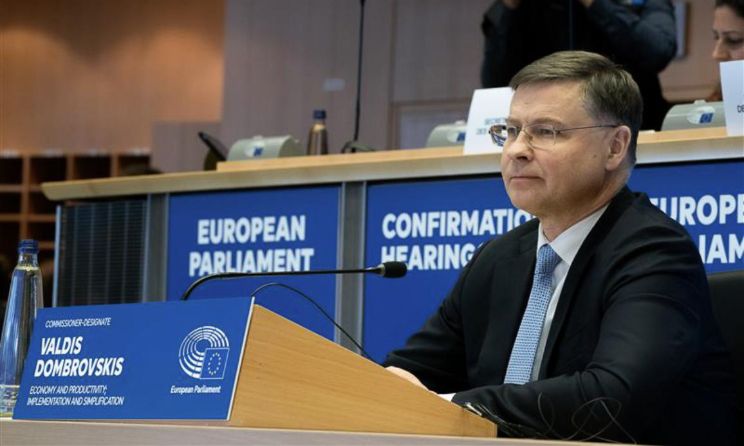
EC Commissioner Valdis Dombrovskis (pictured) said UMG’s takeover of Downtown risks removing a key competitor in label and artist services.

In a statement released on 22 July, the Commission said it had “preliminary concerns that the transaction may allow UMG to reduce competition in the wholesale market for the distribution of recorded music in the European Economic Area (EEA) by acquiring commercially sensitive data of its rival record labels.”

It also expressed concern that UMG’s takeover of Downtown “may allow [it] to reduce competition in the market for the supply of artist and label services in the EEA by removing an important competitive force.”

UMG’s Virgin Music Group first announced the deal in December 2024, and formally notified the EC last month. An initial 25-day Phase I review concluded on 22 July, leading to the announcement of a more extensive 90-working-day Phase II inquiry. The Commission now has until 26 November 2025 to reach a final decision, although it notes that “the opening of an in-depth inquiry does not prejudge the outcome of the investigation.”

A UMG spokesperson responded in a statement to Music Business Worldwide: “Virgin Music Group today received notice from the European Commission that it will open a Phase II investigation into Virgin’s previously announced acquisition of Downtown Music Holdings. A Phase II review is a customary part of the Commission’s merger review process in those cases where initial concerns about a transaction’s effects have not been resolved during Phase I.”

They added: “We remain confident that the combination of Virgin and Downtown will create an improved offering in the growing and highly competitive label services category that currently consists of roughly 100 companies, one that will provide a wide range of services to help independent artists, labels and entrepreneurs achieve their commercial and creative goals.

“We look forward to continuing to work constructively with the Commission to convey the benefits this transaction will bring to the independent community, as well as to address the wilful misrepresentation of market data by self-interested parties who represent a tiny fraction of the thousands of independent labels that make up the independent community globally. Our initial projected timeframe for the completion of the transaction remains unchanged.”

According to the Commission, a Phase II investigation involves “an in-depth analysis of the merger’s effects on competition” and is only opened when issues cannot be resolved in Phase I. The EC has the option to extend the 90-day deadline by 15 or 20 working days if required.

While most merger cases (over 90%) are settled during Phase I without remedies, less than 10% proceed to Phase II. At the conclusion of the process, the Commission may approve the deal (with or without conditions) or prohibit it outright if competition concerns are not sufficiently addressed.

Although the UMG-Downtown deal did not meet the EU’s standard turnover thresholds to trigger an automatic review, it met national thresholds in the Netherlands and Austria. This led to the Netherlands invoking Article 22 of the EU Merger Regulation, with Austria joining the referral, prompting the EC to take up the case.

The EC stated that its preliminary findings “indicate that the transaction may allow UMG to acquire upstream commercially sensitive data of its rival record labels” and that “UMG would likely have the ability and incentive to use commercially sensitive data of third-party record labels for its own business activities notably related to recorded music.”

Commenting on the investigation, Valdis Dombrovskis, the EC’s commissioner for economy and productivity; implementation and simplification, said: “By acquiring Downtown, UMG would purchase a large provider of services for labels that compete with UMG and for artists.

Opening an in-depth investigation will allow us to assess more carefully whether this acquisition would have a negative impact on artists, labels and, ultimately, European consumers.”

The proposed acquisition has sparked debate across the global music industry. Earlier this month, Virgin Music Group leaders condemned what they called “juvenile and offensive falsehoods” from critics of the deal. A letter signed by over 200 individuals, including staff from Beggars Group and Secretly Group, objected to the acquisition, while the European Composer & Songwriter Alliance (ECSA) issued an open letter to the EC on 2 July urging it to block the merger.

As the Commission’s inquiry continues behind closed doors, the music world will closely watch how Europe’s regulators weigh the balance between market consolidation and competition in a rapidly evolving industry.

Please log in to post a comment.

Most popular

Disclaimer: Music In Africa provides a platform for musicians and contributors to embed music and videos solely for promotional purposes. If any track or video embedded on this platform violates any copyrights please inform us immediately and we will take it down. Please read our Terms of Use for more.

newsletter banner

Subscribe to our monthly Newsletter

Follow us on social media