




































NEFCISA
NEFCISA

The Music In Africa Foundation (MIAF) is proud of its partnership with the Industrial Development Corporation (IDC) as a Strategic Implementing Partner (SIP) for its Social Employment Fund (SEF). Through this collaboration, MIAF is running a national programme that is creating jobs, addressing skills gaps, and strengthening South Africa's creative industries — in line with the SEF's overarching goal to generate work for the common good and build community value through employment, social contribution, and inclusive economic participation. Operating under the banner NEFCISA (National Employment Facility for Creative Industries in South Africa), the initiative is recruiting and training participants, matching them with host organisations, and has already placed 1 500 workers across the country — surpassing its original target of 1 000. NEFCISA is delivered through a network of 20 host organisations spanning five provinces, who are actively hosting participants and contributing to work for the common good across South Africa's creative and cultural industries. Key Objectives: Support employment and entrepreneurship in the creative industries. Offer skills development and training programmes. Foster partnerships between public and private creative sectors. Promote South African creativity at both provincial and national levels Foster community development through social contribution.

ACCES
ACCES

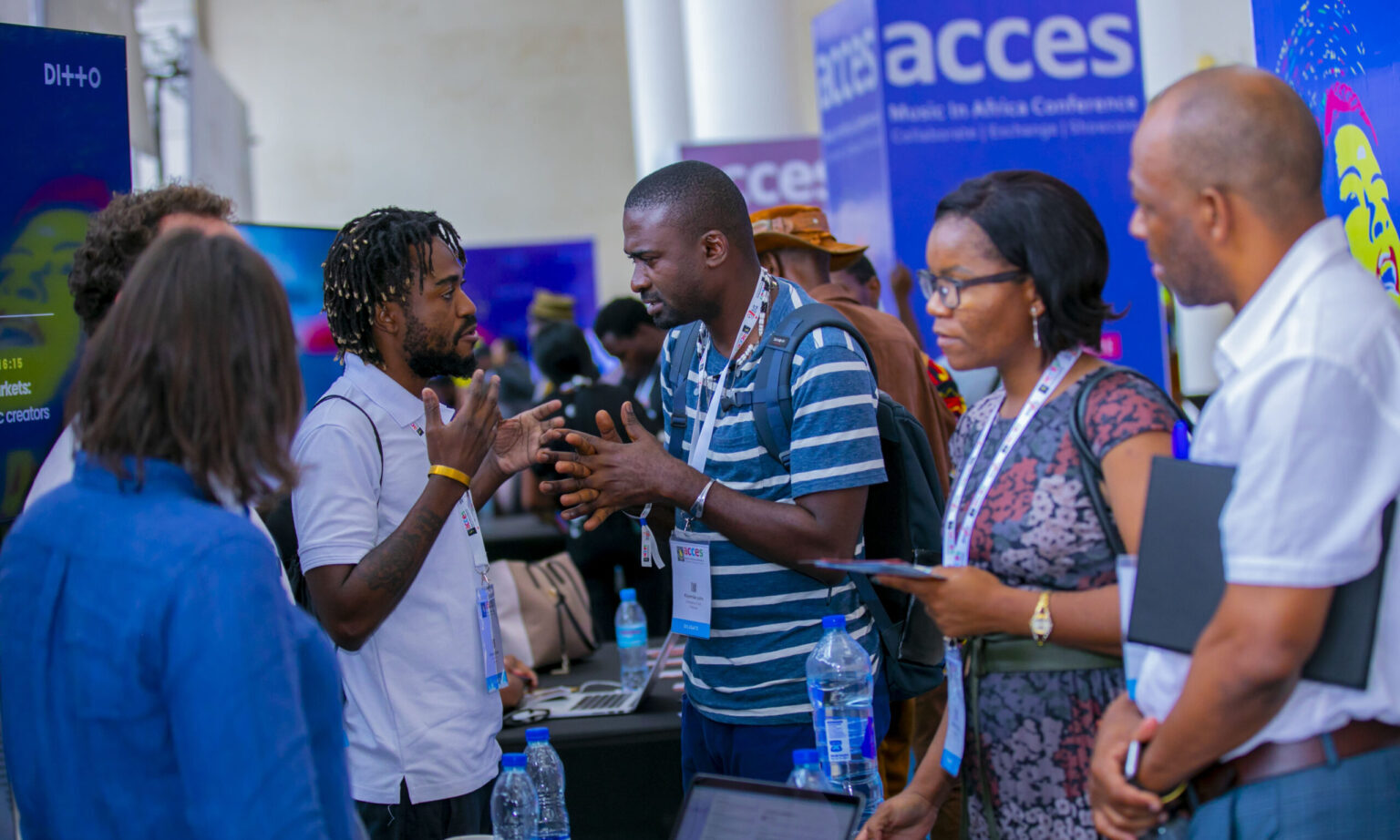
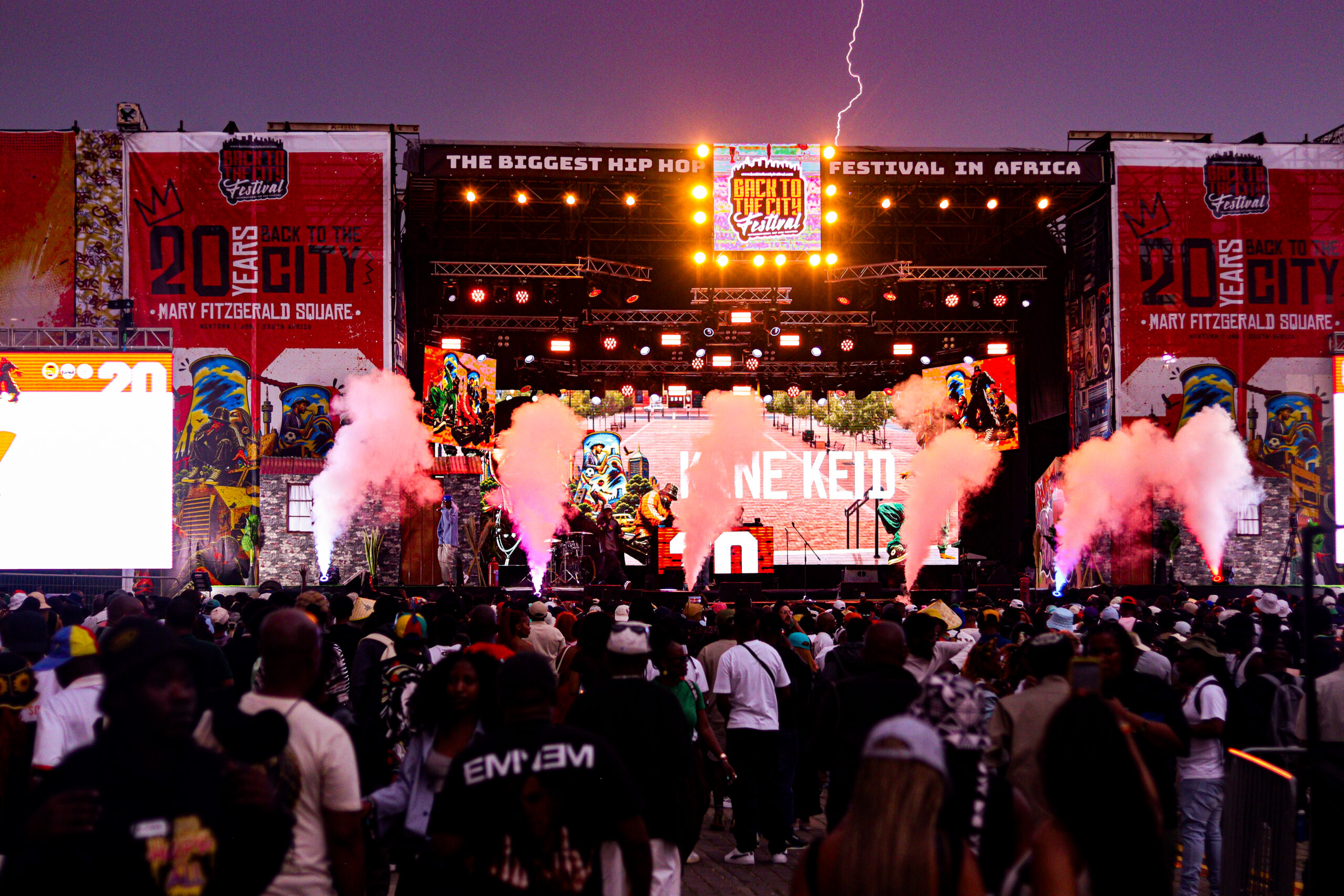
ACCES Conference and Showcase Festival is Africa's leading music industry gathering, bringing together the people shaping the future of the continent's music business. Artists, entrepreneurs, executives, investors, policymakers and cultural leaders from across Africa and around the world come to ACCES to build partnerships, exchange ideas, discover talent and create new business opportunities. Since its launch in 2017, ACCES has become the continent's premier platform for professional exchange and music market development. Combining a high-level conference with a curated showcase festival, networking, exhibitions and industry programmes, ACCES offers a unique space where creativity meets business and where African music connects with the global industry.

Gender@Work
Gender@Work

Music In Africa Gender @ Work is a three-year training programme aimed at upskilling and increasing the participation of female professionals in the African music sector. Launched by the Music In Africa Foundation (MIAF) in April 2019, the programme is connected to the MIAF’s ACCES music conference – a pan-African event held in a different African country every year. This connection enables the programme to reach new participants in a different African country every year. The programme marks the beginning of a more concerted effort by the Foundation to support the participation and inclusion of women in all facets of its programmes and the music sector in Africa as a whole. Over the three years, the programme will aim to address gender imbalances in the sector through training, lobbying, facilitating knowledge exchange and dialogues that foster the interest of women. The broader objectives of the programme are to: Provide industry training for women on critical music industry skills, focusing on: Stage management Electronic music production and recording Music business management Technical knowledge Provide an opportunity for both professional and aspiring women to benefit from the Music In Africa network and its broad range of activities in 2019, 2020 and 2021. Provide a solution-based platform in the form of a round table at ACCES with a view to identify challenges, discuss opportunities and lobby for the interests of female practitioners. Offer participants the opportunity to benefit from programmes offered by MIAF’s partners. Increase access to educational materials. Integrate participants in the broader ACCES programme to maximise experience and exposure to the industry. Record and present training materials on the www.musicinafrica.net, including but not limited to tutorials, templates and other best-practice materials. Communicate women-based themes that support the initiatives and messages of the programme. MAIN TRAINING ACTIVITIES Training in first country (Ghana): In the first year, participants will be trained on all aspects of stage management by a team of experienced stage managers from 10 to 17 November 2019. The programme will offer robust classroom training as well as practical, hands-on training in which participants will also be given the opportunity to manage various aspects of the ACCES performance programme. Training in second country: The second training iteration will take place at ACCES 2020 when the programme will diversify its course to include music production lessons and training on other music business topics. A round-table platform will also be introduced to coincide with the ACCES programme. Training in third country: The third training iteration will take place at ACCES 2021 in a different country, offering an advanced course. HOW DO YOU GET INVOLVED?  As a participant, facilitator or trainer: The programme enrolls up to 12 trainees every year. All opportunities are advertised publicly on this website, and will be added to this page. Please keep checking this page for new calls (below under UPDATES & CURRENT OPPORTUNITIES). As a partner Please contact Claire Metais at [email protected]. APPLY The call for applications for 2020 will be announced soon. The Music In Africa Gender @ Work programme is made possible with the support of the Prince Claus Fund, Siemens Stiftung and Goethe-Institut.

Sound Connects Fund
Sound Connects Fund

For cultural and creative practitioners and organisations operating in southern Africa, access to funding remains a major challenge. The COVID-19 pandemic has also had a massive impact on government policy, spending and the economy in general, and has seen spending on culture being moved further down the list of priorities. Further, the cultural and creative industries repeatedly cite four main areas where investment is needed for growth, which are increased visibility, mobility including access to new markets, finance and support structures.

Instrument Building And Repair Project

Experience the Vibrations African Instruments Exhibition online in 3D

Features

Four Kenyan musicals that should return to stage

27 Feb 2017 - 16:05

cc-img flag-img

La La Land may have been awkwardly dethroned as winner of the Best Picture category at the 2017 Oscars but the musical is on everybody’s lips. Touted as “a work of sublime artifice”, “an irresistible excess of heart” and “a sun-drenched musical masterpiece”, Damien Chazelle’s film comes at a time when the US needs a ray of sunshine, a break from the bleak, dreary political and social realities of the day. And what better way to let your hair down than with a dreamy musical?
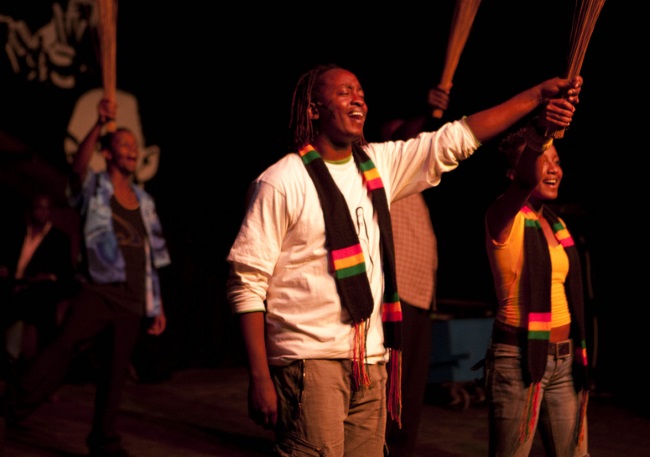
Eric Wainaina leads the cast of his production, Mo Faya. Photo: Flickr

Since it is election year in Kenya, let’s take a breather from politics and look at four original musicals that should return.

Luanda – Man of Stone
This musical rendition of the popular folk legend of Luanda Magere, the mighty warrior from the Luo community, was staged in 2003 in Nairobi to critical acclaim. Gowi Odera starred as Luanda while June Gachui played his first wife and Karimi Rimbui his second. Luanda is said to have had a body of stone and it was not until his second wife discovered his weakness – that his shadow would bleed if pierced – and betrayed him that his enemies defeated him in battle. He turned to stone, and the stone is a tourist attraction today.

It was produced by Sterling Quality and the music done by popular contemporary artist Eric Wainaina. Jazz pianist Aaron Rimbui was part of the band. It is by far one of the best shows to have graced the Kenya National Theatre stage, with excellent acting by a powerful cast and original music that blended folklore, contemporary styles and sometimes humour.

Mo Faya
This gritty explosion of colour, dance, reggae music and slum life was the first Kenyan production to go to Broadway. In 2009 it was staged at the New York Musical Theatre Festival. Singer Eric Wainaina’s brain child, Mo Faya left audiences laughing and crying all at once. Wainaina's song 'Nchi Ya Kitu Kidogo' is a powerful indictment of corruption and the musical was a moving story of the preying “investor” who seeks to defraud a community and steal their land, a common occurrence in Kenya.

But it was also the story of a slum community that though ravaged by poverty has strong ties. Directed by veteran thespian John Sibi-Okumu, the musical brought on stage some of Kenya’s finest talents including Mumbi Kaigwa, Dan Aceda, Wainaina as the lead actor DJ Lwanda and Valerie Kimani. On the instruments were Ricky na Marafiki band.

Out of Africa – Safari Through Musical Kenya
This promotional musical was a collaboration between Kenya Tourism Board, Peter Ultee Productions and Meerkat Productions, and toured the world in 2012, selling Kenya as a magical tourist destination. Written and executed in the epic style of South Africa’s seminal musical, Africa Umoja – The Spirit of Togetherness, this show ran a thread through Kenya’s heritage – both ancient and contemporary. It was a colourful performance with diverse music styles from different tribes.

It also featured a star-studded cast with the likes of Peter King, Charles Ouda, Anto Neosoul and Mkamzee Mwatela, who in 2003 played Sarafina in the self-titled musical.

Mekatilili the Musical
In this musical, Spellcast Media told the story of Mekatilili wa Menza, a woman leader who led the Giriama community in a rebellion against the British colonial administration between 1913 and 1914. The British levied forced labour on the locals, disregarded their systems of government and put their own stooges in charge while desecrating their cultural symbols. They called Mekatilili a witch for dancing ‘kifudu’, the ecstatic death dance through which she passed on messages from ancestral spirits to the people, encouraging them not to fear and not to give in.

The show dazzled with its energetic choreographed dances, mellow coastal rhythms, supernatural manifestations and its creative licence twist, where heroes from other Kenyan communities came to the aid of the heroine, thus bringing in an eclectic range of music and costumes. It is a story of strength, betrayal, pain, loss and eventual triumph.

Please log in to post a comment.

Most popular

Disclaimer: Music In Africa provides a platform for musicians and contributors to embed music and videos solely for promotional purposes. If any track or video embedded on this platform violates any copyrights please inform us immediately and we will take it down. Please read our Terms of Use for more.

newsletter banner

Subscribe to our monthly Newsletter

Follow us on social media