













































Interview: Sony Music Entertainment Africa MD Sean Watson

25 Aug 2022 - 11:13


Sony Music Entertainment Africa (SMEA) has been doing a lot of work lately amid the burgeoning African music industry, recently adding emerging African artists including Gyakie, 25K, Emotionz DJ, Ferre Gola, R.O.Z and Abby Chams to its roster.
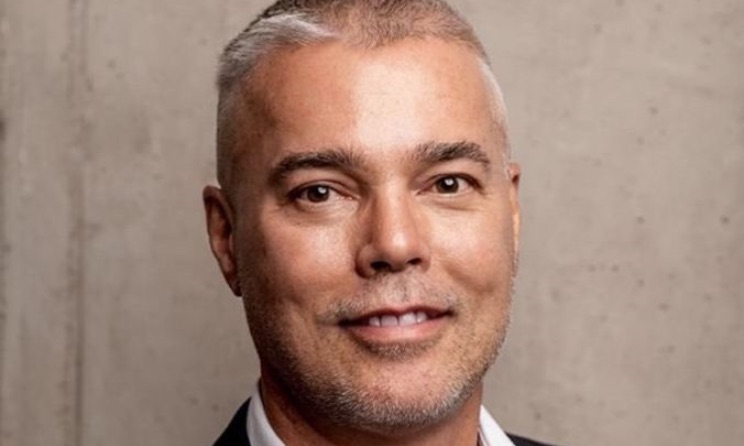
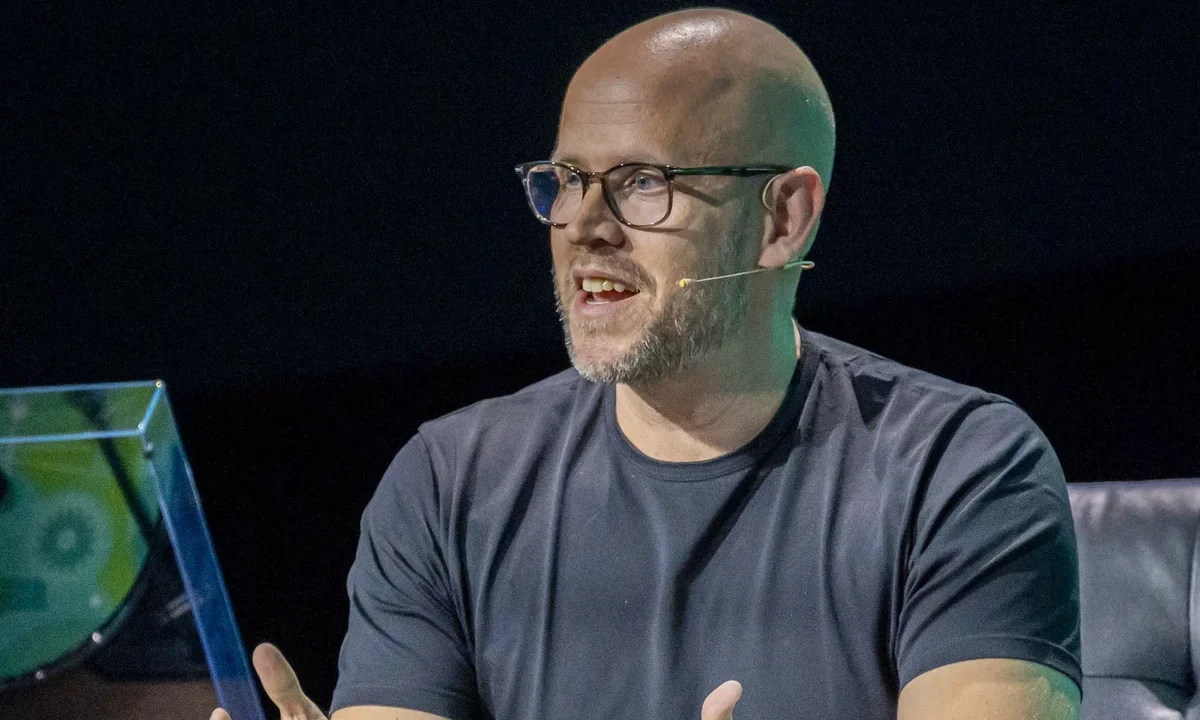
Headquartered in Johannesburg, South Africa, the music company has expanded its operations in other African regions including West and East Africa. SMEA managing director Sean Watson, who joined the company as an executive director in 2009, has played a significant role in signing new talent and aligning Sony Music Africa’s operations to the technological explosion in the music business.
Music In Africa caught up with Watson to speak about his vision for the label, the company’s social projects and the disruption occasioned by the COVID-19 pandemic, among others.
MUSIC IN AFRICA: Since joining the label, what have been your long-term goals, and how have you accomplished them?
SEAN WATSON: I joined Sony Music in 2009 as an executive director and spent most of my time overseeing the music plans in Africa for the 2010 FIFA World Cup project including the official song ‘Waka Waka’. When I took over from my predecessor in 2011 as managing director, the primary long-term goal from the outset of my tenure was to develop Sony Music’s business in sub-Saharan Africa outside of our then single operation in South Africa. We started signing local talent in new African markets where we could offer our services to them as a record company with global reach and in-depth experience, and set about forming business partnerships and hiring people to grow organically.
Our first-mover approach had us setting up operations in West Africa as early as 2014, signing Davido and Wizkid to ground-breaking deals in partnership with some of Sony Music’s UK and US labels as far back as 2016 and following suit in East Africa by signing Rose Muhando, Redsan and Alikiba. In South Africa, we acquired local label Select Musiek and further strengthened our investment in the local South African repertoire by signing then new artists AKA, Kwesta, Shekhinah, Black Motion, Zakwe, The Soil and the more established Zonke.
Today, a rapidly growing Sony Music West Africa operation in Lagos, Nigeria, boasts a healthy roster of recording artists that includes Mayorkun, Gyakie, Dice Ailes, SARZ, Davido and Wizkid. Most recently, Turntable Charts rated Sony Music the No 1 label in Nigeria, an accolade thanks to hard work from our amazing Lagos team in collaboration with colleagues around the world. We’ve also enjoyed incredible local success with Nigerian artists signed abroad like Ruger [Columbia Records UK] and Jae5 [Black Butter] and partnered with B1 Recordings in Germany to sign the viral hit ‘Ameno Amapiano’. Last year we appointed Christine Mosha to accelerate the development of our East African business out of Tanzania. She is developing a local roster that already includes Aslay, Young Lunya, Ommy Dimpoz and talented young newcomer Abigail Chams.
In South Africa we’re forging new ventures, such as with New Money Gang, Black is Brown Entertainment and Piano Hub. Artists like Mr JazziQ, Mellow & Sleazy, Venom, 25K and Phila Dlozi have also joined Sony Music, while existing artists Mlindo the Vocalist, Sha Sha and Shekhinah have continued to be at the forefront of the South African local music scene.
All of our efforts in Africa have been driven by the great people that work here. As we’ve grown and expanded, we have prioritised efforts to drive diversity, equity and inclusion in the business, building a new pipeline of talent to support the variety of different artists that have joined us and making Sony Music a truly great place to work. We’ve also been conscious about balancing our presence with the communities we work in by investing and giving back to the community through initiatives like Sony Music Group Global Social Justice Fund.
What is the company culture like at Sony Music Entertainment Africa?
Sony Music is a people-centric business that invests in building a culture which fosters creativity, collaboration and innovation. We are committed to being a safe space for employees from diverse backgrounds and to being as inclusive as possible, providing as many comfortable and artist friendly engagement points as we can for our partners in music, as well as a collaborative environment for our teams. We continuously work on internal dialogue about our organisational culture, facilitating discussion as well as a series of programmes and workshops designed to bring us closer to understanding one another and our individual and collective needs, despite the different backgrounds we all come from.
Recently, we moved into new offices in Johannesburg that, through innovative and creative design, provides a work environment that inspires our teams to deliver exceptional creative work. We’ve also just acquired magnificent new office space in Lagos that will be just as fantastic to work in as our new Johannesburg space. This focus on making Sony Music a great place to work is also reflected in the work underway at a global level. For example, in 2020, we launched a Global Employee Assistance Programme, which covers all our employees across the African continent too.
However, it’s not just about employees, it’s also about extending that culture of openness, support and transparency to our artists. That’s why we launched Artists Forward, a global initiative prioritising transparency and support for our music creators in all aspects of their development. Artists Forward is very much an evolving initiative and part of our ambition to always put our artists first.
What challenges are you facing as Sony Music Entertainment Africa and what measures have you put in place to overcome them?
Competition continues to increase as streaming evolves and grows in Africa. There’s more choice than ever before for artists as Africa integrates more firmly with the worldwide music market and deals flow in from all over the planet. In a competitive deal-making environment, it’s important to provide value-added and unrivalled services that draw on our transcontinental and global reach to support artists across Africa.
An absence of robust music industry data in many African markets continues to restrict growth in some ways. However, Sony Music’s investment in data and analytics tools provides us and our artist with a lot more data than is commonly available and allows us to work off unique insights that are a strong competitive advantage.
The massive growth in the amount of music available to fans for streaming on digital service provider [DSP] platforms means that it’s becoming harder and harder for artists to stand out. As a result, our focus has been to engage with these platforms as a valued partner through our expert partner management teams as early as possible to reap big rewards for our artists down the line. As we find space and positioning for our local artists, it also means that we’re opening up what we are doing in Africa to the rest of the world, which can now see in real time what’s going on in the African streaming ecosystem. We are part of an ecosystem that allows music fans to discover listen and share music from anywhere at any time. There is no passport required for music in today’s digitally connected world.
How has the COVID-19 pandemic affected Sony Music Entertainment Africa’s operations?
COVID-19 taught us a lot about ourselves and just how resilient we can be under pressure. I’m grateful to be in a business that proved to be relatively resilient in terms of the virus’ impact on our ability to operate, but I’m even more grateful to work for a company that cares and a company that single-mindedly chose to put its people first during the torrid time of our course through the pandemic.
We’ve come through the trials of COVID-19 having learnt how to adapt to global challenges that are beyond our control. Although we were able to translate most of what we do into an online, remote-working version, our business is about people and relationships, and being physically apart from each other and our artists put strain on areas like A&R and marketing. We’re happy to be back to almost normal and to be able to meet, enjoy and create great music and plans together with our artists again.
Ultimately, coming out of the pandemic, we see good potential for growth in Africa. Streaming is at the heart of our business, and we’ve got an incredible roster of local artists who partner with us to find new ways to co-create a share of the space available in streaming for them. Our team is focused on providing the right kind of setup for repertoire to maximise the impact on a very large marketplace and they are exceptional at it, benchmarking our digital marketing work in Africa alongside our international colleagues. Africa is evolving fast as a digital marketplace and we expect a lot of innovation still to come out of our unique environment, as well as strong growth, for a while to come.
What differentiates Sony Music Entertainment Africa and Sony Music Publishing?
Sony Music Entertainment [SME] and Sony Music Publishing [SMP] are two independently operating companies, with different management and teams and very different roles in the music value chain. SMP represents the songwriters and their songs, while we represent recording artists. As a result, the rosters of the two different companies are substantially different. This gives artists more options and choice about how they want to split the work in generating strong returns for their recorded music and their songwriting.
What factors do you consider before signing an artist to Sony Music Entertainment Africa?
A healthy mix of talent, momentum and relevance. There’s no single solution and each signing we undertake has a different combination of the aforementioned metrics, all of which combine uniquely to make each deal we do a fit for both us and the artist in question. There are an array of talent indicators, from vocal ability to writing, performance and innovation. Momentum can be measured by considering where the impact is being made by the artist and what level it’s being achieved against the contextual benchmarks in spaces like DSPs, social media, charts, video streaming platforms, live circuits, traditional media and so forth.
Relevance comes from contemplating the demand in certain geographies, genres and scenes and how well the artist is positioned to be relevant to the audiences in those spaces, including future audiences in growing areas. Sony Music has a powerful set of tools that allow us to gather data and insights that assist us with making a lot of the decisions we make but ultimately, we rely on the A&R specialists in our organisation who combine their expertise with instinct and data driven insights to arrive at decisions.
What tech has your organisation employed to advance its operations within the recorded music industry?
The music industry is undergoing a huge transformation driven by technology, data and analytics, which now play a vital role in all phases of our business globally. Our role is to help artists predict future music trends, empower them with easy access to the insightful data needed to guide their activities and partner with them to help provide new opportunities for them to gain more financial value from their creations and build deeper relationships with their fans.
To do this, at a global level we are building value-added services for artists including premium content and podcasting production, brand deal business development, and merchandising services, while also expanding our network of owned studios, growing our live and ticketing relationships, adding artist management hubs and supporting artist-led ventures. I’ve also found that being part of the Sony family has been a huge differentiator for our artists, creating commercial, promotional and creative opportunities spanning gaming, film and TV, and electronics.
The metaverse or immersive technology, while still in its infancy, is certainly one of the biggest opportunities emerging for artists. Music is fundamental to everything, so as virtual worlds are built, music will be critical to that experience. Sony Music at a global level sees massive business value and possibilities in this space and has been building up our digital capabilities to help our artists identify and capture the relevant opportunities.
In June this year, Sony Music Group launched a Global Scholars Programme, which is designed to provide scholarships for students around the world. How can African students who are studying music or music business-related fields access this scholarship and how long will this project run for?
We were delighted to announce our Global Scholars Programme last month, which aims to provide opportunities for the music industry’s next generation of global leaders to bring diverse perspectives to corporations, artists, songwriters and composers. The music industry is a fantastic place to work, and we want to open up access to careers for people around the world of all backgrounds. This scholarship is open to students pursuing full time undergraduate degree programmes in music business-related fields of study at accredited educational institutions in Africa and around the world.
Which other programmes does Sony Music run to give back to the community?
In June 2020, we launched our $100m Sony Music Group Global Social Justice Fund, to support communities and help address structural inequality for lasting change. To date, we have donated to more than 400 organisations spanning more than 60 countries.
For our part, in Africa we have launched a number of initiatives as part of the fund. A personal favourite of mine has been Digify Africa, which provides people from disadvantaged backgrounds the opportunity to work at Sony Music Africa in three-month rotations to help address low digital literacy levels in South Africa and on the continent. We also partner with non-profit pan-African women empowerment platform the Women of Music Business (WOMB) to launch a new masterclass training programme, supporting women working in the African music industry and helping to build the next generation of senior female music executives on the continent.
We will also be launching two other charity projects due to launch this summer, designed to provide assistance, education and a safe space for at-risk youths through music and creative entrepreneurship across South Africa.


Most popular

Top amapiano songs of 2026
16 Feb 2026

Top Afrobeats songs of 2026
19 Mar 2026
AFRIMA 2026: All the winners
12 Jan 2026
Open call: Goethe-Institut grants for Southern African creatives
08 Sep 2026

Top Naija songs of 2026
31 Mar 2026

Call For Applications : ACCES seeks a UK-based performer
10 Sep 2026
Sun-El Musician confirmed for ACCES 2026 in Joburg
15 Sep 2026
Disclaimer: Music In Africa provides a platform for musicians and contributors to embed music and videos solely for promotional purposes. If any track or video embedded on this platform violates any copyrights please inform us immediately and we will take it down. Please read our Terms of Use for more.

Subscribe to our monthly Newsletter
Follow us on social media


Please log in to post a comment.