





































NEFCISA
NEFCISA

The Music In Africa Foundation (MIAF) is proud of its partnership with the Industrial Development Corporation (IDC) as a Strategic Implementing Partner (SIP) for its Social Employment Fund (SEF). Through this collaboration, MIAF is running a national programme that is creating jobs, addressing skills gaps, and strengthening South Africa's creative industries — in line with the SEF's overarching goal to generate work for the common good and build community value through employment, social contribution, and inclusive economic participation. Operating under the banner NEFCISA (National Employment Facility for Creative Industries in South Africa), the initiative is recruiting and training participants, matching them with host organisations, and has already placed 1 500 workers across the country — surpassing its original target of 1 000. NEFCISA is delivered through a network of 20 host organisations spanning five provinces, who are actively hosting participants and contributing to work for the common good across South Africa's creative and cultural industries. Key Objectives: Support employment and entrepreneurship in the creative industries. Offer skills development and training programmes. Foster partnerships between public and private creative sectors. Promote South African creativity at both provincial and national levels Foster community development through social contribution.

ACCES
ACCES

ACCES Conference and Showcase Festival is Africa's leading music industry gathering, bringing together the people shaping the future of the continent's music business. Artists, entrepreneurs, executives, investors, policymakers and cultural leaders from across Africa and around the world come to ACCES to build partnerships, exchange ideas, discover talent and create new business opportunities. Since its launch in 2017, ACCES has become the continent's premier platform for professional exchange and music market development. Combining a high-level conference with a curated showcase festival, networking, exhibitions and industry programmes, ACCES offers a unique space where creativity meets business and where African music connects with the global industry.

Gender@Work
Gender@Work

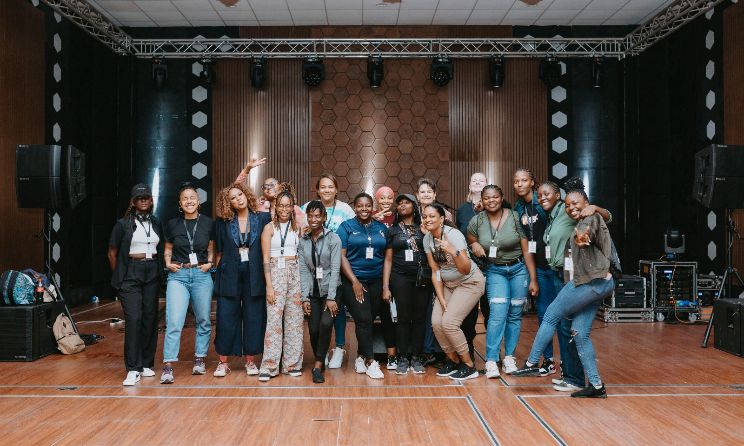
Music In Africa Gender @ Work is a three-year training programme aimed at upskilling and increasing the participation of female professionals in the African music sector. Launched by the Music In Africa Foundation (MIAF) in April 2019, the programme is connected to the MIAF’s ACCES music conference – a pan-African event held in a different African country every year. This connection enables the programme to reach new participants in a different African country every year. The programme marks the beginning of a more concerted effort by the Foundation to support the participation and inclusion of women in all facets of its programmes and the music sector in Africa as a whole. Over the three years, the programme will aim to address gender imbalances in the sector through training, lobbying, facilitating knowledge exchange and dialogues that foster the interest of women. The broader objectives of the programme are to: Provide industry training for women on critical music industry skills, focusing on: Stage management Electronic music production and recording Music business management Technical knowledge Provide an opportunity for both professional and aspiring women to benefit from the Music In Africa network and its broad range of activities in 2019, 2020 and 2021. Provide a solution-based platform in the form of a round table at ACCES with a view to identify challenges, discuss opportunities and lobby for the interests of female practitioners. Offer participants the opportunity to benefit from programmes offered by MIAF’s partners. Increase access to educational materials. Integrate participants in the broader ACCES programme to maximise experience and exposure to the industry. Record and present training materials on the www.musicinafrica.net, including but not limited to tutorials, templates and other best-practice materials. Communicate women-based themes that support the initiatives and messages of the programme. MAIN TRAINING ACTIVITIES Training in first country (Ghana): In the first year, participants will be trained on all aspects of stage management by a team of experienced stage managers from 10 to 17 November 2019. The programme will offer robust classroom training as well as practical, hands-on training in which participants will also be given the opportunity to manage various aspects of the ACCES performance programme. Training in second country: The second training iteration will take place at ACCES 2020 when the programme will diversify its course to include music production lessons and training on other music business topics. A round-table platform will also be introduced to coincide with the ACCES programme. Training in third country: The third training iteration will take place at ACCES 2021 in a different country, offering an advanced course. HOW DO YOU GET INVOLVED?  As a participant, facilitator or trainer: The programme enrolls up to 12 trainees every year. All opportunities are advertised publicly on this website, and will be added to this page. Please keep checking this page for new calls (below under UPDATES & CURRENT OPPORTUNITIES). As a partner Please contact Claire Metais at [email protected]. APPLY The call for applications for 2020 will be announced soon. The Music In Africa Gender @ Work programme is made possible with the support of the Prince Claus Fund, Siemens Stiftung and Goethe-Institut.

Sound Connects Fund
Sound Connects Fund

For cultural and creative practitioners and organisations operating in southern Africa, access to funding remains a major challenge. The COVID-19 pandemic has also had a massive impact on government policy, spending and the economy in general, and has seen spending on culture being moved further down the list of priorities. Further, the cultural and creative industries repeatedly cite four main areas where investment is needed for growth, which are increased visibility, mobility including access to new markets, finance and support structures.

Instrument Building And Repair Project

Experience the Vibrations African Instruments Exhibition online in 3D

Features

MAUS’ Mark Stent talks about new SA airplay tracking tool

31 Mar 2022 - 13:10

cc-img flag-img

Last week’s introduction of radio-focused monitoring service Music Audit Usage System (MAUS) was welcomed by South African independent musicians and labels, who believe it will help them get their dues in terms of music royalties. The tool’s ability to report radio and TV airplay while calculating the royalties owed to musicians makes it the only digital platform of its kind in South Africa. More importantly, the service is expected to collect “every cent of royalties due” for local musicians.

MAUS co-founder Mark Stent.

MAUS says it offers users a simple and transparent way for composers, artists, labels and publishers to closely monitor airplay of their songs and resulting revenues, allowing them to interrogate pay-outs from collective management organisations (CMOs). The service relies on British data company Radiomonitor to collect airplay information, then uses it to calculate royalties owed based on each radio station’s predetermined usage rate. MAUS offers three subscription tiers and does not take a cut from artists’ royalties.

Another important feature is the option to populate a song’s credits on splits sheets while uploading it for free before distribution. This minimises the possibility of tracking issues during the royalty collection process or risking unpaid royalties. Irregular and unpaid royalty collections due to inaccurate or missing metadata has been a challenge in the music industry for some time.

MAUS boasts a team of seasoned music pros, including DJ and mathematical statistician Mark Stent, Audlytics owner and Radiomonitor South Africa manager Jarrod Assenheim as well as Gresham Rights Management’s Andrew Mitchley and Larry Gresham. With the tool, which is quickly picking up steam, the execs are making a joint effort to tackle and resolve metadata and royalty collection woes in the South African music industry.

Music In Africa spoke to Stent to learn more about the new music auditing tool.

MUSIC IN AFRICA: Can you briefly tell us more about how MAUS works and the technology that it uses?

MARK STENT: We use fingerprint and detection technology from Radiomonitor SA, which is the industry standard in this format. We have a huge catalogue and monitor radio and TV 24 hours a day. Each song that’s detected is reported within the system and the correct revenue allocated according to each station’s usage rates, durations or spins. This is in line with the respective CMO, and the reporting is accurate and near real-time.

How precise is MAUS and can it track radio plays globally?

The reporting is highly accurate. Radiomonitor is a global leader in broadcast monitoring, reporting from 120 countries and thousands of the top radio stations globally. MAUS only reports on South African usage at this time, but we will be launching a new phase to expand to other territories in the coming months.

In terms of reporting data and insights, what are some of the differences between MAUS and analytics and royalty tracking services offered by digital service providers [DSPs]?

MAUS is the only platform that reports usage on radio. We also provide a free service that allows users to upload their tracks and assign the composer and publisher rights and associated metadata and then create splits agreements, which are then verified by each composer and signed digitally. This is not available on Spotify or other DSPs. This is an important part of the creative process. Artists can enter their metadata at source and ensure that it’s correct before it gets distributed, where it can get lost in the various stages due to loss of royalty income. They will also get one song to monitor at no cost.

When will MAUS start reporting data from music streaming platforms?

This is part of our roadmap and we intend to do so in the next 12 months. MAUS is limited to South Africa at the moment, but there are plans to expand beyond in the next calendar year.

How has South Africa reacted to the new tool and how many artists or representatives have signed up to the service?

There has been overwhelming support for the service from composers, publishers, labels and CMOs. We are signing up users on a daily basis and starting to grow quite rapidly after a very short time since launch. As with any new platform, awareness is key and for us to encourage composers to use the tools for better compliance. The entire global industry has a metadata problem and we aim to resolve that for them.

What advice can you offer artists about better managing and collecting their royalties?

Ensure that you have all your metadata completed and registered – artists and title names spelt correctly, composers details and splits agreed, and the correct labelling of the audio track. Once a song has been released, you can’t go back and change anything, so ensure it’s all 100% correct before doing so. Become a member of SAMRO, SAMPRA, CAPASSO and RiSA Audio Visual. It’s free to do so, and you will get your royalties.

Visit the MAUS website for more information.

Please log in to post a comment.

Most popular

Disclaimer: Music In Africa provides a platform for musicians and contributors to embed music and videos solely for promotional purposes. If any track or video embedded on this platform violates any copyrights please inform us immediately and we will take it down. Please read our Terms of Use for more.

newsletter banner

Subscribe to our monthly Newsletter

Follow us on social media