

























































With a population of 1.27 million people, Swaziland’s press industry can be characterized as small. There are not a vast number of media houses in the various platforms - namely print, radio, TV and online. This text provides an overview of the country’s media, particularly as it relates to the local music industry.
Over the last decade, Swazis (being a generally Christian society) have embraced gospel music, which has been the dominating genre in the local music industry, arguably at the expense of other genres. Worth noting is that Swazis are typically a conservative bunch of people and it’s within their nature to take long to accept alternative styles of music.
Another important fact is that the Swazi populace has generally preferred to consume international music at the expense of local artists. However, there has been a paradigm shift in the last few years, which has seen a growing appreciation for proudly local Swazi products, including music. Media platforms have contributed immensely towards the growth of the local music industry, thrusting local artists into the spotlight.
The print media is the most popular in the country. Urban and rural Swazis are more inclined to grab a newspaper, widely accessible in public transport and on every street corner. Copies of newspapers are easily accessible at reception areas of clinics or any place of business.
The state-owned Swazi Observer Group of Newspapers consists of three publications, namely the daily Observer (published Monday through Friday) as well as the weekend editions The Observer on Saturday and The Sunday Observer. Entertainment is regarded as an important component: the daily editions include an entertainment segment, while the weekend editions have themed inserts - ‘Lifestyle & Entertainment’ (or simply ‘L&E’) for the Saturday edition and ‘Scene’ for the Sunday publication.[i]
The Times of Swaziland Group of Newspapers operates in a similar fashion as The Observer, with a weekly subsidiary, the Swazi News as well as the weekly Sunday Times. The publication carries up-to-date news on local artists, charts and album releases, as well as international music and trends. The Swazi News, published on Saturdays, contains an entertainment pullout known as ‘Gcwala’, while the Sunday Times offers a supplement called ‘Style’. [ii]
There are no magazine publications in Swaziland, except for The Nation, a monthly magazine that deals with socio-political commentary and analysis. [iii]
Radio
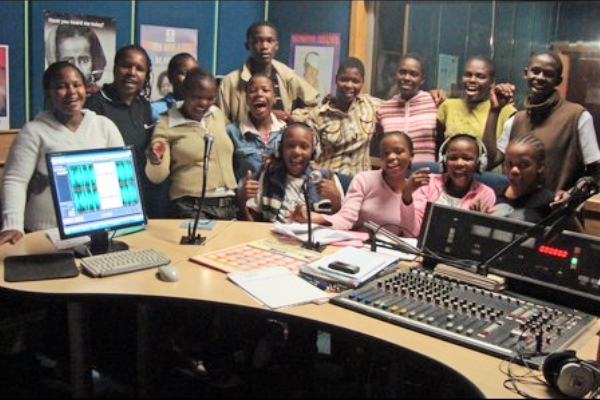
The country has one major radio broadcaster, the Swaziland Broadcasting and Information Services (SBIS), which offers two channels: SBIS1 in siSwati and the youth-orientated SBIS2 in English. SBIS2’s ‘Morning Jam’, also known as ‘the Breakfast Show with Bobo and Lindelwa Mafa’, gives listeners a headstart to their day every other morning of the week with 100% musical content[iv].
Considered ‘the gospel channel’ in a country with a strong gospel following, the Voice of the Church (VOC) currently reaches between 2.5 to 2.8 million listeners within Swaziland, South Africa and some parts of Mozambique. Most of the stations’ programmes are educational and motivational.[v]
There are unfortunately no community radio stations in Swaziland. Founded in 1999, the Lubombo Community Media Group has since then been trying to establish a station, Lubombo Community Radio, but is yet to be granted a permanent license, because the Communications Bill is yet to be debated and passed in Parliament. The Bill, if made into law, will allow independent radio stations to operate in the country. The only time that Lubombo Community Radio has been able to broadcast so far was for King Mswati III’s birthday celebrations in 2013, when it was issued a one-day licence to do so.
Television
The Swaziland Television Authority (STA), also known as Swazi TV[vi], is the oldest television station in the country. Nearly all Swazi households have access to the station, provided they own a TV. One of the station’s most popular music shows is ‘The Beat Down’, targeting the youth between 15 and 25. It focuses on the top 10 music videos from all over the world[vii]. ‘This Weekend eSwatini’ is another popular music programme and features local and international celebrities, audience interaction and event news[viii]. Other music programmes Swazi TV include ‘Washumkhukhu’, a programme that unearths local talent from all corners of the country, the choral music show ‘Emachalachala’ and the gospel variety music show ‘Gospel Impact’.
A privately owned local television station is Channel Swazi, although it isn’t as popular as Swazi TV. Also available is the DStv bouquet, which provides some competition to Swazi TV. Offering a 'window' into the outside world, many Swazis would rather subscribe to DStv than tune into the local TV station, whose transmission ends at 11:30pm. Music channels like Trace Urban, Channel O and Mzansi Magic Music have the largest following. Subscribing to DStv in Swaziland is relatively expensive, although there are tailor-made offerings to suit lower incomes, and some viewers have devised ways subscribe illegally through South Africa.
Online
The use of modern technology is a trend that has grown in popularity over the years, especially among the tech-savvy youth. Internet cafes have sprung up all over the country and the average Swazi can gain internet access anywhere, for example with the free wi-fi available to students of the University of Swaziland (UNISWA).
Online radio is growing in popularity. Having failed continuously to secure an operating licence from government, Lubombo Community Radio went online. Listeners in and outside the country can access the station’s programmes[ix]. A division of local record label Swazi Jive Entertainment, Swazi Jive Radio is a seasonal radio station broadcast online as a build up to the annual ‘Hipnotik’ show[x].
Swazi Jive also created the new service Dobro Audio, aimed at revolutionising the Swazi industry. It offers accurate music charts across all genres. Fans are able to play, buy or download music, and artists are able to distribute and sell their music[xi]. In addition, Swazi artists are also able to get their music on iTunes and other international music stores to compete with the rest of the world.
Relatively unknown but no less active is FrequentXP, a bunch of young individuals who are passionate about the arts in Swaziland. Their goal is to discover, nurture and assist in promoting talent in music, dance, DJing, painting, fashion and photography[xii]. Although it has been inactive in the last year or so, the MusicSwaziland site was created as a platform to promote Swazi talent, focusing mainly on music[xiii]. The online Swazi Hip-Hop Magazine has unfortunately failed to take off. Created with noble intentions to promote urban culture in all the four regions in Swaziland, little is known about this movement or the people behind it[xiv].
Media freedom
There are conflicting beliefs about the historical role of the Swazi media in South Africa, specifically that of Radio Swazi under apartheid. Some subscribe to the notion that radio announcements and other medium of communication in Swaziland aggressively promoted anti-ANC propaganda and instilled fear in the minds of ordinary Swazis, painting revolutionary activism and struggle as foreign, ‘unSwazi’ and unpatriotic[xv]. Other reports state that not just Swaziland but also Botswana and Lesotho remained openly critical of apartheid, but had to rely on South Africa for economic reasons.[xvi]
Established in 1996, the Media Institute of Southern Africa (MISA)’s Swaziland chapter exists to promote freedom of speech in pursuit of democracy and the protection of human rights[xvii]. Another industry body, albeit currently defunct, is the Swaziland National Association of Journalists (SNAJ). In 2002 the Swaziland Editors Forum, practising reporters and editors developed and approved a code of conduct to ensure professional standards were maintained by all journalists in the country. However, at the moment no organisation exists to ensure the code of ethics is adhered to. Therefore SNAJ currently relies on willing editors in newsrooms to make sure journalists know and adhere to the code[xviii].
In 2015, censorship in the local media is somewhat of an ‘unspoken rule’. Media outlets know better than to broadcast or publish anything that would incite the public or ruffle the feathers of authorities. Censorship is somewhat encrypted in the public’s mind. As a result, media freedom in Swaziland is a myth. This theory is based on recent events that gave rise to the arrests of prominent human rights lawyer Thulani Maseko and Nation magazine editor Bheki Makhubu last year. Both men were charged with contempt of court relating to two separate articles that appeared in the Nation and were critical of the arrest of a government vehicle inspector. Both men have since been released[xix]. According to reports, media freedom is under attack in Swaziland, with journalists claiming they face constant harassment[xx].
Musically, local artists specialising in indigenous music have voiced concerns of not receiving adequate airplay compared to gospel or even hip-hop artists.


Most popular

Top Naija songs of 2026
31 Mar 2026

Top Afrobeats songs of 2026
19 Mar 2026
Ghana: Mr Eazi and MOLIY’s ‘Comfort’ earns Urban Music Awards nomination
21 Oct 2026

Top amapiano songs of 2026
16 Feb 2026
Open call: CANEX Music Business Lab and Songwriting Camp
15 Oct 2026
Nigeria: CANEX WKND unveils 2026 programme
21 Oct 2026
Disclaimer: Music In Africa provides a platform for musicians and contributors to embed music and videos solely for promotional purposes. If any track or video embedded on this platform violates any copyrights please inform us immediately and we will take it down. Please read our Terms of Use for more.

Subscribe to our monthly Newsletter
Follow us on social media


Please log in to post a comment.