






















































Pretty Yende, a South African opera star with a voice that shatters glass ceilings
09 Mar 2023 - 15:18


By Wayne Muller
It’s been announced that South African opera star Pretty Yende will sing at King Charles III’s coronation on 6 May in Westminster Abbey, London. The 37-year-old soprano was elated.
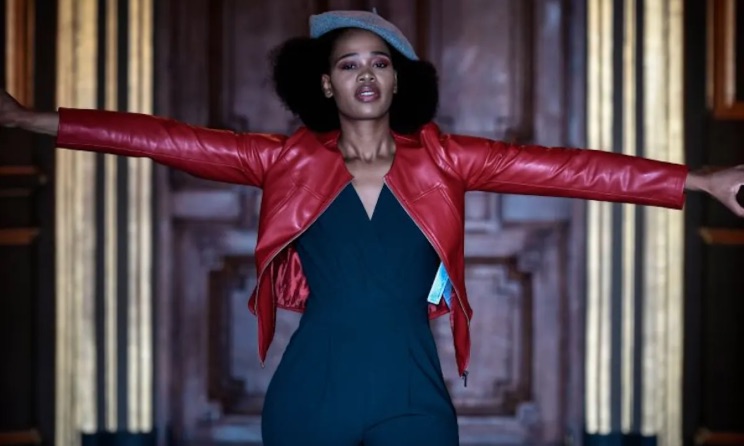
The invitation is reminiscent of when Charles and the late Diana, Princess of Wales were married in 1981. For this occasion, the New Zealand soprano Kiri Te Kanawa’s beautiful voice beguiled the royal couple. Te Kanawa, being Maori, represented her indigenous community who were the victims of imperialism and colonialism.
Te Kanawa was the same age as Yende is when she gave her royal performance and Yende carries with her this colonial history too. Considering the previous British coronation was that of Queen Elizabeth II in 1953, with white males dominating the music programme, it will now, to the best of my knowledge, be the first time that a black person – let alone an African – performs at the coronation of a British monarch.
However, along with the elation at Yende’s news, there have also been opinions on social media that she should decline the invitation because of the legacy of British colonialism in South Africa.
It might be a valid point, but it is precisely Yende’s participation that will shatter the glass ceiling of yet another space from which Africans had been excluded for centuries. More so because she is an African practising a predominantly white western art.
Who is Pretty Yende?
Hailing from eMkhondo (Piet Retief) in Mpumalanga, a rural province in the east of South Africa, Yende has often told the story of how the Flower Duet from the opera Lakmé in a British Airways TV advert converted her to opera. A decade later she would become opera royalty.
Yende was a senior music student when I first heard her in 2007 in her professional debut in the Artscape Opera House in Cape Town, singing the title role in Massenet’s Manon. She already had a stand-out voice. At the time I wrote in a review that “South Africa now has a new diva”.
Coupled with her ambition and drive, her voice would soon allow her to conquer international singing competitions, which then set her on a path towards performing in productions in the world’s major opera houses. Her international breakthrough came in 2013 at the Metropolitan Opera in New York when she stepped in as an understudy to sing Adèle in Rossini’s Le Comte Ory. The critics raved, and Yende became a star.
Yende’s activism
In 2019 she said in an interview that “being the first black Lucia (in Donizetti’s Lucia di Lammermoor) at Lincoln Centre is huge for me. Being the first black Lucia in Paris is huge for me. Being the first black person to have a new production of La Traviata in Opera Garnier in Paris is huge for me…” And, judging from her Instagram post when the news broke, being the first black soprano to sing at the coronation of a British monarch is also huge for her.
This speaks to Yende’s activism, which stems from her experiences of being black in a white dominated opera world. In June 2021, she spoke out about these experiences after being detained and strip searched at Charles de Gaulle airport in Paris due to visa issues. “Police brutality is real for someone who looks like me,” she said.
Last year, the international Black Opera Research Network, of which I am a member, hosted a seminar in which other black opera singers shared similar airport horrors. They seem simply to be the result of custom officials’ disbelief that a black person could be an opera singer, as detailed on their visa application form.
These experiences, and similar racist practices in the opera industry, are part of a wider discourse and scholarship on blackness in opera. In very practical terms, it is about how these marginalised voices are pushing for a place on stage. Or, as US musicologist Naomi André puts it, the inclusion of “new voices, narratives, and experiences” in opera. It is not only about a singer’s heritage, but also about opera itself.
Let’s face it, the standard-repertoire operas that are performed most often worldwide were written by white European men, with mostly white characters, often with narratives about the lives of European aristocracy or bohemians. And the industry – from conductors to directors – are still mostly white. How do black bodies immerse themselves in this world?
Luckily, Yende’s US predecessors, such as Marion Anderson (the first black female soloist to sing at the Metropolitan Opera, in 1955), Leontyne Price and Jessye Norman, had begun to open those doors. Yende also has the example of her former University of Cape Town singing lecturer, Virginia Davids, who was the first black female soloist to sing a lead role in an opera in South Africa in 1988.
There has been a transformation in opera in South Africa since the fall of white minority rule and apartheid. We have seen the emergence of world-class black singers, the “Africanisation” of operatic stage settings and the composition of local operas foregrounding black histories, for instance. But only recently have the big opera stages of the world, where Yende practises her art, begun transforming.
Shattering the glass ceiling
One would like to believe that Charles III’s choice fell on Yende because of her activism in proclaiming that performing standard-repertoire opera roles is often different, historical and huge for a black singer even today.
This announcement reminds us that many performance spaces of Western European classical music and opera – such as a British coronation – remain enclosed and devoid of black voices.
Rather than decline an invitation to perform in such spaces, I would argue that it is essential that black bodies and voices enter and transform those places of exclusion, otherwise those spaces will remain as they are.
On 6 May, when Yende’s voice soars in the vast hallowed space of the 13th-century Westminster Abbey, it will be a historical and huge moment, and her voice will shatter the glass enclosures of yet another space of exclusion.
Wayne Muller is a publications editor/research fellow at Stellenbosch University's Africa Open Institute for Music, Research and Innovation. The article first appeared on The Conversation.


Most popular
Gambia: Suntou Susso announce UK tour for ‘The Path of a Griot’
09 Oct 2026

Top amapiano songs of 2026
16 Feb 2026

Top Afrobeats songs of 2026
19 Mar 2026
Open call: 2026 Gender@Work music industry training in Johannesburg
09 Oct 2026

Top Naija songs of 2026
31 Mar 2026
Open call: National Arts Festival artistic director in SA
15 Oct 2026
Disclaimer: Music In Africa provides a platform for musicians and contributors to embed music and videos solely for promotional purposes. If any track or video embedded on this platform violates any copyrights please inform us immediately and we will take it down. Please read our Terms of Use for more.

Subscribe to our monthly Newsletter
Follow us on social media


Please log in to post a comment.