










































NEFCISA
NEFCISA

The Music In Africa Foundation (MIAF) is proud of its partnership with the Industrial Development Corporation (IDC) as a Strategic Implementing Partner (SIP) for its Social Employment Fund (SEF). Through this collaboration, MIAF is running a national programme that is creating jobs, addressing skills gaps, and strengthening South Africa's creative industries — in line with the SEF's overarching goal to generate work for the common good and build community value through employment, social contribution, and inclusive economic participation. Operating under the banner NEFCISA (National Employment Facility for Creative Industries in South Africa), the initiative is recruiting and training participants, matching them with host organisations, and has already placed 1 500 workers across the country — surpassing its original target of 1 000. NEFCISA is delivered through a network of 20 host organisations spanning five provinces, who are actively hosting participants and contributing to work for the common good across South Africa's creative and cultural industries. Key Objectives: Support employment and entrepreneurship in the creative industries. Offer skills development and training programmes. Foster partnerships between public and private creative sectors. Promote South African creativity at both provincial and national levels Foster community development through social contribution.

ACCES
ACCES

ACCES Conference and Showcase Festival is Africa's leading music industry gathering, bringing together the people shaping the future of the continent's music business. Artists, entrepreneurs, executives, investors, policymakers and cultural leaders from across Africa and around the world come to ACCES to build partnerships, exchange ideas, discover talent and create new business opportunities. Since its launch in 2017, ACCES has become the continent's premier platform for professional exchange and music market development. Combining a high-level conference with a curated showcase festival, networking, exhibitions and industry programmes, ACCES offers a unique space where creativity meets business and where African music connects with the global industry.

Gender@Work
Gender@Work

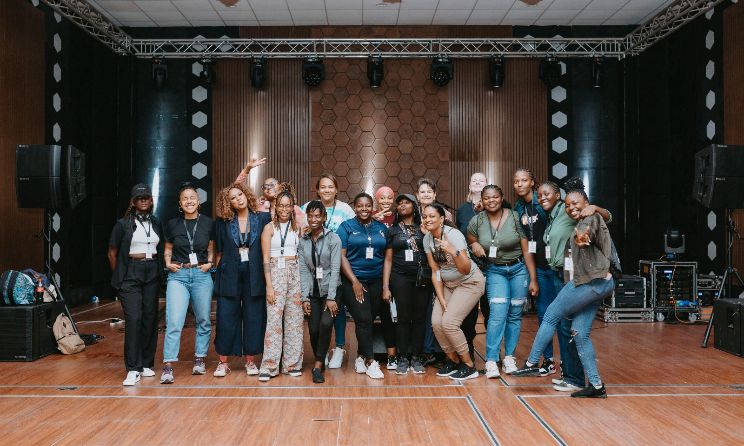
Music In Africa Gender @ Work is a three-year training programme aimed at upskilling and increasing the participation of female professionals in the African music sector. Launched by the Music In Africa Foundation (MIAF) in April 2019, the programme is connected to the MIAF’s ACCES music conference – a pan-African event held in a different African country every year. This connection enables the programme to reach new participants in a different African country every year. The programme marks the beginning of a more concerted effort by the Foundation to support the participation and inclusion of women in all facets of its programmes and the music sector in Africa as a whole. Over the three years, the programme will aim to address gender imbalances in the sector through training, lobbying, facilitating knowledge exchange and dialogues that foster the interest of women. The broader objectives of the programme are to: Provide industry training for women on critical music industry skills, focusing on: Stage management Electronic music production and recording Music business management Technical knowledge Provide an opportunity for both professional and aspiring women to benefit from the Music In Africa network and its broad range of activities in 2019, 2020 and 2021. Provide a solution-based platform in the form of a round table at ACCES with a view to identify challenges, discuss opportunities and lobby for the interests of female practitioners. Offer participants the opportunity to benefit from programmes offered by MIAF’s partners. Increase access to educational materials. Integrate participants in the broader ACCES programme to maximise experience and exposure to the industry. Record and present training materials on the www.musicinafrica.net, including but not limited to tutorials, templates and other best-practice materials. Communicate women-based themes that support the initiatives and messages of the programme. MAIN TRAINING ACTIVITIES Training in first country (Ghana): In the first year, participants will be trained on all aspects of stage management by a team of experienced stage managers from 10 to 17 November 2019. The programme will offer robust classroom training as well as practical, hands-on training in which participants will also be given the opportunity to manage various aspects of the ACCES performance programme. Training in second country: The second training iteration will take place at ACCES 2020 when the programme will diversify its course to include music production lessons and training on other music business topics. A round-table platform will also be introduced to coincide with the ACCES programme. Training in third country: The third training iteration will take place at ACCES 2021 in a different country, offering an advanced course. HOW DO YOU GET INVOLVED?  As a participant, facilitator or trainer: The programme enrolls up to 12 trainees every year. All opportunities are advertised publicly on this website, and will be added to this page. Please keep checking this page for new calls (below under UPDATES & CURRENT OPPORTUNITIES). As a partner Please contact Claire Metais at [email protected]. APPLY The call for applications for 2020 will be announced soon. The Music In Africa Gender @ Work programme is made possible with the support of the Prince Claus Fund, Siemens Stiftung and Goethe-Institut.

Sound Connects Fund
Sound Connects Fund

For cultural and creative practitioners and organisations operating in southern Africa, access to funding remains a major challenge. The COVID-19 pandemic has also had a massive impact on government policy, spending and the economy in general, and has seen spending on culture being moved further down the list of priorities. Further, the cultural and creative industries repeatedly cite four main areas where investment is needed for growth, which are increased visibility, mobility including access to new markets, finance and support structures.

Instrument Building And Repair Project

Experience the Vibrations African Instruments Exhibition online in 3D

Reviews

Review: Ric Hassani is more than your average gentleman
14 Sep 2017 - 10:30

cc-img flag-img

The African gentleman is a mythical creature. Think of him as Anansi or the talking tortoise—or so said Fela, who must be sorely disappointed in Ric Hassani.
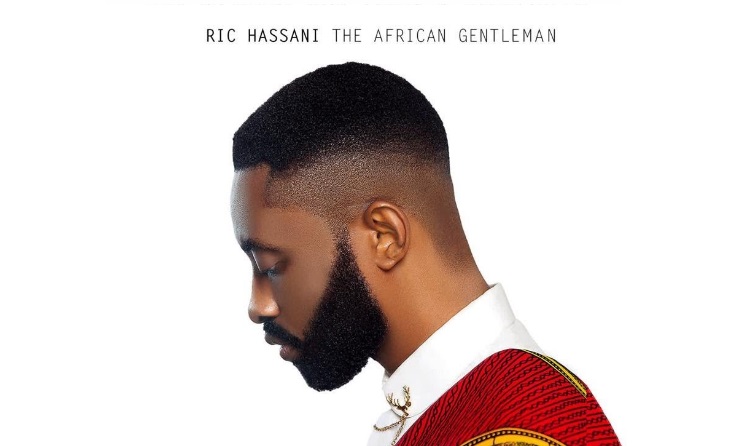
Ric Hassani: 'the non-alpha-male suitor'.

Hassani, whose real name is Ikechukwu Eric Ahiauzu, has titled his debut album The African Gentleman, thus officially claiming that three-word title as nickname. Fela turns in his grave: Only 20 years after his death, and this is what his countryman gets up to?

As you’d expect from someone with his nickname, Hassani makes music with enough strings and plaintive vocals to belong in a sappy Hollywood musical. Those drums that have coloured the records of his more mainstream peers show up lightly, and at least one of his drum-backed songs is clearly intended to court a set of listeners different from those who, drawn by the cool sophistication of ‘Gentleman’, the 2015 single which made Hassani’s name, became early fans.

Those fans need not be surprised by their man’s apparent desire for mainstream appeal. Ric Hassani has probably seen that in his country only pop artists make a decent living from making music. “I would not say I am alternative,” he said in an interview with the Guardian. “I think that most times, people tend to call a new or different sound that they aren’t used to alternative, but I best define myself as a pop artist.”

Yeah, never mind that one of his songs ‘As Long As You Love Me’ is less influenced by Plantashun Boiz than by Backstreet Boys. (Fans of a certain age might recall the 1997 hit song of same name by the American boy band.) Never mind that the start of an acoustic version of ‘Gentleman’ (included on the overlong deluxe version of the album) is similar to the first few seconds of Vanessa Carlton’s ‘A Thousand Miles’. There is no chance that any of those songs passes for pop in contemporary Nigerian music.

The trouble as you may have guessed is that Ric Hassani is sure to be outmanoeuvred in the pop space. One of his songs uses “scatter the floor, give it to dem, gimme the wine ah!” in the style of localised dancehall, but, its pleasantness notwithstanding, there is no way the song would replace a track by a true pop act, even a minor one like, say, LAX, on anyone’s playlist.

Ric Hassani might not be aware, but his persona—the non-alpha-male suitor—belongs in the good-guy group fronted by Adekunle Gold. Both men hope to get the girl by being sweet.

On occasion a lustier guy shows up, as happens on Adekunle Gold’s ‘Sweet Me’ and on Hassani’s ‘Oge Na Ga’ featuring Cabo Snoop, Xcellente and Mr Nomsy. But these men are not satyrs like their more mainstream colleagues. Adekunle Gold accepted his status and has now entered the pop space through the backdoor: he refused to pander and somehow became too big for the space he created. Of course, Adekunle Gold has the Yoruba language and the long history of traditional Yoruba music, juju notably, on his side. Hassani’s western music influence means he has too little to fall back on locally; he has turned up on the scene when good English gets a man a pat from his former headmistress but is near-incompatible with pop success. Still you want to see him commit to the sound that clearly has his heart.

On songs where he does commit—as he does on the single word titled ‘Gentleman’, ‘Police’, ‘Sing’ and ‘Believe’—the results are believable. You might even dance to ‘Believe’, which is the first time drums form a major part of the music on The African Gentleman. The dancing should continue with ‘Number One’, a song so delightful it will secure a spot within wedding song playlists. A more sober wedding song ‘Marry You’ follows. It is a bit of a one-two punch of matrimonial music—the latter is for the walk down the aisle, and the former for the reception.

The African Gentleman is woman-centred and as, presumably, the two women most important in a man’s life are his mother and partner, Ric Hassani does an ambiguous thing by combining tributes to both on one song. The song ‘Sweet Mother’ with Zambia’s Mumba Yachi recalls the Nico Mbarga classic, but the late Cameroonian didn’t perform the shapeshifting Hassani does on his hook: “My girl you look so fine…my number one woman in my life and you know that you remind me of my mama, sweet mother, love me like no other.”

Yachi’s wonderfully teary voice provides a delicious contrast to the song’s bouncy beat, but you just might wonder: Which of these women is the man’s true number one? Apparently, being a gentleman doesn’t mean you can’t be smooth.

Ric Hassani may not be quite as smooth in attracting a large pop audience, but he should be fine. To be a gentleman, after all, is to possess a practised contentment.

Buy The African Gentleman on iTunes

Artist: Ric Hassani

Album: The African Gentleman

Label, Year: Riverland Records, 2017

Please log in to post a comment.

Most popular

Disclaimer: Music In Africa provides a platform for musicians and contributors to embed music and videos solely for promotional purposes. If any track or video embedded on this platform violates any copyrights please inform us immediately and we will take it down. Please read our Terms of Use for more.

newsletter banner

Subscribe to our monthly Newsletter

Follow us on social media