


























































Despite local and international organisations fervently lobbying against the adoption of the Copyright Amendment and Performers’ Protection Amendment bills, the two pieces of legislation have been given the green light by South Africa’s Parliament. The bills will now be sent, for a second time since 2020, to President Cyril Ramaphosa who is expected to sign them into law.
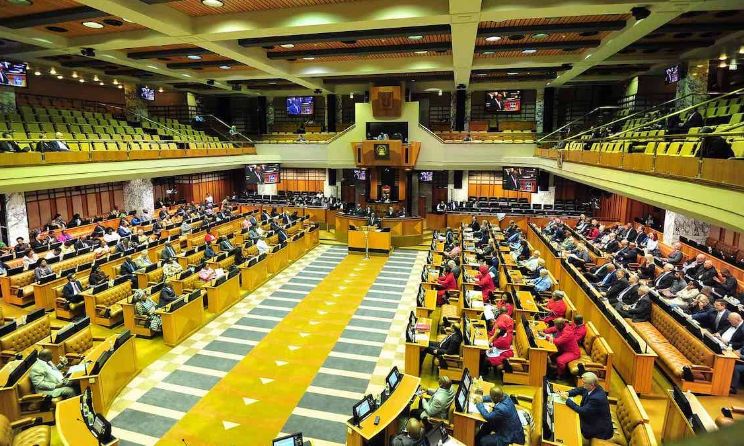
Almost all opposition parties went on record to voice their concerns about the two bills on 29 February, yet the ANC, with its parliamentary majority and backed by the IFP, voted in favour of the bills, ignoring serious red flags raised by the creative community since 2017.
Even bodies like the International Confederation of Societies of Authors and Composers, through its director-general Gadi Oron, called the Copyright Amendment Bill “out of step” days before its adoption.
“We are very disappointed at what transpired in the National Assembly with the adoption of the Copyright Amendment Bill,” said Chola Makgamathe, chairperson of the Copyright Coalition of South Africa, which has been advocating against the bill for years. “We are further disappointed by the fact that there was such opposition with regard to the bills with such valid reasons, but still it was adopted. Nonetheless, we still maintain that the bill remains constitutionally flawed. We still urge the president, who will now receive this bill, to not sign it into law.”
Of the two bills, the Copyright Amendment Bill has particular bearing on music rightsholders in South Africa. The main concerns against the bill include provisions giving the minister of trade, industry and competition the power to prescribe the terms of publishing contracts, a 25-year limitation on the assignment of rights, and the controversial inclusion of the US-borrowed ‘fair use’ clause, which allows for the free use of copyrighted works in a number of contexts, including research and teaching.
Many agree that the inclusion of fair use will create an environment replete with lawsuits in a justice system lacking precedent and safeguards such as punitive damages, as is the case in American jurisprudence.
Recording Industry of South Africa (RiSA) CEO Nhlanhla Sibisi told Music In Africa: “What’s strange is that we will be the only sector where the minister can prescribe contractual elements. You can’t find it anywhere else and it’s not like the bills themselves seek to advance the interests of various sectors, because they [the Department of Trade and Industry] didn’t do any sector impact study when they introduced fair use. They simple decided to introduce fair use. What informed their decision? We are here to find out.”
The Trade Union for Musicians of South Africa’s (TUMSA’s) Gabi le Roux added: “We specifically asked for music to be excluded from the fair use clause, and they wouldn’t take our advice. Composers and authors will undoubtedly pay the price for that in the future.”
Makgamathe says if Ramaphosa assents the bill into law, it would have a profound effect on all creative industries, including publishing. Over the years, many critics have said that the South African government’s main motivation behind the Copyright Amendment Bill is to allow for the free duplication of educational materials in schools, particularly in poverty-stricken, rural parts of the country.
“In the book publishing sector, people will be able to essentially photocopy books for free and claim the educational exceptions that are in the bill. This will lead to a decrease in book sales. What then happens is that authors will not be afforded the requisite protection in South Africa. It won't make any sense to publish books here, which means that the publishing industry will suffer. And most likely even the bigger publishing houses will disinvest,” she said.
When asked what TUMSA’s next steps would be before Ramaphosa signed the bills, Le Roux said: “We have to do the same what we did last time. We took to the streets, we protested. We mounted serious dialogues and workshops to explain why we didn’t think it should happen.”


Most popular

Top amapiano songs of 2026
16 Feb 2026

Call for applications: ACCES 2026 Emerging Artist Spotlight Competition
01 Oct 2026

Top Naija songs of 2026
31 Mar 2026

Top Afrobeats songs of 2026
19 Mar 2026

Open call: 2026 Gender@Work music industry training in Johannesburg
03 Oct 2026

AFRIMA 2026: All the winners
12 Jan 2026
Disclaimer: Music In Africa provides a platform for musicians and contributors to embed music and videos solely for promotional purposes. If any track or video embedded on this platform violates any copyrights please inform us immediately and we will take it down. Please read our Terms of Use for more.

Subscribe to our monthly Newsletter
Follow us on social media


Please log in to post a comment.