







































NEFCISA
NEFCISA

The Music In Africa Foundation (MIAF) is proud of its partnership with the Industrial Development Corporation (IDC) as a Strategic Implementing Partner (SIP) for its Social Employment Fund (SEF). Through this collaboration, MIAF is running a national programme that is creating jobs, addressing skills gaps, and strengthening South Africa's creative industries — in line with the SEF's overarching goal to generate work for the common good and build community value through employment, social contribution, and inclusive economic participation. Operating under the banner NEFCISA (National Employment Facility for Creative Industries in South Africa), the initiative is recruiting and training participants, matching them with host organisations, and has already placed 1 500 workers across the country — surpassing its original target of 1 000. NEFCISA is delivered through a network of 20 host organisations spanning five provinces, who are actively hosting participants and contributing to work for the common good across South Africa's creative and cultural industries. Key Objectives: Support employment and entrepreneurship in the creative industries. Offer skills development and training programmes. Foster partnerships between public and private creative sectors. Promote South African creativity at both provincial and national levels Foster community development through social contribution.

ACCES
ACCES

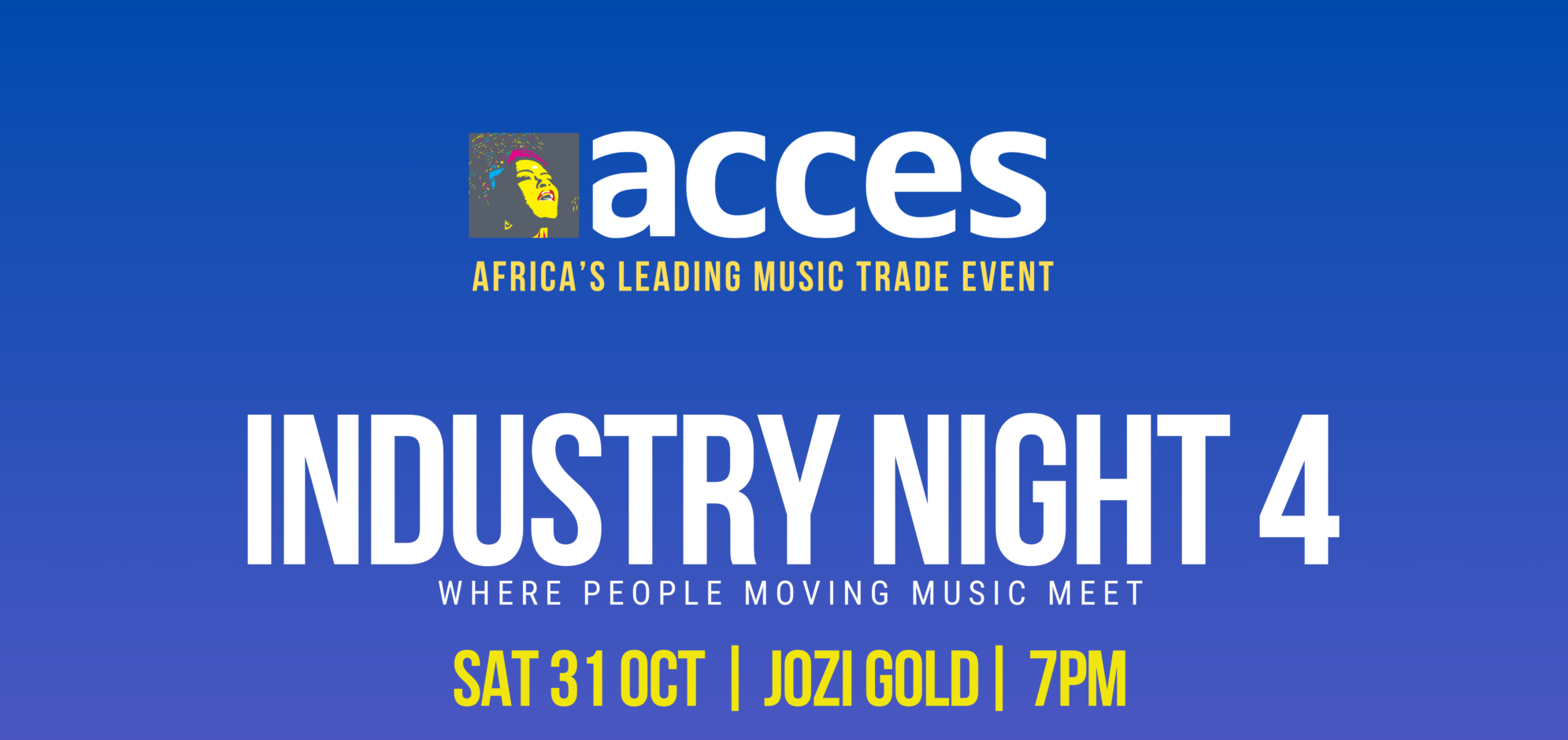
ACCES Conference and Showcase Festival is Africa's leading music industry gathering, bringing together the people shaping the future of the continent's music business. Artists, entrepreneurs, executives, investors, policymakers and cultural leaders from across Africa and around the world come to ACCES to build partnerships, exchange ideas, discover talent and create new business opportunities. Since its launch in 2017, ACCES has become the continent's premier platform for professional exchange and music market development. Combining a high-level conference with a curated showcase festival, networking, exhibitions and industry programmes, ACCES offers a unique space where creativity meets business and where African music connects with the global industry.

Gender@Work
Gender@Work

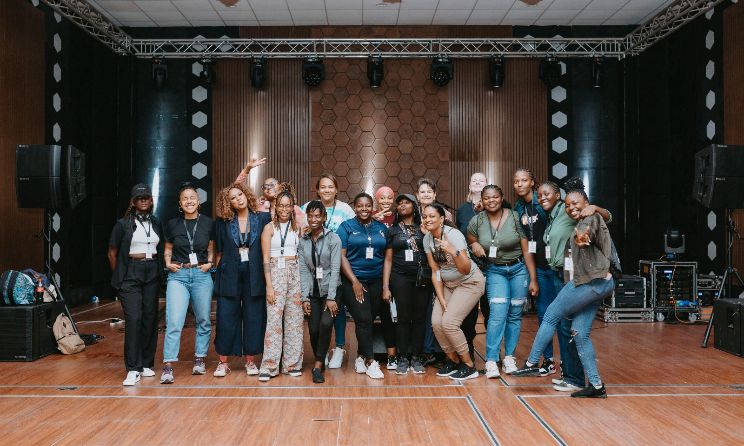
Music In Africa Gender @ Work is a three-year training programme aimed at upskilling and increasing the participation of female professionals in the African music sector. Launched by the Music In Africa Foundation (MIAF) in April 2019, the programme is connected to the MIAF’s ACCES music conference – a pan-African event held in a different African country every year. This connection enables the programme to reach new participants in a different African country every year. The programme marks the beginning of a more concerted effort by the Foundation to support the participation and inclusion of women in all facets of its programmes and the music sector in Africa as a whole. Over the three years, the programme will aim to address gender imbalances in the sector through training, lobbying, facilitating knowledge exchange and dialogues that foster the interest of women. The broader objectives of the programme are to: Provide industry training for women on critical music industry skills, focusing on: Stage management Electronic music production and recording Music business management Technical knowledge Provide an opportunity for both professional and aspiring women to benefit from the Music In Africa network and its broad range of activities in 2019, 2020 and 2021. Provide a solution-based platform in the form of a round table at ACCES with a view to identify challenges, discuss opportunities and lobby for the interests of female practitioners. Offer participants the opportunity to benefit from programmes offered by MIAF’s partners. Increase access to educational materials. Integrate participants in the broader ACCES programme to maximise experience and exposure to the industry. Record and present training materials on the www.musicinafrica.net, including but not limited to tutorials, templates and other best-practice materials. Communicate women-based themes that support the initiatives and messages of the programme. MAIN TRAINING ACTIVITIES Training in first country (Ghana): In the first year, participants will be trained on all aspects of stage management by a team of experienced stage managers from 10 to 17 November 2019. The programme will offer robust classroom training as well as practical, hands-on training in which participants will also be given the opportunity to manage various aspects of the ACCES performance programme. Training in second country: The second training iteration will take place at ACCES 2020 when the programme will diversify its course to include music production lessons and training on other music business topics. A round-table platform will also be introduced to coincide with the ACCES programme. Training in third country: The third training iteration will take place at ACCES 2021 in a different country, offering an advanced course. HOW DO YOU GET INVOLVED?  As a participant, facilitator or trainer: The programme enrolls up to 12 trainees every year. All opportunities are advertised publicly on this website, and will be added to this page. Please keep checking this page for new calls (below under UPDATES & CURRENT OPPORTUNITIES). As a partner Please contact Claire Metais at [email protected]. APPLY The call for applications for 2020 will be announced soon. The Music In Africa Gender @ Work programme is made possible with the support of the Prince Claus Fund, Siemens Stiftung and Goethe-Institut.

Sound Connects Fund
Sound Connects Fund

For cultural and creative practitioners and organisations operating in southern Africa, access to funding remains a major challenge. The COVID-19 pandemic has also had a massive impact on government policy, spending and the economy in general, and has seen spending on culture being moved further down the list of priorities. Further, the cultural and creative industries repeatedly cite four main areas where investment is needed for growth, which are increased visibility, mobility including access to new markets, finance and support structures.

Instrument Building And Repair Project

Experience the Vibrations African Instruments Exhibition online in 3D

Reviews

Bad To Me: Wizkid enters ‘amapianosphere’

20 Sep 2022 - 13:06

cc-img flag-img

However you look at it, Wizkid catching the amapiano bug should mark a crowning moment for the South African dance genre, whose red-hot popularity, starting from the COVID-19 lockdowns, could be signalling a regime change in mainstream listening preferences across the continent.

Wizkid.

Since its resurgence via the efforts of local stars like Daliwonga, Major League DJz, Kamo Mphela and the Scorpion Kings, the sound has gotten the whole of Africa smitten, striking particular interest in West Africa, where it is being married with other pop pulses.

Davido, for his well-received collabs with Focalistic, and Asake, known for his innovative experiments with the genre, seem to be the sound’s poster boys here. Burna Boy too, for appearing on DJ Tarico’s ‘Yaba Buluku’ remix.

Now, with the P2J and Sammy Soso co-produced ‘Bad To Me’, Wizkid, an effortless hit machine and Afrobeats royal, has joined the bandwagon – taking to the log drums, subtle percussion work, soulful keyboards and intermittent chanting that suffuse amapiano, but making sure to impress on the song with West African linguistic stamps like Yoruba and Nigerian Pidgin.

A bit of history: amapiano is a loungier and more cerebral progression of kwaito and gqnom. First popularised in the townships of Johannesburg and Pretoria around 2012, the beaty and ambient musical style is crafted to soundtrack the party circuit. For some reason, it is often the nature of the South African music scene to be insular and sceptical of inviting external influence, while Nigeria’s for instance, is generally more receptive, harnessing the various rhythms that reach it. And so, until a few years ago, amapiano remained confined to South Africa. Other countries, since finding the sound, however, have begun using it as canvas for local creations. It is how, I suspect, Wizkid's baptism has occurred.

Beyond leaving a big splash, Wizkid’s releases, because of his growing global stature, tend to become political. His appearance on ‘Bad To Me’ – which heralds his fifth studio album More Love Less Ego and follows 2020’s Made In Lagos – has exposed another grey area – this time, regarding inspiration and appropriation. It has also raised urgent questions about cultural protectionism among amapiano activists, who worry that their creation is being stolen from right under their noses, with others profiting off their art.

There is zero debate about the origins of amapiano, and one may be shortsighted in entertaining fears about its ownership. Indeed, Wizkid trying out amapiano could be amplifying the sound and making it richer. It is how sounds like hip hop and R&B have progressed over the decades. Perhaps, this is amapiano’s transition to the rest of the world, and South Africa's cue to embrace other influences and push the boundaries of their pop.

On his choice of theme, trust Wizkid, whose catalogue overflows with a fertile appetite for ample female contours, to remain with carnal obsessions. “This kind of body don dey cause a migraine” is how he launches into the amapianosphere, two years after his last major single ‘Essence’.

He also relies on a fluid thought stream, sticking with a flirtatious calm and lyrical charm that finds him befogging the line separating love and lust. “This kind, this kind love, yeah/ Wey dey make me want more, woah”, the pre-hook goes. Also, he is not forceful about his invitation to amorous relations. And so, what happens after he departs what I suspect is a party with the song's subject? "When we leave, we fit do am your way/ Or if you want, we fit do am my way.” On paper, love and sex differ. A master hypnotist, Wizkid theorises with comely efflorescence, that the two are the same, driven by similar passions.

Quintessentially, Wizkid has stayed clear of all the online banter that has attended the release of his new song, as if to neutralise this discord. His historic international run, which includes a Grammy and record-breaking chart presence around the world, must remain unsullied, as must his relationship with other African acts. His main focus: “This kind, this kind love, yeah/ I dey want for the night.”

Wizkid should quickly return to his unique sonic technique which fuses horn-led Afrobeats with reggae-dancehall and R&B. Before that, however, ‘Bad To Me’ will go down as among Afrobeats’ biggest acknowledgement of amapiano as the new African dance groove.

Artist: Wizkid
Song: Bad To Me
Label: Starboy/RCA
Year: 2022

Please log in to post a comment.

Most popular

Disclaimer: Music In Africa provides a platform for musicians and contributors to embed music and videos solely for promotional purposes. If any track or video embedded on this platform violates any copyrights please inform us immediately and we will take it down. Please read our Terms of Use for more.

newsletter banner

Subscribe to our monthly Newsletter

Follow us on social media