

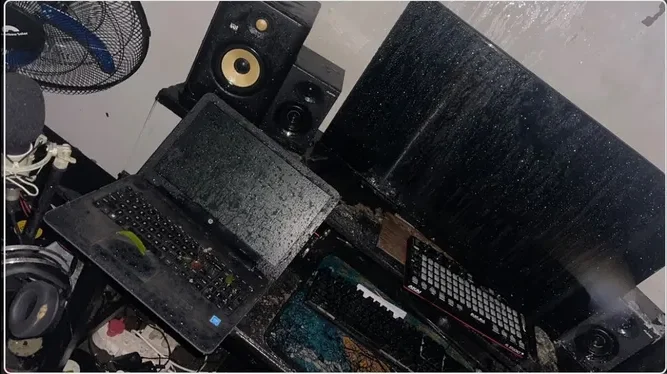
































































Music rightsholders could get more income from private copying levies if governments used sufficient legislation and effective collection mechanisms.

This is according to the International Confederation of Societies of Authors and Composers‘ (CISAC’s) new Private Copying Global Study published recently in partnership with French mechanical rights association BIEM and Dutch body Stichting De Thuiskopie. It follows CISAC’s 2020 Global Collections Report released in October.
The study provides an overview of private copying systems and the legal environment across 194 countries and five continents. It describes the legal and enforcement measures needed to maximise income for rightsholders, and demonstrates the potential economic benefits if levies are effectively implemented to cover digital devices.
“The new report offers invaluable insight and important guidance to decision makers for unlocking the economic potential of private copying levies to the benefit of local creative communities”, CISAC director-general Gadi Oron said.
According to its Global Collections Report, private copying income grew by 9.8% last year. However, effective legislation and enforcement of the revenue stream were singled out as key factors for its success.
In Malawi, income grew five-fold to €1m in 2019 following the adoption of a new law the previous year. Eight African markets currently report private copying collections, including Morocco, Tunisia and Cape Verde.
BIEM president Georg Oeller said: “Private copying has always been a key concern of BIEM members. Today’s publication is the result of a good cooperation between three complementary organisations in the defence, diffusion and acknowledgement of private copying around the world. We hope this report will help in further developing the scope of private copying, in terms of territories and equipment concerned, at the benefit of the creators by raising awareness of the authorities.”
Stichting De Thuiskopie director Hester Wijminga said: “In 1991, Thuiskopie started compiling information on the existing private copying systems in the world in order to learn and share best practises in collecting and distributing private copying remunerations on behalf of rightsholders. Now, so many years later, we are pleased that in partnership with CISAC and BIEM we are able to present a global report on private copying. Sharing our knowledge and combining our expertise have resulted in the most extensive and complete work on private copying yet to be published.”
The study is intended as an information tool to inform governments and policymakers. It contains much of the information stakeholders need to know with regard to private copying, from the legal framework to its practical implementation.
Elements in the new study include collection figures for both authors’ and neighbouring rights, detailed information on tariffs and the media devices subject to levies, and data on private copying collections from 2015 to 2018.
The study also includes a comprehensive economic analysis of private copying revenue trends in the last four years, with levy income estimates based on levies paid by two hypothetical households in different territories. The economic analysis provides an estimation of revenue potential per device for seven target countries with potential future regulatory amendments, including Nigeria, Bulgaria, Canada, Denmark, Japan, South Korea and Mexico.
Download the Private Copying Global Study here.


Most popular
Open call: 2026 Gender@Work music industry training in Johannesburg
09 Oct 2026

Top amapiano songs of 2026
16 Feb 2026

Gambia: Suntou Susso announce UK tour for ‘The Path of a Griot’
09 Oct 2026

Top Afrobeats songs of 2026
19 Mar 2026

Top Naija songs of 2026
31 Mar 2026

Call for applications: ACCES 2026 Emerging Artist Spotlight Competition
01 Oct 2026
Disclaimer: Music In Africa provides a platform for musicians and contributors to embed music and videos solely for promotional purposes. If any track or video embedded on this platform violates any copyrights please inform us immediately and we will take it down. Please read our Terms of Use for more.

Subscribe to our monthly Newsletter
Follow us on social media


Please log in to post a comment.