











































This text provides an overview of the media in South Sudan and how it relates to the local music industry.
Introduction
The media in South Sudan faces immense social, logistical, economic and political challenges, including press freedom. South Sudan became an independent country in July 2011 under the name Republic of South Sudan, after an overwhelming 98.3% vote in favour of seceding from the Republic of Sudan. After independence, there was a wave of hope of a new dawn. Juba became the centre of business of the world’s youngest nation. The 2005 Comprehensive Peace Agreement opened up operations for the media[i] in South Sudan. To date more than 30 FM radio stations have been set up across the country.
Radio networks funded by churches, community organizations, international NGOs and privately owned media establishments have also been set up and they broadcast in local dialect, English and basic Arabic.
After five years of operation in Khartoum, the United Nations owned station Radio Miraya permanently relocated to Juba. This marked the genesis of media houses previously stationed in Sudan and Nairobi to embrace the new dawn that opened up South Sudan to the rest of the world. Music became a powerful tool for peace-building in a country that was largely divided.
The music industry in the country is still very young and mostly influenced by different cultures as people return from exile. Unity, development and peace remain the common themes in most song releases. Hip-hop particularly has become the dominant genre in the music repertoire of the country.
Radio
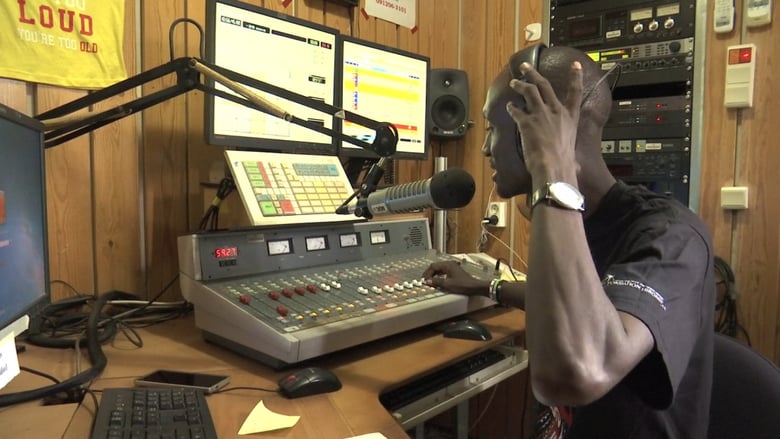
Radio stations are the biggest drivers of the local music industry. Privately owned radio stations include 88.4 City FM, 90.6 Dream FM and 89.0 Capital FM. 101 Radio Miraya and 98.6 Eye Radio often play the popular local music.
Music programmes include The Beat 11am-2pm on 101 Miraya FM and Evening Vibes on 92.3 Classic FM, weekdays from 5pm-9pm. The Beat is hosted by Moro Lokombu on 101 Radio Miraya. The presenter engages listeners through the music request segment, where they get to take control of the playlist by calling in. Also, the station gives room for new artists to submit their music to be played on the programme after scrutiny of the lyrical content. The radio station is owned by the United Nations Mission in South Sudan (UNMISS).
Eye Radio broadcasts cover most of the Central Equatorial, Eastern and Western Equatorial States. The radio station went on air in 2010 and operates 24 hours from its studios in Juba. Eye Radio has demonstrated its commitment to developing the music industry in South Sudan. For instance, in April 2016 Eye Radio partnered with the telecoms company MTN to organize the MTN Eye Radio Music Awards[ii], which celebrated emerging music talents in the country.
The effect of the awards was felt in Gbudwe State as the Minister for Information, Youth, Culture and Sports Natali Sabuni[iii] reportedly ordered all stations to play music from South Sudan after Gbudwe native BBG Musica emerged as the winner in the Best Traditional Music category at the MTN Eye Radio Music Awards.
The radio station has many dedicated music programmes. Top 10 on Eye Radio is a popular music countdown show that airs Sundays 10am to 1pm. An interactive segment dubbed Amplified X gives listeners a more up-close experience, where fans are given a chance to interview a guest artist each Sunday, play their top 5 songs and premiere new songs. The show is capped off with the top 10 songs in South Sudan.
Listeners don’t have to wait all weekend for the countdown. Romzie Sukuma Ramadhan hosts a song request show Mixplay Music, which is on the air daily from 9:30am to 1pm. Midnight Music Shuffle is another show that is dedicated to music on the station.
City FM (88.4) is a private commercial radio that features a unique blend of hip-hop, R&B, reggae, soul, Afro-beat, country and traditional music from South Sudan and the rest of the world. Country Music is a show that is broadcast every Sunday between 10am and 1pm. On Saturdays listeners are taken on a musical trip on Sounds of Africa, which airs from 3pm to 6pm. For gospel lovers the radio focuses on this kind of music every Sunday in the morning hours.
Capital FM’s Hit Parade is a music countdown that attempts to bring a global music feel to South Sudan. Thirty songs battle it out for the top spot each week. The countdown is, however, dominated by American pop music. Evening Vibes on 92.3 Classic FM runs weekdays 5pm to 9pm, where listeners request songs.
The focus on music within print media is limited. South Sudan has two daily newspapers, The Citizen and the Juba Monitor. Besides the two publications, there are several other titles that appear weekly or twice a week. Nearly all the print media are published in English.
In early 2012, most South Sudanese newspapers were still printed in Kampala or Nairobi and flown into Juba for distribution. The Citizen became South Sudan’s first daily newspaper when it transferred all its operations from Khartoum to Juba in 2010.
Television
South Sudan has only one television station, the state-run South Sudan TV. The station broadcasts six hours a day in English and Arabic. SSTV hardly has any dedicated music programme.
Online
According to www.internetlivestats.com[iv], internet penetration is at 17.1% within the country. There is gradual growth of online media portals like Hot in Juba, an online tabloid about celebrity gossip and news. Musicians also utilize free music download websites like ReverbNation and Newmp3file to distribute their music freely. Internet cafes in towns are meeting centres for young people looking for new music. Videos, mixtapes and audio files of popular singers are sold on CD or transferred to phones or USB discs.
Though not reliable, some radio stations like Miraya FM, Capital FM and Eye Radio can be streamed online for audiences outside South Sudan. YouTube is the most reliable source of South Sudanese music and videos. There is use of social media groups, especially on Facebook, that inform fans about new music and the latest celebrity news. However, these channels are not regularly updated.
Conclusion
It is safe to say that gradually, as the wounds of conflicts heal, South Sudanese music can be one of the richest and the most enjoyed across the world. Almost everyone will identify with it, given the dispersion of the South Sudanese people across the world, which allowed them to be assimilated to different cultures. The music is therefore a mixture of folk and more modern genres like hip-hop.
South Sudan nonetheless has several indigenous media outlets and a host of active journalists in the local music industry.


Most popular

Top amapiano songs of 2026
16 Feb 2026

Top Afrobeats songs of 2026
19 Mar 2026

AFRIMA 2026: All the winners
12 Jan 2026
Open call: Goethe-Institut grants for Southern African creatives
08 Sep 2026

Top Naija songs of 2026
31 Mar 2026
Call For Applications : ACCES seeks a UK-based performer
10 Sep 2026

Sun-El Musician confirmed for ACCES 2026 in Joburg
15 Sep 2026
Disclaimer: Music In Africa provides a platform for musicians and contributors to embed music and videos solely for promotional purposes. If any track or video embedded on this platform violates any copyrights please inform us immediately and we will take it down. Please read our Terms of Use for more.

Subscribe to our monthly Newsletter
Follow us on social media


Please log in to post a comment.