




























































The revival of uhadi and umrhubhe in urban South Africa
19 May 2025 - 15:23


By Geoffrey ‘Diver’ Smuts
After decades of scarcity and obscurity, southern African musical bows are making a comeback. This seems to be especially true of cosmopolitan areas in the Eastern and Western Cape provinces of South Africa, where interest in the construction and performance of the Xhosa musical bows, uhadi and umrhubhe, is growing rapidly.
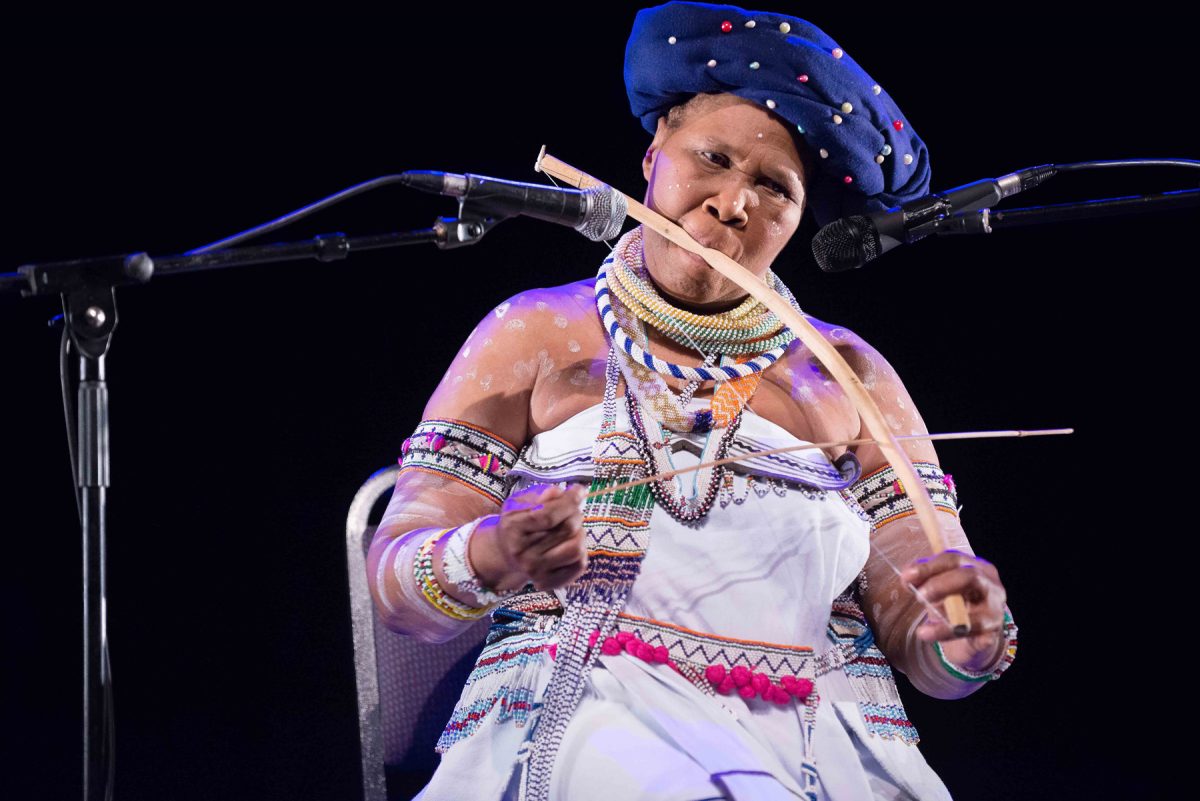
Musical bows are found throughout Southern Africa, with different iterations found across South Africa, eSwatini, Angola and Mozambique. Aside from small differences in size and structure, most bear a basic resemblance to a hunting bow, with a single string attached to either end of a curved length of wood. Historically, the strings would have been made from animal gut or plant fibres, but today the instruments are most often strung with brass wire, providing them with greater resonance.
Among the Xhosa-speaking peoples of the Eastern and Western Cape provinces of South Africa, the two most commonly performed bows today are uhadi and umrhubhe. Uhadi is the larger of the two and typically features a hollowed-out calabash attached to the shaft, which acts as a resonating chamber that amplifies the sound of the instrument. Sound is produced by firmly tapping the string with a thin reed stick in one hand and pinching the string with the thumb and forefinger of the other hand in order to produce different notes. The sound hole of the calabash resonator, which faces away from the string, is also moved back and forth from the chest to create a melody from the overtones.
Umrhubhe is a smaller, mouth-resonated bow. It is most often played by rubbing the string back and forth with a reed or scraped stick (in much the same way as one plays the violin), while using the mouth both as a resonator to amplify the sound, and an inward whistling technique to create a melody. It is also sometimes played in a percussive manner, similar to the tapping technique used on uhadi.
Historically, umrhubhe and uhadi were important signifiers of Xhosa girlhood and womanhood respectively, and carry strong connotations of storytelling, lullabies, and nostalgia – not surprising for instruments that are frequently described as evocative, otherworldly and hypnotic.
The impact of colonialism
Like many indigenous instruments across the continent, uhadi and umrhubhe were systematically devalued by European colonial authorities. Indigenous populations were taught to view Western classical musical instruments and forms as superior. This attitude, along with the conditions of migrant labour across the country, continues to impact the status of traditional instruments. Musical bows, with their superficially simple structure and playing techniques, were derided as unsophisticated. Even today, some people, even those with cultural links to the instruments, consider uhadi and umrhubhe to be silly playthings at best and embarrassing relics of a primitive past at worst. In previous decades, the lack of interest in these instruments was so dire that bow music researchers considered them at risk of dying out. Until recently, it was rare to find enthusiastic players even in rural areas, let alone in urban areas where they were virtually non-existent.
Survival and revival
The past decade, however, has seen a significant shift in such attitudes, and there has been a rapid rise in the popularity of these instruments, especially in cities such as East London, Gqeberha, and Cape Town. This is evidenced by the increasingly high number of bow-centred music performances aired on national television, offered at live gigs, and shared on major streaming platforms. Further promoted by African instrument building workshops, international conferences dedicated to bow music, media coverage from both major news outlets and smaller independent networks, as well as expanded inclusion in university music curricula, it seems that the revival of Xhosa bow music is well under way.
It is thanks to a handful of bow music scholars and cultural elders such as the late Dr Latozi Mpahleni, aka Madosini, Mantombi Matotiyana, the Nqoko Women’s Ensemble, and Prof Dizu Plaatjies, that the tradition has been kept alive. Now, a new generation of uhadi and umrhubhe builders and performers is rising to the challenge of revitalising the instruments.
Among the growing number of musicians who make up the current Xhosa bow music revival, some of the more prominent figures include Mthwakazi, Luyolo Lenga, Indwe, Dumama, Thandeka Mfinyongo, and Odwa Bongo. Artists like these are finding innovative ways to introduce uhadi and umrhubhe into a wide variety of musical contexts, from fusions with folk, jazz, and Western classical music, to art installations and sound journeys.
Through recent collaborations with Xhosa bow musicians, popular music artists like Msaki, Neo Muyanga, and Zolani Mahola are also contributing to the visibility of uhadi and umrhubhe, as are the potent art installations by ceramicist Andile Dyalvane and sound artist Mntana WeXhwele.
Thanks to such efforts, even the elders of the tradition have gained greater prominence in recent years. In 2019, Mantombi Matotiyana released her debut album at the age of 87 and, in 2020, Madosini was celebrated as the Standard Bank South African National Arts Festival’s Featured Artist and awarded an honorary doctorate in music by Rhodes University.
Future directions
Recent innovations in the construction of musical bows, such as the addition of tuning pegs and built-in sound pickups for greater amplification, are expanding the possibilities of composition and collaboration within multiple genres.
The revival of these instruments also comes with some interesting cultural shifts in response to the needs of a younger generation, such as the loosening of historical gender associations and a stronger connection to the spiritual beliefs and ritual practices of the amaXhosa. Indeed, this revival is both personal and political, and many consider their work to be an act of spiritual healing for themselves and a disillusioned post-apartheid youth.
Excitingly, other southern African musical bows, including the Zulu counterparts of uhadi and umrhubhe – umakhweyana and ughubhu – are also receiving a similar quality of attention, bolstering the prospects for a nationwide bow music revival.
By popularising southern African musical bows, these artists and their collaborators are not only celebrating indigenous musical sounds and musical values, but also reviving indigenous knowledge systems more generally, offering unique and much-needed perspectives on South Africa’s sociopolitical landscape.
Sources & further reading
https://bowmusicfoundation.org/musical-bows-in-southern-africa/
https://journals.co.za/doi/epdf/10.10520/AJA02562804_764
https://nationalartsfestival.co.za/news/2020-featured-artist/
https://humanities.uct.ac.za/college-music/african-music
https://baz-art.co.za/what-we-do/projects-and-murals/jhb-modosini-x-msaki
https://letsgetlocal.co.za/meet-odwa-bongo-healing-the-hurt-and-reviving-the-uhadi/


Most popular
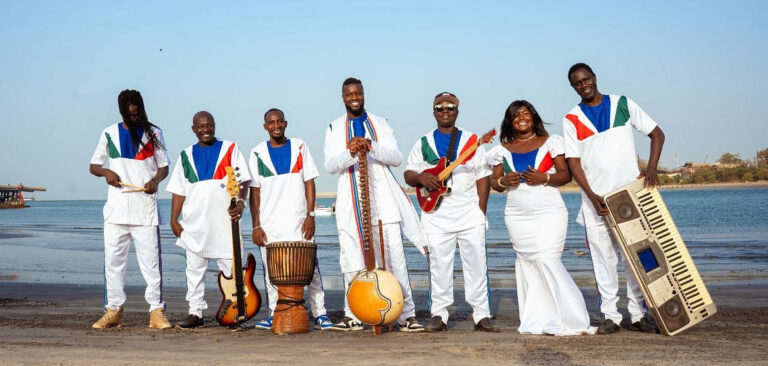
Gambia: Suntou Susso announce UK tour for ‘The Path of a Griot’
09 Oct 2026

Top amapiano songs of 2026
16 Feb 2026

Top Afrobeats songs of 2026
19 Mar 2026
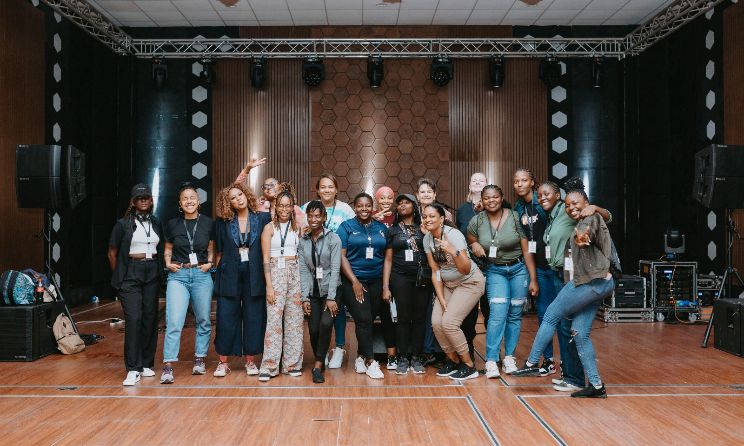
Open call: 2026 Gender@Work music industry training in Johannesburg
09 Oct 2026

Top Naija songs of 2026
31 Mar 2026

Call for applications: ACCES 2026 Emerging Artist Spotlight Competition
01 Oct 2026
Disclaimer: Music In Africa provides a platform for musicians and contributors to embed music and videos solely for promotional purposes. If any track or video embedded on this platform violates any copyrights please inform us immediately and we will take it down. Please read our Terms of Use for more.

Subscribe to our monthly Newsletter
Follow us on social media


Please log in to post a comment.