






















































By Collins Mwai
Cultural heritage in its various aspects is one of the most important elements of political and socio-economic development of any country. Its contributions range from the creation of economic opportunities and the preservation of values to offering a sense of identity to citizens. This text provides an overview of cultural politcy in Rwanda.
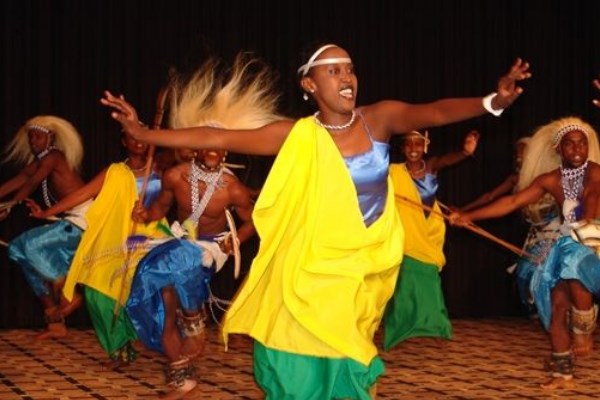
Despite having been in place for decades, the Rwandan cultural[i] and creative industry has long been perceived by the general public as a hobby, as opposed to an income-generating activity. Activities within the cultural industry - ranging from music, arts and festivals to historical preservation - consequently lost attractiveness as careers, leaving talented citizens to pursue formal careers. Those who stick to the cultural industry mostly choose to leave the country to pursue foreign markets, where their skills offer better financial opportunities. As a result, the cultural heritage (buildings, monuments, artifacts, books, works of art, practices, folklore, traditions and language) risks erosion from western influence. It is upon this background that the Rwandan government developed and adopted a cultural policy that is set to be the foundation of the development of the creative industry.
First formulated in 2008, the policy - which finally came into effect in February 2015 - aims to promote and preserve cultural values, as well as increasing cultural and creative industries' contribution to economic development [ii]. Through the policy, the Rwandan government hopes to capitalize on the cultural industry’s potential for economic diversification to facilitate the country’s targets of creating about 250 000 jobs every year and increasing opportunities for self-employment. The cultural policy was therefore tailored to harmonize and guide cultural initiatives in the country to promote the Rwandan creative industry.
In the process of developing the policy, the Rwandan government and industry stakeholders began by identifying key challenges that had previously held back the cultural and creative sectors where the policy would intervene. Among the challenges were; insufficient space for cultural expression, high equipment investment costs, inadequacies in enforcing the copyrights law, and low levels of technology and skills for the majority of industry players. Beyond these listed challenges, it was evident that the industry was also ailing due to the lack of an official policy and the absence of coordination between the activities of various structures and players.
Key interventions
According to the cultural policy document, proposed intervention activities include reviewing and developing legal instruments in the creative arts sub-sector to increase their economic benefits, develop a strategy to promote cultural tourism and establish ways for different institutions to partner to promote the industry. Noting that the intervention was against the backdrop of the 1994 genocide against the Tutsi that claimed more than a million lives, the policy also prioritizes establishment of effective mechanisms to research, re-write and widely disseminate Rwandan history for the benefit of locals and foreigners. The policy itself is an admission by the government that cultural and creative industries require support to allow talented people to further develop skills and generate income through their various skills.
In the process of implementing the policy, the stakeholders have affirmed (through media and other public appearances) that they aim to create confidence among talented Rwandans, reduce their vulnerability in the market and fully exploit their skills to transform their creativity into business. Among the other changes, the regulatory framework policy is now orienting all interventions to allow people in the industry to access finance, get recommendations and get training to increase their knowledge. Implementation is through multi-sector cooperation bringing together a range of stakeholders, including the Ministries of Trade and Industry, Education, Youth and ICT, the private sector and civil society, among others, under the coordination of the Ministry of Sports and Culture[iii] and its affiliated agencies.
According to the policy document, to fully realize the desired outcomes, an investment of about RWF 5 billion (US$6.7 M) will be required by the sector. The implementation costs are being met through traditional annual budget allocations from the national treasury, as well as investments through public private partnerships and contributions from development partners. The ministry is also responsible for soliciting funding for the interventions planned by the policy and for mobilizing the private sector to invest in various cultural initiatives. This involves conducting research to provide sufficient data on the opportunities available in the sector and sharing these with the private sector to take advantage of them.
Policy impact
So far, by having in place a policy that has clear objectives, the Rwandan cultural and creative industry has been able to attract support from partners and like-minded stakeholders. Though only in its first year of implementation, the policy has attracted the Swedish government[iv] to include the arts as one of the sectors they support in Rwanda. Their support is through sharing experiences from Sweden and mobilizing stakeholders to work jointly on the way forward.
The policy has also received backing from the United Nations as culture, creativity and development are part of new global development framework outlined in the UN's Sustainable Development Goals adopted in September 2015. The Rwanda Development Board (RDB)[v], the investment promotion agency of the government, has also included the arts among the sectors that investors should consider when investing in the country.
Following the adoption of the policy, players in the Rwandan cultural industry have come together to discuss ways they can jointly build an environment that will ensure their welfare and encourage their creative activities. The policy has also boosted the confidence of other industries and leading corporations to work with the cultural industry to increase their relevance in the Rwandan market and have an edge over their competitors. This is expected to give rise to corporations and firms working more closely with the cultural sector to provide opportunities to a previously ailing sector.
Cultural industry players pursuing various interests are upbeat about the future of their industry. Among their expectations is a gradual demystification of their beloved industry, for it to be considered as more than just a hobby but also a career. In this way, it is hoped that industry players will be able to access support from financial institutions with relative ease, as well as to be considered for support by international and local development partners.
Industry experts say that the next step calls for training and capacity building among young people, the future professionals and leaders of the industry. Experts further note that beyond the implementation of the policy and the operationalisation of its actions plans, industry stakeholders will require cohesion and a common vision to achieve sustainability and avoid long-term donor dependency.


Most popular

Call for applications: ACCES 2026 Emerging Artist Spotlight Competition
01 Oct 2026

Top amapiano songs of 2026
16 Feb 2026

Top Naija songs of 2026
31 Mar 2026

Top Afrobeats songs of 2026
19 Mar 2026
Open call: 2026 Gender@Work music industry training in Johannesburg
03 Oct 2026
AFRIMA 2026: All the winners
12 Jan 2026
Disclaimer: Music In Africa provides a platform for musicians and contributors to embed music and videos solely for promotional purposes. If any track or video embedded on this platform violates any copyrights please inform us immediately and we will take it down. Please read our Terms of Use for more.

Subscribe to our monthly Newsletter
Follow us on social media


Please log in to post a comment.