


















































SA arts department to probe SAMRO amid royalties allegations
04 Apr 2018 - 16:17


The South African Department of Arts and Culture has intervened in a royalty payment dispute involving gospel singer Hlengiwe Mhlaba and the Southern African Music Rights Organisation (SAMRO).
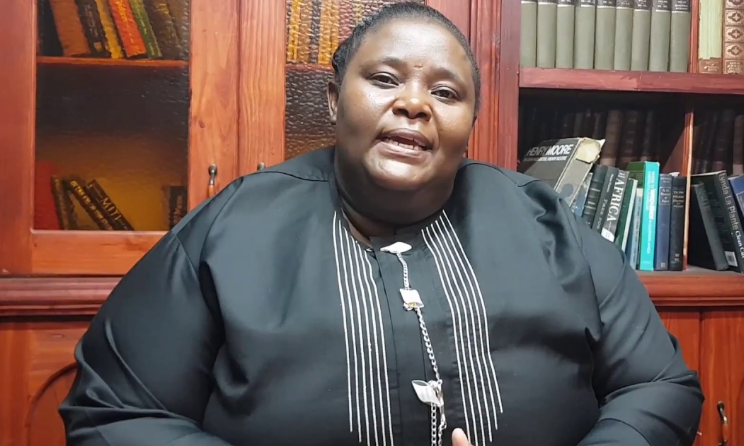
Mhlaba alleged through a City Press newspaper article published on Easter weekend that SAMRO had fleeced the singer of millions in royalties. She claims SAMRO wrongfully paid out R8.5m ($720 000) to her former producer and manager Sipho Makhabane without the singer signing her rights over to him. City Press, which spoke to Mhlaba in what the publication calls a “tell-all interview”, said the singer only received a portion of royalties for 24 original song arrangements.
The allegations were raised by Mhlaba’s legal advisor, Graeme Gilfillan, who accused SAMRO of giving artists only 16.7% of their royalties while siphoning the remaining 83.3% through a “mysterious composer” known as DP. Gilfillan told City Press that artists should receive 100% of the royalties for rearranged musical works. This scam, the City Press article says, has been running for more than five decades and amounts to a total of R1.2bn involving various local and international artists.
“[South African Arts and Culture] Minister Nathi Mthethwa has noted with grave concern the article published in City Press and News 24 online news platforms on 1 April 2018 in what is alleged to be the biggest music rights scam in South African history,” said a departmental statement released on Monday to announce the launch of an official commission of inquiry to probe the matter.
“The report goes into worrying detail into the alleged theft over a period of years of royalties amounting to millions of rands due to the artist in question. The Department of Arts and Culture will announce in due course the outcome of a process, which is to begin immediately by the legal unit of the department.”
But in a letter to members, SAMRO CEO Nothando Migogo says the City Press article is riddled with factual inaccuracies, although she does admit that some practices at the organisation are outdated and need adjustment.
“It must be recorded that SAMRO is already reviewing the rules in question as part of a far wider policy review because of the clear disharmony between some of our policies and the SAMRO we wish to see going into the future, as well as clear unhappiness over the years from members,” she wrote.
“The fact that we need to change and improve certain aspects of the way SAMRO operates is well known and was a key mandate given by the board to me and the executive in July 2017, and was a very clear directive from you, the membership, of SAMRO at the EGM [extraordinary general meeting] and AGM meetings of October and November 2017.”
Speaking to Music In Africa in an email note, Migogo provided clarity on the 16.7-83.3% split levelled by Mhlaba and her lawyer.
“Where an arranger creates an arrangement, he (the arranger) receives 16.7% of the copyright in the new arrangement while the balance goes to the composers of the original work because the presumption is that original work forms the basis (and thus the lion’s share) of the new arrangement. This presumption may be questioned where the arrangement is so fundamentally different to the original work that the original cannot be said to be worth 83.3% of the copyright,” she said.
“The 16.7% is not a percentage SAMRO is not open to exploring and amending. However, to outright say an arranger of a work should own 100% of an arrangement (as suggested by Gilfillan) would mean that if you make an arrangement of a Thandiswa Mazwai composition, for example, she would not have any rights attributable in the arrangement. The fact that the original work is in the public domain does not change this principle.”
The City Press article says that DP stands for dominus publicus – a term used to describe a work that “no longer qualifies for copyright because the composer died more than 50 years ago”. SAMRO says DP actually stands for ‘public domain’, which comprises works of dead musicians as well as indigenous music.
So what happens to the 83.3% that belongs to dead musicians who can’t collect their royalties? City Press seems to allude that the money is siphoned to connected individuals at SAMRO or simply stolen.
Migogo says royalty payments of public-domain works are part of a transparent process known to all SAMRO members, albeit not supported by many.
“The remaining 83.3% is assigned the category 'DP', indicating that this portion is in the public domain (i.e. there is no copyright) and the royalties that would have accrued had the work been in copyright are ring-fenced and distributed to all SAMRO-member musical works that have been active in that year.”
Migogo told this publication that the SAMRO executive and board were looking at a number of options to ameliorate the issue of royalty payments in the public domain but that assigning 100% accreditation to an arranger would always be problematic. She said there had been developments in the enactment of the Intellectual Property Amendment Bill by the Companies and Intellectual Property Commission, which would recognise copyright of indigenous and traditional music. “This will take such music out of the public domain and give a legitimate royalty flow for these works,” Migogo said.
It is now up to the commission of inquiry to investigate all money flows and payments that were made out through SAMRO’s public-domain royalties system since 1963. SAMRO executive general manager of corporate affairs Andre Le Roux told Music In Africa that the organisation would comply with the commission’s processes. “We are ready to assist the commission in any way we can,” he said, adding that an instatement of a commission of inquiry could take longer than what the department has indicated.
Meanwhile, the City Press article also questions the SAMRO board composition, its membership tiers, payments to big industry players and a Dubai deal in which the body lost $2.8m.
Read Migogo’s full letter to SAMRO members below (attached).


Most popular
Open call: 2026 Gender@Work music industry training in Johannesburg
09 Oct 2026

Top amapiano songs of 2026
16 Feb 2026
Gambia: Suntou Susso announce UK tour for ‘The Path of a Griot’
09 Oct 2026

Top Afrobeats songs of 2026
19 Mar 2026

Top Naija songs of 2026
31 Mar 2026
Call for applications: ACCES 2026 Emerging Artist Spotlight Competition
01 Oct 2026
Disclaimer: Music In Africa provides a platform for musicians and contributors to embed music and videos solely for promotional purposes. If any track or video embedded on this platform violates any copyrights please inform us immediately and we will take it down. Please read our Terms of Use for more.

Subscribe to our monthly Newsletter
Follow us on social media


Please log in to post a comment.