
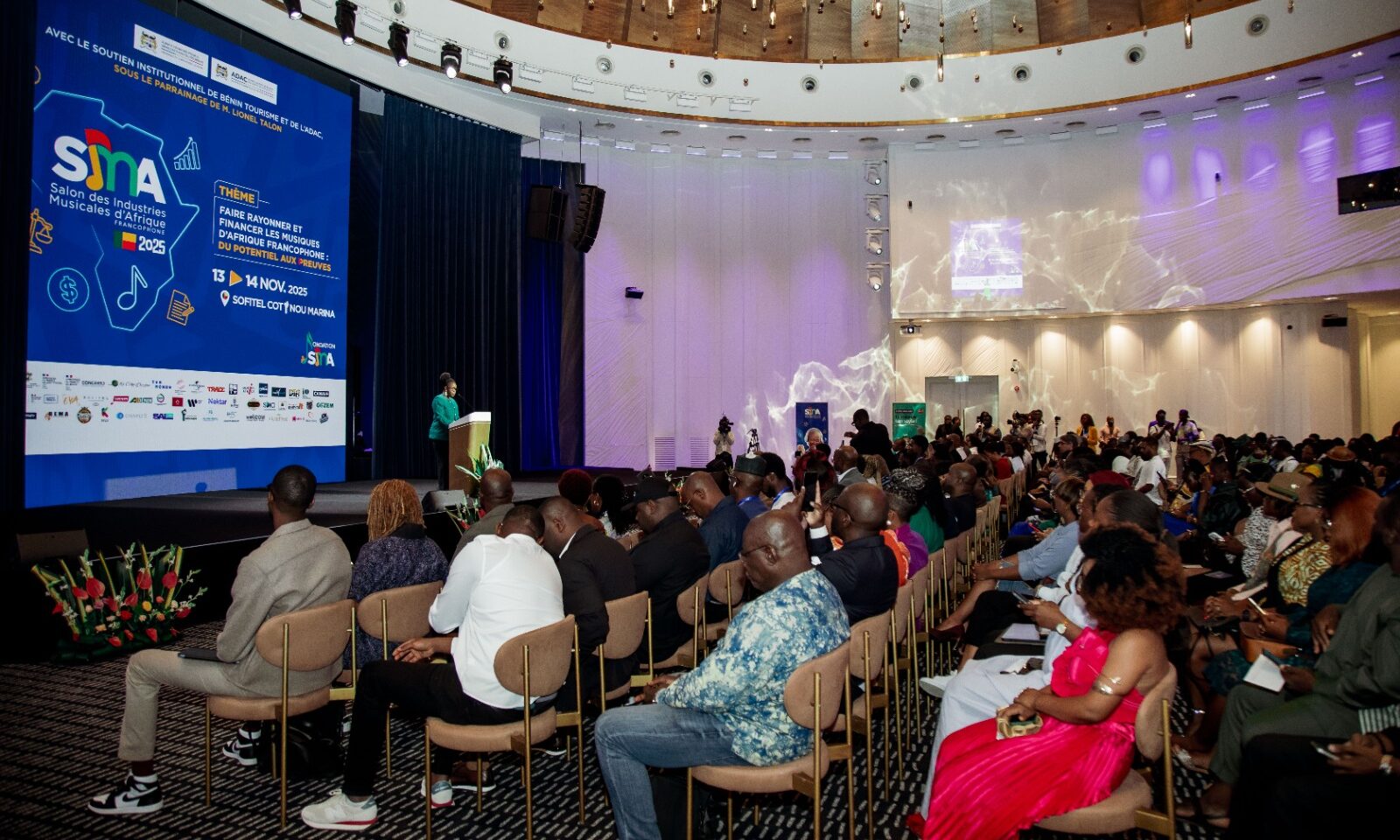























































Merchandising and physical distribution opportunities for SA musicians

24 May 2022 - 07:17


Traditionally, band merchandise, often called ‘merch’ for short, is sold by artists and record labels. It is generally used to promote tours, album releases or brands to music fans.[1]
This article explains how merchandising works in the music industry, including advice on physical distribution strategies.
What is merchandise?
Johnathan Shaw, author of The South African Music Business, defines merchandise as ”all sellable materials other than the music of an artist, which have the name and likeness of the artist.”[2] In other words, merch can be virtually anything that an artist or band, or their representatives, puts their brand on.
The most common types are apparel (T-shirts, caps, hoodies), physical music formats (CDs, vinyl, cassettes) and memorabilia (posters, stickers, patches, buttons/pins).
Merchandise is a great source of revenue for artists, because it generates income and acts as a strong form of promotion. According to Music In Africa’s Revenue Streams for South African Music Creators 2022 report, merchandise sales generate an average monthly income of R6 607 for music creators around the country.
Spending and making money with merch
Selling merch at concerts is a fantastic way to make more money from live performances in South Africa. It is also proven that fans are much more likely to buy your merchandise after watching you perform than online, as fans relish the opportunity to interact with artists and purchase mementos directly from them. Some musicians can earn more money selling merch at their shows than they get paid to perform.[3]
However, the reality of merchandise is that it costs money to produce. Although this should rightly be seen as an investment in future revenue, the key to making money from merch is to balance the cost of producing and selling an item with the price it is sold for.
When considering the cost of manufacturing merch, it is helpful to think about the price at which the product(s) will be sold to the consumer. This allows the artist to decide how much they can afford to spend making and selling the products.
There are three main methods of calculating selling price, and it is advisable to price products using a combination of the three:
- Cost-based pricing: Calculate the cost of production then add a profit margin.
- Competition-based pricing: Price based on what other artists charge.
- Consumer-based pricing: Charge what fans are willing to pay or are used to paying.
Effectively combining these three factors will ensure that the artist does not lose money, that their products are perceived to have value, and that their fans can afford to buy them.
A practical example
Let’s use the example of a production run of 50 T-shirts to illustrate the costs and procedures involved with making and selling merch. All prices are estimated examples based on current/recent price ranges.[4]
Design costs
If the artist cannot, themselves, create a design in an acceptable digital printing format, then they will need to pay a designer to do it. If this is the case, the first cost will be about R2 000 for the T-shirt artwork. If the artist cannot afford to pay a designer, they could ask a friend to help them, or, if they happen to know a visual artist, they could collaborate and share the profits.
Raw product costs
Once the design is done, the blank T-shirts need to be chosen. These can range from R50 to R150 per shirt, based on the quality and the quantity ordered (as with all manufacturing, prices get cheaper the more you order). For this example, let’s assume a median price of R100 per unit for 50 T-shirts, which comes to R5 000.
Manufacturing costs
Screen printing (the method used for most T-shirt printing) prices are based on the amount of colour in the design, as each colour gets printed separately from an individual screen. Printers combine a number of factors (the cost of making the screens, the manufacturing time, delivery charges, etc.) to arrive at a per-unit printing price. For this example, we will use an average rate of R35 per unit (including delivery), which is R1 750.
Selling costs
At this point, the artist has received a box of 50 printed T-shirts, costing them a total of R8 750 (or R175/unit). To make their money back, these T-shirts need to be sold. A combination of online sales and direct-to-fan sales (e.g. live shows) are the most common methods these days for small and medium-sized artists. More established artists, or artists signed to record labels or management agencies that have strong physical distribution networks, may be able to sell their merch in retail stores. For the sake of this example, let’s assume that R500 will be spent on online marketing for the T-shirts, and a 15% sales charge will be levied by the online platform/music venue where the T-shirts will be sold.
Determining the selling price
When we factor in our marketing costs, we arrive at a total of R9 250 (R185/unit) for our batch of 50 T-shirts. Cost-based pricing means that they will need to be sold for at least R218 (unit price of R185 + 15% sales charge) before production costs are covered and any profit can be made. For competition-based pricing, the artist should look at what other artists similar to them – or those selling merch to the same fanbase – are charging. Let’s assume the competition is charging R350 per T-shirt. In this example, the artist may think that these prices are too high. They could then apply some consumer-based pricing logic, deciding that a more reasonable/realistic selling price for their fans is R300 per unit.
Profit margin and break-even point
Once you have determined your selling price, you can then calculate your profit margin. On a per-unit basis, this will be R70 (R300 selling price with 15% sales charge = R255, minus production costs of R185). Therefore, if all 50 T-shirts are sold, a total profit of R3 500 can be realised. However, remember that the minimum goal when making merch should always be to break even (i.e. make back at least what was spent on the T-shirts). To do this, you need to determine how many shirts will need to be sold in order to recoup the total production costs (R9 250 in our example). By factoring in the sales charge of 15%, we can see that we need to earn at least R10 638 in order to squash these costs – which is to say, we need to sell 36 T-shirts at R300 each in order to reach our break-even point.
Online sales and distribution
Online stores are fast becoming the norm when it comes to buying merch, especially in the wake of the impact of the COVID-19 pandemic on the live music sector. Services like Bandcamp, the world’s largest online record store, allow any band or label to use the platform in return for a 15% commission on sales, with similar deals being offered by e-commerce platforms such as Shopify. Local alternatives include The Merch Church and Casual Sex Store. Meanwhile, social media platforms like Instagram and Facebook have taken advantage of the e-commerce boom and are transforming into huge digital marketplaces with direct access to consumers.
It is important to remember that once items have been sold via online marketplaces, they still need to be distributed. This is why it is always wise to charge shipping fees on top of the sale price, because these rates can be very costly. Within South Africa, it costs between R50 and R100 to courier a single T-shirt, vinyl or CD to a fan, while sending the same items to the US or Europe can cost between R500 and R1 000.
To make this process easier, there are distribution companies, such as PacketUp, that will store the artist’s merchandise in a warehouse and send out individual orders on their behalf, charging either a flat fee or a percentage of the artist’s earnings for this service.
Physical music formats
Since 2006 and the advent of streaming platforms, physical music formats have fallen from an 83% market share in the global recording industry to a relatively minor position of 19%.[5] In South Africa, we have witnessed the struggles of music stores such as Musica and Look & Listen, and the latest figures from the Recording Industry of South Africa (RiSA) indicate that CD sales have fallen by 77.8% since 2018.[6]
Yet, despite this reduced market share, selling music in physical formats is far from dead and buried. In fact, the music industry is experiencing an “insane revival” of vinyl, so much so that it takes up to six months to produce a run of vinyl because there is more demand than manufacturing capabilities available worldwide.[7]
- Vinyl is expensive to make for the South African industry because there is no pressing plant on the African continent. They have to be manufactured overseas and imported, which can incur significant import duties, depending on where they were manufactured.
- CDs are still relatively inexpensive to make, and there are still a few manufacturers left in South Africa – though many have closed since the outbreak of the pandemic.[8] While it is true that many people no longer own a CD player, some fans purchase CDs simply to own the music in a physical format – as a piece of memorabilia.
- Cassettes are still popular among audiophiles who claim the sound quality direct from tape in unmatchable by any other format.
Final thoughts
Merchandise is meant to represent the image of the artist and it should therefore take the form of products that their fans are likely to buy. Metal bands sell a lot of T-shirts because lots of metal fans like to wear them. Jazz musicians sell lots of CDs and vinyl because their fans tend to be a little older and still listen to these physical formats.[9] It is therefore crucial to understand your audience and to produce merchandise that will appeal to your fans. It is also a good idea to be on the lookout for opportunities for brand partnerships to help you achieve bigger production scales with lower risks.[10]
Finally, it is important not to over-invest in merchandise, as there is nothing worse than having piles of boxes of unsold products in your house. Correctly assessing your production and sale costs alongside a good understanding of your audience will help to prevent this.
[video:https://www.youtube.com/embed/d7Ahnhnq0G4 width:744 height:446 autoplay:0]
Video: A beginner’s guide to band merchandise presented by The Music Lab.
Resources and citations
- [1] Shaw, JG. (2017). The South African Music Business (Third Edition). Billion Music: pp.75-77
- [2] Ibid.
- [3] Soundfly. (2019). “How to Sell Merch and Music at Shows Without Being ‘Sales-y’”. Accessed on February 1, 2022: https://flypaper.soundfly.com/hustle/how-to-sell-music-merch-at-shows/
- [4] Shaw, JG. (2017). Ibid.
- [5] International Federation of the Phonographic Industry (IFPI). (2021). Global Music Report 2021. Accessed on February 1, 2022: http://www.ifpi.org/wp-content/uploads/2020/03/GMR2021_STATE_OF_THE_INDUSTRY.pdf
- [6] Mathe, T. (2021). “Streaming killed the Musica star”. Mail & Guardian. Accessed on February 1, 2022: https://mg.co.za/business/2021-02-06-streaming-killed-the-musica-star/
- [7] Crockett, Z. (2021). “The insane resurgence of vinyl records”. The Hustle. Accessed on February 1, 2022: https://thehustle.co/the-insane-resurgence-of-vinyl-records/
- [8] BG Music. (2019). “Physical formats”. Accessed on February 1, 2022: https://www.bgmusic.co.za/copy-3-of-products
- [9] Shaw, JG. (2017). Ibid.
- [10] Occhino, L. (2022). “The ultimate guide to selling band merch online”. Bandzoogle. Accessed on February 1, 2022: https://bandzoogle.com/blog/the-ultimate-guide-to-selling-band-merch-online
This article is part of the Revenue Streams for African Musicians project, supported by UNESCO’s International Fund for Cultural Diversity in the framework of the UNESCO 2005 Convention on the Protection and Promotion of the Diversity of Cultural Expressions, the Siemens Cents4Sense programme, Siemens Stiftung, Goethe-Institut, the National Arts Council of South Africa and Kaya FM.
Editing by David Cornwell and Kalin Pashaliev


Most popular

Top Naija songs of 2026
31 Mar 2026

Top Afrobeats songs of 2026
19 Mar 2026

Top amapiano songs of 2026
16 Feb 2026

AFRIMA 2026: All the winners
12 Jan 2026

Visa appoints Fally Ipupa as face of Visa Pay in Democratic Republic of Congo
23 Sep 2026
Benin: SIMA to hold third edition in November
25 Sep 2026
Disclaimer: Music In Africa provides a platform for musicians and contributors to embed music and videos solely for promotional purposes. If any track or video embedded on this platform violates any copyrights please inform us immediately and we will take it down. Please read our Terms of Use for more.

Subscribe to our monthly Newsletter
Follow us on social media


Please log in to post a comment.