


















































How to use your music site to generate advertising revenue

24 May 2022 - 07:13


The internet, and particularly social media, has made some serious changes in how we conduct our day-to-day lives. Social media has deeply impacted the way we socialise, work, fall in love and spend our free time. A recent study published by Statista illustrates how the average person went from spending about 90 minutes a day on social media in 2012 to spending 145 minutes a day in 2020. In the same period, the number of internet users across the globe grew to 4.66 billion.[1]
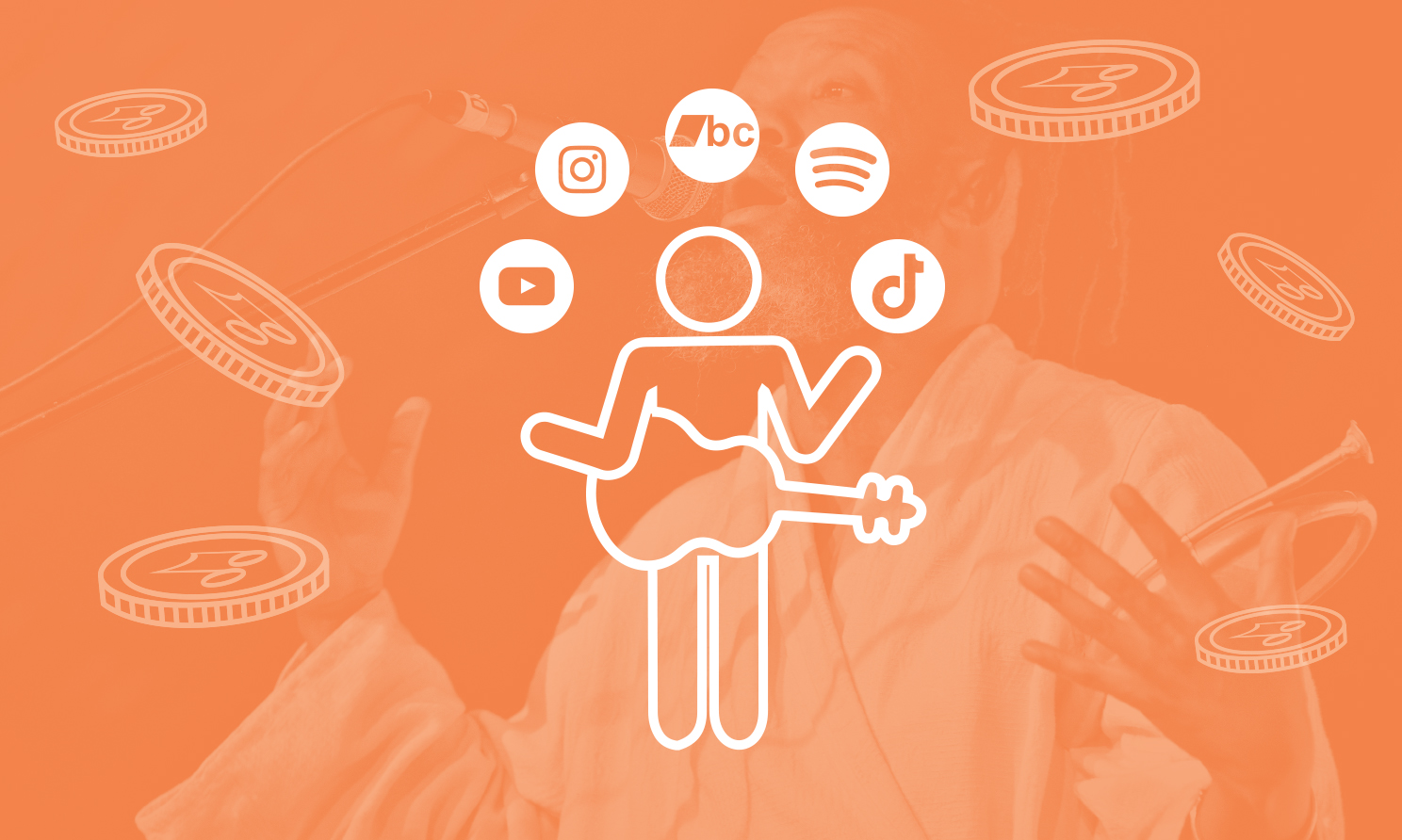
This article looks at how South African musicians can benefit from this growth, by focusing on how to use your music website to generate advertising revenue.
Digital trends in South Africa
Despite the infrastructural obstacles it experiences as a developing nation, South Africa mirrors global trends in terms of increased consumption of online content.[2] The country has taken significant strides in bridging the so-called ‘digital divide’, with the percentage of the population enjoying internet access increasing from 51% in January 2019 to 62% in January 2021.[3] These numbers have been accelerated by the effects that the pandemic and subsequent lockdowns have had on the brick-and-mortar nature of most workspaces, as more and more people have begun to work online from home.
Most importantly, for the purposes of this article, this transformation saw the consumption of online content nearly doubling in 2020, accompanied by a marked change in consumers’ online habits and attitudes. One of four significant shifts noted by digital marketing researchers is that during the height of ‘lockdown life’, people became more receptive to relevant ads on the sites they browsed.[4] And, as more people have begun purchasing goods online, more companies have been willing to spend higher proportions of their marketing budgets on purchasing online advertising space. This has translated into more opportunities for online content creators to earn revenue by hosting these adverts on their websites.[5]
Music in the digital age
The exponential growth and accessibility of the global digital market has driven many music creators towards an independent career, as they no longer strictly require the resources of large record companies to produce their work or reach a sizable audience.
The upside of this is that artists have more agency over their careers in a creative sense; the downside is that they lack the financial prowess that comes with being affiliated with a multinational corporation. This means that artists have to be increasingly crafty about how they navigate and take advantage of every possible income stream at their disposal.[6]
Turning clicks to cash
For artists who are juggling an interconnected ‘ecosystem’ of social media platforms such as YouTube, Instagram, Bandcamp, TikTok, Spotify, etc., a great way to house all these platforms is by having a website or blog. Blogging is a $415bn industry worldwide and one doesn’t require much to get started.[7]
An artist’s blog or site not only serves as a platform to engage fans and sell products and services. It is also a space where the artist can learn to tailor their messages for a distinct audience. Music is a widely popular niche, broadly speaking, but one can sharpen their focus based on factors like genre, geography or political alliance to zero in on their core audience. These ‘insights’ – as they are generally termed – also make it easier for brands to partner with you, if they are looking to advertise to your particular target audience.[8]
According to Music In Africa’s Revenue Streams for Music Creators in South Africa 2022 report, advertising can fetch an average monthly income of R7 312.
There are three main ways one can use a music website or blog to generate ad revenue:
- Advertising networks
- Affiliate marketing
- Sponsored content
Advertising networks
An advertising network, according to BigCommerce.com, “connects businesses that want to run advertisements with websites that wish to host them.” These networks act as a mediator between one’s blog/site, making it easier for the content creator to focus on content creation.[9]
Signing up with an ad network is as easy as applying on one of the internet’s many ad network sites and then waiting for approval. Most do have minimum requirements that are a deciding factor about whether a site gets approved or not.
Before applying to an ad network, a music website or blog should contain the following:[10]
- Original, high-quality content.
- A good amount of content – a minimum of between 15 and 30 posts.
- A sound blog structure in terms of design. You can make use of a free template to achieve this
- Search engine optimisation (SEO).
- A root domain registered in your name (e.g. instead of ‘blog.yourdomain.com’, rather use ‘yourdomain.com’).
- Images that aren’t in violation of any copyright laws.
- Content that doesn’t violate AdSense’s Terms of Service (e.g. violent or pornographic material)
After checking off the list above, one should perform due diligence and choose an ad network that best suits their vision. The most popular ad networks with new bloggers at the time of writing are Google AdSense, Infolinks, PropellerAds, Media.Net, and AdThrive.
Most of these ad network platforms will pay in one of two methods:
- Pay per view (PPV): One is paid a passive income based on how many people have viewed the ad on your site. Also called pay per impression (PPM), it is not uncommon for payments to be made for every 1 000 visits to your page.[11]
- Pay per click (PPC): One is only paid when a reader clicks on a particular ad link.
Affiliate marketing
BigCommerce.com defines affiliate marketing as “the process by which an affiliate earns a commission for marketing another person’s or company’s products.” In simpler terms, one uses their site to refer a reader to an online product via a link on the site. If they purchase said product, then the site owner gets paid in one of the following ways:[12]
- Pay per click: One is only paid when a reader clicks on a particular ad link.
- Pay per sale: One earns a percentage of the product’s sale price.
- Pay per lead: One gets paid based on the conversion of lead (i.e. where the customer either signs up for a free trial or newsletter, downloads affiliate’s software, etc.).
The already-niche nature of a music site means that it’s fairly easy for one to identify the type of products one’s audience would likely be interested in.
Most big brands have affiliate programmes that are free and easy to join. You will need to:
- Select an affiliate programme.
- Choose a product to promote.
- Place a link to this on one’s website or blog.
Some of the most popular affiliate programmes are ClickBank, Commission Junction, Amazon Affiliate Program, Partnerstack, and ShareASale.
[video:https://www.youtube.com/embed/mOWXI6VKGpg width:744 height:446 autoplay:0]
Video: Affiliate marketing can provide a supplementary revenue stream for musicians who have popular websites or blogs.
Sponsored content
The American Press Institute defines sponsored content as “a form of content marketing in which advertisers pay to publish their material on a publication with the intention of closely resembling its editorial content.”[13]
This is arguably the most complex method to earn ad revenue, and there has been some controversy regarding this method of advertising – leading, among other rules, to the obligation to disclose if the content you are posting is sponsored. It is therefore important that one proceeds with any sponsored content agreements legally and ethically.[14]
This type of content could potentially work well with a music site, as there are quite a number of products linked with music making. For instance, one can review any one of the many pieces of equipment or instruments that other musicians might be interested in.
Bear in mind that sponsored content networks usually work with sites that already have a decent amount of traffic, or else ones that can demonstrate strong potential for growth – through the consistent posting of high-quality content, for example.[15]
Final thoughts
Musicians – especially those who already have popular and established websites or blogs – can certainly look to use these online resources to earn a supplementary income through advertising revenue. However, with all these methods, there is one vital consideration that stands above all others: having respect for one’s audience.
Below are some things to consider:
- While flooding your website with advertising might bring in more ad revenue, it might negatively affect the user experience.
- Thorough research must be conducted on all companies to protect one’s audience from scams or harmful products.
- The advertiser’s values should always complement or reflect your values. Otherwise, you risk alienating your fans and may end up losing more than you gain in advertising income.
Resources and citations
- [1] Statista. (2022). “Daily time spent on social networking by internet users worldwide from 2012 to 2020”. Accessed on January 8, 2022: https://www.statista.com/statistics/433871/daily-social-media-usage-worldwide/
- [2] Geldenhuys, J. (2019). “How much time do you spend online?” Moonstone Compliance and Risk Management. Accessed on January 8, 2022: https://www.moonstone.co.za/how-much-time-do-you-spend-online/
- [3] Kemp, S. (2021). “Digital 2021: South Africa”. Accessed on January 8, 2022: https://datareportal.com/reports/digital-2021-south-africa
- [4] Double Verify. (2020). “Four Fundamental Shifts in Media & Advertising During 2020”. Accessed on January 8, 2022: https://doubleverify.com/four-fundamental-shifts-in-media-and-advertising-during-2020/
- [5] Ibid.
- [6] Nxumalo, L. (2021). “The age of the independent artist”. Bubblegum Club. Accessed on January 8, 2022: https://bubblegumclub.co.za/music/the-age-of-the-independent-artist/
- [7] Todorov, G. (2021). “81 of the Most Up-to-Date Blogging Statistics in 2021”. SemRush Blog. Accessed on January 8, 2022: https://www.semrush.com/blog/blogging-stats/
- [8] Gehl, D. (2006). “4 Ways to Get Advertisers on Your Site”. Entrepreneur. Accessed on January 8, 2022: https://www.entrepreneur.com/article/159412
- [9] Big Commerce. (2020). “What is an advertising network?”. Accessed on January 8, 2022: https://www.bigcommerce.com/ecommerce-answers/what-advertising-network/
- [10] Novak, J. (2020). “How to Start a Music Blog & Monetize It”. Fit Small Business. Accessed on January 8, 2022: https://fitsmallbusiness.com/how-to-start-music-blog/
- [11] Arcaléa. (2018). “Pay per Click (PPC) vs. Pay per Impressions (PPM): Which One Is Best For Digital Ads?”. Accessed on January 8, 2022: https://www.arcalea.com/blog/pay-per-click-ppc-vs-pay-per-impressions-ppm-comparison-guide
- [12] On Blast Blog. (2018). “5 Ways to Monetize Your Music Blog”. Accessed on January 8, 2022: https://www.onblastblog.com/5-ways-monetize-music-blog/
- [13] Sonderman, J. & Tran, M. (2013). “The definition of ‘sponsored content’”. American Press Institute. Accessed on January 8, 2022: https://www.americanpressinstitute.org/publications/reports/white-papers/the-definition-of-sponsored-content/
- [14] Brenner, M. (2021). “The 2 Rules of Sponsored Content You’re Not Allowed to Forget”. Marketing Insider Group. Accessed on January 8, 2022: https://marketinginsidergroup.com/content-marketing/the-2-rules-of-sponsored-content/
- [15] Mediakix. (2018). “What is sponsored content, and why should brands invest in it?”. Accessed on January 8, 2022: https://mediakix.com/blog/what-is-sponsored-content/
This article is part of the Revenue Streams for African Musicians project, supported by UNESCO’s International Fund for Cultural Diversity in the framework of the UNESCO 2005 Convention on the Protection and Promotion of the Diversity of Cultural Expressions, the Siemens Cents4Sense programme, Siemens Stiftung, Goethe-Institut, the National Arts Council of South Africa and Kaya FM.
Editing by David Cornwell and Kalin Pashaliev


Most popular

Top Naija songs of 2026
31 Mar 2026

Top Afrobeats songs of 2026
19 Mar 2026

Top amapiano songs of 2026
16 Feb 2026

AFRIMA 2026: All the winners
12 Jan 2026

Visa appoints Fally Ipupa as face of Visa Pay in Democratic Republic of Congo
23 Sep 2026
Benin: SIMA to hold third edition in November
25 Sep 2026
Disclaimer: Music In Africa provides a platform for musicians and contributors to embed music and videos solely for promotional purposes. If any track or video embedded on this platform violates any copyrights please inform us immediately and we will take it down. Please read our Terms of Use for more.

Subscribe to our monthly Newsletter
Follow us on social media


Please log in to post a comment.