























































Ruffcoin: Is Nwa Aba the forgotten hero of Igbo rap music?

10 Aug 2017 - 14:41


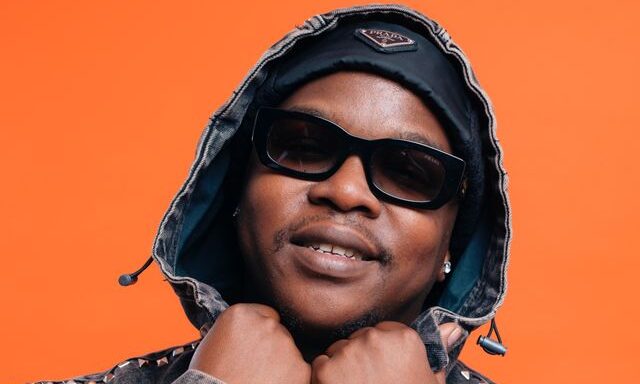
In December 2016, Ruffcoin performed in Abiriba, Abia state before an audience of around 400 persons. His concert was well received without the rapper even getting out of first gear.

Not the tallest artist by any chance, he exuded a stage presence that has far eclipsed his career. Everyone at the venue sang along. Interestingly, he seemed a little surprised that the crowd could sing songs off his Made in Aba album, which at the time was only about two weeks old. The reception he received that night showed that he was a bit of a hero in south-east Nigeria.
But then, performing at a non-ticketed event in some obscure place, when other artists were performing at sold-out shows in Eko Convention Centre in Lagos was hardly a sign of growth. He was probably paid good money to come for the show, but that location, that type of show, at that time of the year, isn’t what the career of an artist as talented as Ruffcoin should turn to.
Roughly a decade ago, Ruffcoin introduced himself into the Nigerian music scene with the song 'Nwa Aba'. It was a hit: A slow tempo rap song heavy on street slang and highly figurative Igbo expressions. It spoke about the industry, smartness, and street credibility of Aba, the most industrialised town in the southeast. Aba was the melting pot of all Igbo people or communities, and its industry was reflective of the industrious Igbo spirit, so that when Ruffcoin sang “A bu m Nwa Aba” [I come from Aba], every Igbo person owned it.
Moreso, when he says, “Umu Eko want to guy nwa Aba, ha akugokwa aka na tipper bu aja” [Lagos boys wanted to scam an Aba boy, they’ve hit their hands on a truck carrying sand], he buttresses an inherent street-smart (real or imagined) of the average Igbo person. With astute rhyming and deft storytelling, Ruffcoin delivered a message of the Igbo survivalist drive, especially for Lagos-based Igbo folk, toiling to earn a living, and who wouldn’t fall prey to Lagos boys who were into money washing. 'Nwa Aba' turned Ruffcoin to a legend. Albeit, a local one.
It was Ruffcoin who took Igbo rap a notch higher than 2Shortz and Nigga Raw (now Mr. Raw), both pioneers of the sub-genre in the mid-2000s. Ruggedman would be worth a mention but he mostly rapped in Nigerian pigeon. As Phyno does today, Ruffcoin infused proverbs and folkloric lines into his lyrics, making Igbo rap fancier, punchier.
Nwa Aba begins with the line, “Aku fee fee fee ya dara m, nwanne aburo m Mango but a chala”. No better way announce your arrival among your contemporaries: “When the locust is done flying," he says, "it’ll fall at my feet. I’m no mango fruit, but I’m more than ripe.” Ruffcoin was right, only, when Phyno put out 'Ghost Mode' with Olamide, every other person, Igbo and non-Igbo, found a riper fruit on the tree. Their gazes would move away from Ruffcoin.
In the years since 'Nwa Aba', Ruffcoin has put out tracks with 2Baba ('The way you dance'), Flavour ('Ofu Ofu') and Phyno ('30-40'), but his music still lacks the gravitas for a countrywide appeal. Yet, all of the artists he has featured were at the prime of their game. It is hard to think of any other Nigerian artist with such an array of collaborations with A-list artists in their resume who has come up short.
Why did he fail where artists like Phyno, and to a lesser extent, Zoro have succeeded? One explanation is in the ability of Phyno to embrace a more panoramic vision of the Nigerian music industry, and consciously worked to give his art a more national appeal while retaining the Igbo essence of his craft, his storytelling, his lyricism. Phyno's sustained collaborations with Olamide was one way he tried to achieve this, in the sense that fans of either Phyno or Olamide became fans of both artists. Zoro carved a different niche for himself in the form of Ogene rap music, even though a part of the jury, is still out on him.
Another possible explanation is that Ruffcoin may have suffered from contentment too early, and having done too little. Is he the man who choosing to restrict himself to a tiny piece of land loses a continent? He certainly had the talent to be bigger, but perhaps for lack of ambition or poor management, it never really looked like happening.
Back in 2014, after many hit and miss songs, Ruffcoin released 'Eriwa', a groovy, street music that spoke of being blessed by the heavens with hypnotic and unparalleled riches. That song was a big hit in Igboland, seeming to give Ruffcoin a second bite of the cherry. “Ka ego m hara igwu, ka akpowa nu m eriwa. Eriwa, agwu agwu,” he sang, a line loosely translating to “May my fountain of wealth never run dry, and may I continue to be known as the big money spender. The man who spends with no limit.”
The song became a staple for weddings, Igwe coronations and Ozor title ceremonies. People walked up to DJs to request for 'Eriwa'.
Sadly, Eriwa outlived its usefulness without Ruffcoin leveraging its success. Sometimes I wonder whether an Olamide remix might have done him good. Perhaps a Timaya remix. Or even a Phyno remix. But I’m also confronted by the fact that both Phyno and Flavour are featured on the track 'Ogbugianyi' off his last album Made in Aba, yet no one even knows the song. Alas, there’s only so much features can do.
Last month, Ruffcoin released a video for 'Okacha Uto', a unique love song off M.I.A. The album's first video, one might add, a whoping seven months after the album's release. Shouldn’t videos help the visibility of an artist’s music and his own presence in the consciousness of the public? These days, unavailability of content is a ticket to obscurity. Especially in the Nigerian music industry where people are quick to forget or write-off artists. Ruffcoin's management may not be blameless in the rapper's inconsistency.
If Ruffcoin learns the right lessons, and with a little more strategic adaptation to the industry, he may well reach the heights deserving of his talent. At the moment, it is hard to argue against the fact that, a decade after his biggest song, 'Nwa Aba', Ruffcoin doesn’t seem like the finished product. He is talented, yes, but remains rough on the edges.


Most popular
Gambia: Suntou Susso announce UK tour for ‘The Path of a Griot’
09 Oct 2026

Top amapiano songs of 2026
16 Feb 2026
Open call: 2026 Gender@Work music industry training in Johannesburg
09 Oct 2026

Top Afrobeats songs of 2026
19 Mar 2026

Top Naija songs of 2026
31 Mar 2026
Call for applications: ACCES 2026 Emerging Artist Spotlight Competition
01 Oct 2026
Disclaimer: Music In Africa provides a platform for musicians and contributors to embed music and videos solely for promotional purposes. If any track or video embedded on this platform violates any copyrights please inform us immediately and we will take it down. Please read our Terms of Use for more.

Subscribe to our monthly Newsletter
Follow us on social media


Please log in to post a comment.