







































NEFCISA
NEFCISA

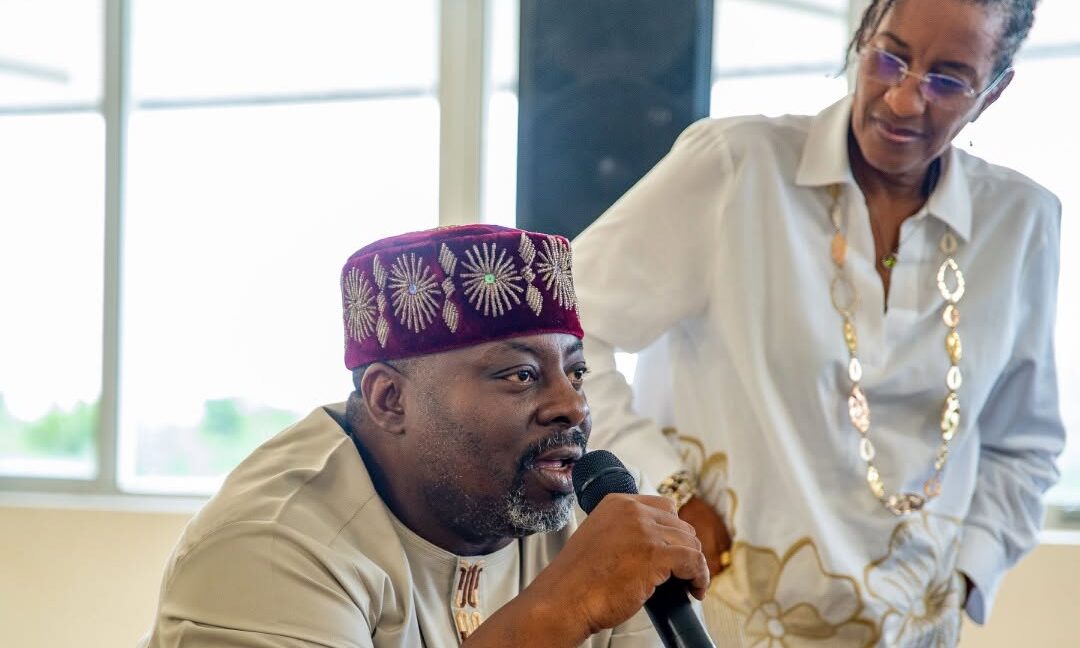
The Music In Africa Foundation (MIAF) is proud of its partnership with the Industrial Development Corporation (IDC) as a Strategic Implementing Partner (SIP) for its Social Employment Fund (SEF). Through this collaboration, MIAF is running a national programme that is creating jobs, addressing skills gaps, and strengthening South Africa's creative industries — in line with the SEF's overarching goal to generate work for the common good and build community value through employment, social contribution, and inclusive economic participation. Operating under the banner NEFCISA (National Employment Facility for Creative Industries in South Africa), the initiative is recruiting and training participants, matching them with host organisations, and has already placed 1 500 workers across the country — surpassing its original target of 1 000. NEFCISA is delivered through a network of 20 host organisations spanning five provinces, who are actively hosting participants and contributing to work for the common good across South Africa's creative and cultural industries. Key Objectives: Support employment and entrepreneurship in the creative industries. Offer skills development and training programmes. Foster partnerships between public and private creative sectors. Promote South African creativity at both provincial and national levels Foster community development through social contribution.

ACCES
ACCES

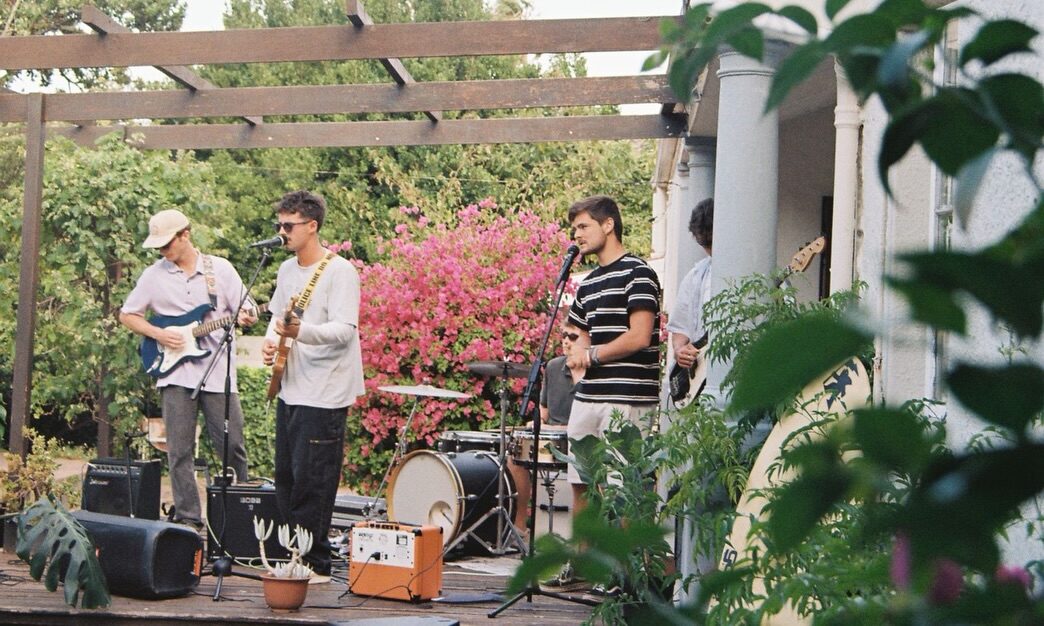
ACCES Conference and Showcase Festival is Africa's leading music industry gathering, bringing together the people shaping the future of the continent's music business. Artists, entrepreneurs, executives, investors, policymakers and cultural leaders from across Africa and around the world come to ACCES to build partnerships, exchange ideas, discover talent and create new business opportunities. Since its launch in 2017, ACCES has become the continent's premier platform for professional exchange and music market development. Combining a high-level conference with a curated showcase festival, networking, exhibitions and industry programmes, ACCES offers a unique space where creativity meets business and where African music connects with the global industry.

Gender@Work
Gender@Work

Music In Africa Gender @ Work is a three-year training programme aimed at upskilling and increasing the participation of female professionals in the African music sector. Launched by the Music In Africa Foundation (MIAF) in April 2019, the programme is connected to the MIAF’s ACCES music conference – a pan-African event held in a different African country every year. This connection enables the programme to reach new participants in a different African country every year. The programme marks the beginning of a more concerted effort by the Foundation to support the participation and inclusion of women in all facets of its programmes and the music sector in Africa as a whole. Over the three years, the programme will aim to address gender imbalances in the sector through training, lobbying, facilitating knowledge exchange and dialogues that foster the interest of women. The broader objectives of the programme are to: Provide industry training for women on critical music industry skills, focusing on: Stage management Electronic music production and recording Music business management Technical knowledge Provide an opportunity for both professional and aspiring women to benefit from the Music In Africa network and its broad range of activities in 2019, 2020 and 2021. Provide a solution-based platform in the form of a round table at ACCES with a view to identify challenges, discuss opportunities and lobby for the interests of female practitioners. Offer participants the opportunity to benefit from programmes offered by MIAF’s partners. Increase access to educational materials. Integrate participants in the broader ACCES programme to maximise experience and exposure to the industry. Record and present training materials on the www.musicinafrica.net, including but not limited to tutorials, templates and other best-practice materials. Communicate women-based themes that support the initiatives and messages of the programme. MAIN TRAINING ACTIVITIES Training in first country (Ghana): In the first year, participants will be trained on all aspects of stage management by a team of experienced stage managers from 10 to 17 November 2019. The programme will offer robust classroom training as well as practical, hands-on training in which participants will also be given the opportunity to manage various aspects of the ACCES performance programme. Training in second country: The second training iteration will take place at ACCES 2020 when the programme will diversify its course to include music production lessons and training on other music business topics. A round-table platform will also be introduced to coincide with the ACCES programme. Training in third country: The third training iteration will take place at ACCES 2021 in a different country, offering an advanced course. HOW DO YOU GET INVOLVED?  As a participant, facilitator or trainer: The programme enrolls up to 12 trainees every year. All opportunities are advertised publicly on this website, and will be added to this page. Please keep checking this page for new calls (below under UPDATES & CURRENT OPPORTUNITIES). As a partner Please contact Claire Metais at [email protected]. APPLY The call for applications for 2020 will be announced soon. The Music In Africa Gender @ Work programme is made possible with the support of the Prince Claus Fund, Siemens Stiftung and Goethe-Institut.

Sound Connects Fund
Sound Connects Fund

For cultural and creative practitioners and organisations operating in southern Africa, access to funding remains a major challenge. The COVID-19 pandemic has also had a massive impact on government policy, spending and the economy in general, and has seen spending on culture being moved further down the list of priorities. Further, the cultural and creative industries repeatedly cite four main areas where investment is needed for growth, which are increased visibility, mobility including access to new markets, finance and support structures.

Instrument Building And Repair Project

Experience the Vibrations African Instruments Exhibition online in 3D

Reviews

Teni Entertainer offers fresh Fuji twist on Fargin

26 Sep 2017 - 11:31

cc-img flag-img

Teni Entertainer’s ‘Fargin’ mines popular Nigerian sounds of old. This is in contrast with the mode of creation in Nigeria’s present pop music boom, which involves borrowing from various cultures—from neighbouring Ghana to faraway Caribbean—and mixing the import with local rhythms to create dance tunes.

Teni Entertainer’s ‘Fargin’ mines popular Nigerian sounds of old. Photo: Pulse

Before releasing ‘Fargin’, Teni had gained some popularity online as a YouTuber. Starting 2012, she made humorous videos of herself dancing, eating and singing. One of those videos, from five years ago, has her singing for her sister Niniola, of ‘Maradona’ fame. Filmed in black and white, her face close to the camera, she starts with a high-pitched R&B ballad and switches towards the end to an Ekiti folk rendition.

If that video—and many like it on her YouTube and Instagram accounts where she covers artists from all over the world—were like adding stew to rice, on ‘Fargin’, she has made jollof.

‘Fargin’ is made of words sampled from Adewale Ayuba’s ‘Omoge Cinderella’ delivered in the vocal style of King Wasiu Ayinde over a sample of Osita Osadebe’s ‘Osondi Owendi’. That is one song made up of Fuji and Igbo highlife delivered in the happy-go-lucky style of the best juju musicians. It is a musical mosaic that also contains ad-libs taken from other songs and sounds.

Fuji, highlife and juju are close-knit. These were the pop sounds of the 1980s, 1970s and 1960s that gradually lost their lustre in the artistic drought that visited Nigeria in the 1990s. From the late 1990s/early 2000s, music that borrows from other cultures became the major way to capture the attention of young Nigerians.

But recently, there has been a growing number of young artists whose main inspirations are entirely local. Terry Apala mixes Fuji and apala, Adekunle Gold has made juju his own, Flavour has long been the prince of highlife, and Nigerians are still coming to terms with the enigma that is Small Doctor.

All the names above are male. Female singers who choose local styles often stay with folk music, because Fuji is, notoriously, a boys’ club. Like many male-dominated fields, the genre is filled with machismo and misogyny. Adewale Ayuba, who Teni Entertainer samples, is one of a few Fuji artists who sang with some self-awareness. In the midst of that testosterone-driven culture, he seemed to foreshadow the impact of feminism. His ‘Omoge Cinderella’ features a male and female character in conversation. Man approaches woman, singing about her physical endowments as he invites her to have sex. Woman sings back…

The woman sings back! She challenges and calls him wicked for wanting sex without considering the implication of the act: pregnancy even when she doesn’t have an education. He cuts her mid-song and asks, “Ki la gbe ki le ju?” expressing shock at the force of her reply to his supposedly benign query.

Teni takes the spirit of this conversation and switches the characters. Man becomes the an old lech who roams parties making passes at young girls. Girl becomes an ingénue. Teni sings both parts. Man: the descriptions of her curves, the request for copulation, self-curse to drown if he’s lying. In Ayuba’s song, man calls lady Cinderella. Here, Teni calls the man Maradona—echoing Niniola’s song. Woman responds with astonishment: “Uncle, I’m still a virgin o.” This is the source of the title.

A boisterous self-described “free spirit”, Teni Entertainer is woman and middle class, traits you couldn’t ascribe to Fuji stars of old. She’s also singing of a young virgin, the kind of subject typical Fuji musicians wouldn’t touch except to render as part of their conquests. Yet, her music doesn’t feel out of place.

Teniola Apata’s authenticity doesn’t stem from being part of a street culture in a Fuji-mecca like Mushin. Instead, her Fuji sound is forged from years spent immersed in the work of artists like King Wasiu Ayinde. One brief song does not a movement make, but the embrace of Fuji by young artists who are eager to mix, match and gentrify the sound, in a way that still feels authentic, might just save one of Nigeria’s indigenous genres from festering in the underground.

Artist: Teni Entertainer
Song: Fargin
Label, Year: Independent, 2017

Please log in to post a comment.

Most popular

Disclaimer: Music In Africa provides a platform for musicians and contributors to embed music and videos solely for promotional purposes. If any track or video embedded on this platform violates any copyrights please inform us immediately and we will take it down. Please read our Terms of Use for more.

newsletter banner

Subscribe to our monthly Newsletter

Follow us on social media