
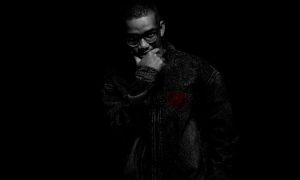









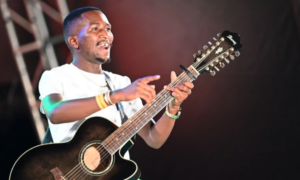







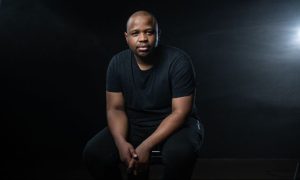















Billy Monama is a guitarist with a passion for the indigenous music heritage of South Africa. He was born and raised in Makopane, South Africa, where he was first exposed to the guitar.
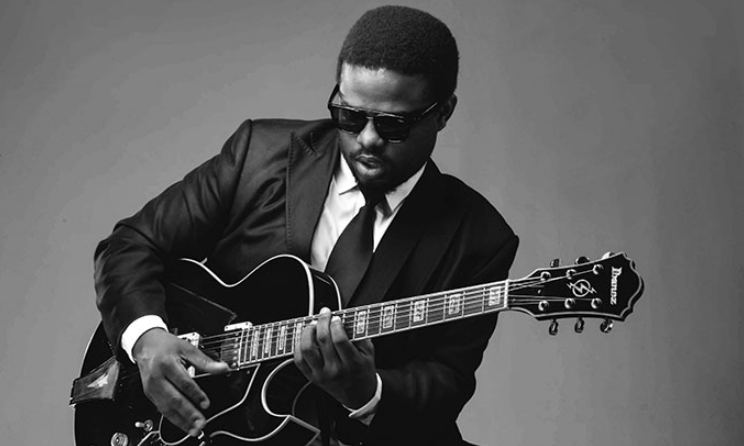
He taught himself how to play with the help of jazz greats such as Tal Farlow, Charlie Parker, Thelonious Monk and Ella Fitzgerald. Monana has dedicated himself preserving South Africa’s musical heritage through the Graz Roots project, which seeks to revive guitar playing styles found in genres such as mbaqanga, mgqashiyo, maskandi and African jazz.
Monana recently released his debut album Rebounce after years of trial and error and unforeseen circumstances that saw the album delayed.
Music In Africa sat with Monama to speak about his upbringing and the challenges he has faced while trying to find his feet in the music industry.
MUSIC IN AFRICA: When did you decide to make music a career?
BILLY MONAMA: I started playing the guitar in 1997 but I only started playing professionally in 2004. That’s when I started making money. Professionally it was because I was playing in church. I was in the church choir and took part in other church activities. Growing up I taught students how to play, so that when I wasn’t available the church wouldn’t be stuck without a guitarist.
When I finished school that’s when the transition came, that’s when I decided I wanted to study music. But my parents didn’t approve of that. Black parents don’t usually approve when their children want to study art. So I opted for political science. I had always had an interest in history. I wasn’t good in maths.
I failed political sciences, I failed it with distinctions and I failed it intentionally because I was playing the guitar when I was supposed to be studying. I missed most of my classes because I was rehearsing for gigs around Pretoria. That’s when I received my first real payment, which was R300 ($25). But the biggest payment I had was when I performed with Deborah Fraser in 2005. I got R1 500. It was a lot of money at the time. I was a student, I had pocket money and an extra 1 500. I bought a lot of CDs because I was interested in finding out about the South African music landscape.
I stopped studying political sciences and gave my mother an ultimatum. I told her, ‘It’s either I do music and promise not to fail any course or I do political sciences, fail and waste your money.’ I never failed any of my music courses thereafter.
How did you get involved in the preservation of indigenous music in South Africa?
What made me interested in heritage preservation was that we were always taught the history of American jazz. The music at school was based on American jazz and classical. And when we were covering South African content, we were given an assignment to focus on the guitar in particular. That was an eye opener for me. I realised there was a serious problem. I went to all the libraries in Johannesburg and I couldn’t find any information about SA guitar styles of playing. The reason is that they were never documented like other styles.
I had a conference on my own. I had an SA background of guitar playing, I was taught to play mbaqanga and maskandi. At school I was introduced to jazz. When I had to research I thought to myself, ‘I grew up listening to Simon ‘Mahlathini’ Nkabinde Mahotella Queens, Zakes Nkosi and West Nkosi.
I asked myself why these people were not in the history books like Louis Armstrong, Miles Davis and John Coltrane. So I came up with a concept called the Graz Roots project, which was inspired by the very lack of preservation of South African musical heritage. The idea here is that it starts with me. I have to preserve my own heritage before I preserve the jazz of Miles.
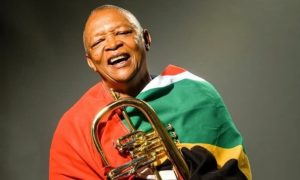
What’s the next generation going to learn if they want to reference SA music without the sheet music? What I want is to take the songs of somebody like the late Hugh Masekela and implement it in the school curriculum. That is the broader idea of the Graz Roots project. It’s also a political project.
What drives you to stay in the music industry?
I come from a humble background. I was raised by a single parent who was strong and never quit supporting us. Every time I want to quit, I think about where I come from and I don’t want to go back there. I come from poverty and starvation. I cannot quit because the world is looking up to me.
I was recently asked how I feel about the death of Masekela as a young person and I said I didn’t want to follow in his footsteps because I’m Billy. He led his own path, he started his career in the height of apartheid and he went into exile. I can’t go to exile, so it’s a different experience.
Music also saved me from bad decisions. I have friends who became thugs. While they were busy with criminal activities, I was at church playing the guitar. Most of them are either in jail or dead. Music was my discipline.
How long did it take you to release your album and what inspired the name Rebounce?
The album was recorded at different stages of my life. I went through obstacles for the album to happen. It was recorded in 2009. It was supposed to be released in 2010. In that year my mother passed away. In 2013 I had a baby so the album had to wait – and babies are expensive. So I went to Swaziland to record an artist. When I returned home I found that everything I owned had been stolen. When I resumed the album in 2015 I was involved in a car accident.
Every time I wanted to release the album and had a title in mind something would happened. The album title was supposed to be Reflections. During all that time I didn’t release it another artist released an album titled Reflections. Then I changed the title to My Journey. Then another artist released the album My Journey.
I looked at the albums and realised all the titles meant the same thing. I was bouncing back from the difficult situations in my life. Bouncing back to me is recovering from all the tough moments.
I thought, ‘If I throw a tennis ball to the ground it comes back to me’ and I called this process ‘the rebounce’ because my life was similar to the tennis ball. Every time I would fall, I would bounce back. And the album was then titled Rebounce.


Most popular

Ringing cancer’s bell: How Umjondi became a story of friendship, grief and hope
26 Jun 2026
Dwin, The Stoic: Master of ballads, architect of connection – part 2
26 Jun 2026

Tycoon releases ‘Art of Love III’ ft. Kabza De Small, Kelvin Momo
26 Jun 2026

Morocco: ElGrandeToto expands ‘SALGOAT Vol. 2’ with extended edition, new international collabos
26 Jun 2026

Kabza De Small tops 2026 SAMAs nominations
26 Jun 2026

Deezer launches Remix Lab, allowing fans to create authorised song remixes
25 Jun 2026





Disclaimer: Music In Africa provides a platform for musicians and contributors to embed music and videos solely for promotional purposes. If any track or video embedded on this platform violates any copyrights please inform us immediately and we will take it down. Please read our Terms of Use for more.

Subscribe to our monthly Newsletter
Follow us on social media


Please log in to post a comment.