










































Audu Maikori: COSON and the case against Tony Okoroji

11 Apr 2018 - 12:29


By Audu Maikori
Editor's Note: As the controversy at the Copyright Society of Nigeria (COSON) rages, several parties have sought to intervene. The Edo state branch of COSON recently took a stand. Now the former head of the Chocolate City record label Audu Maikori, who is a member of the COSON board, has also spoken.
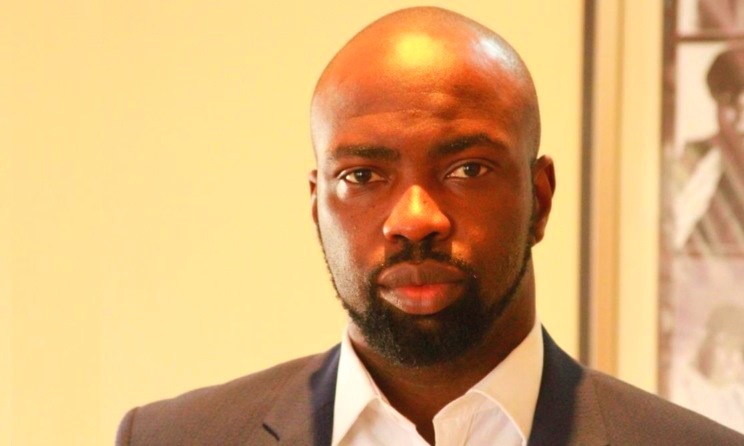
In a statement received by Music In Africa, Maikori gives an account of the controversy which has dogged it since the election of Efe Omorogbe as Chairman replacing Tony Okoroji, who was later re-elected, effectively giving the body two leaders. Below, we reproduce a portion of Maikori's statement.
A list of Tony Okoroji’s infractions
1. The continued engagement of companies owned by fellow Directors /board members of COSON Miss Azeezat Allen and John Udeagbunam, who are currently engaged as paid consultants to COSON, contrary to Article 3(6) of the COSON MEMART.
2. Tony Okoroji personally responded to an earlier petition by Premier Music Publishing Company Ltd (foremost record label in Nigerian history and owners of over 1 000 musical works and sound recordings) querying some of the association’s disbursements and formula for calculating the royalties they received. This in all fairness wasn’t the first time we had complaints about the sharing formula and how it was calculated, even my company had complained about the formula but in this instance, Okoroji (not the GM) responded to the letter without referring the letter to the board for their input.
3. Okoroji unilaterally claimed and approved a standard of 10% commission on all licensing income deemed to have been “brought in” by him without recourse or approval of the board. This is contrary to the objects of the society itself- why should the Chairman of a board get a commission for collecting revenue that is the core purpose which the board was instituted for? And why should the copyright owners have to bear that cost? This not just unethical but totally unheard of!
4. Okoroji unilaterally decided (ostensibly in connivance with his crony Chinedu Chukwudi the GM of COSON) to pay to himself a 15% commission through his company TOPS limited and/ or Creative Legal (a law firm he unilaterally hired as COSON’s legal advisor) from MTN’s settlement payment for royalties. Indeed, the commission, which amounted to about N22 500 000 ($62 550) was paid out without the knowledge, approval, and signature of both the finance committee chairman, Joel Ajayi, and other board members. As a rule, any and all payments above N2 000 000 ($5 560) require board approval. This was flouted as usual.
5. When protests were being mounted about Okoroji's activities, he hurriedly and unilaterally dissolved all standing committees without ensuring that the mandatory quorum as stipulated in Article 42 of the COSON MEMART was adhered to.
6. Finally, as stated earlier, the request for payment of the sum of N26 000 000 ($72 280) in favor of TOPs Management as their fees/costs for the execution of the 2017 COSON Week – an event which the board had suspended because of the high cost of running the event.
The above formed the contents of a petition that was submitted to the Nigerian Copyrights Commission for its consideration and intervention in its role as regulator of COSON.
Following the above, board members felt the need to formally address the issues raised as they were clearly affecting not just the transparency of the operations of the board, but also the amount of money available to be distributed to the owners of the money itself – COSON members. Consequently, the members called for an emergency board meeting, which held on the 7th of December 2017 at the COSON headquarters. In attendance at the meeting was the NCC representative Chuks Ezeilo who by virtue of the provisions of the CMO regulations of 2007 had to be present for all statutory meetings of COSON.
At the meeting, these allegations were raised and Okoroji was asked to respond to the above-stated allegations. Okoroji couldn’t justify any of the issues satisfactorily. Instead, he pleaded with the board to give him time to "resolve" the pending issues. The board then moved a motion to remove Okoroji as Chairman of the board and Efe Omoregbe was voted the new Chairman. The said meeting was witnessed by Ezeilo the representative of the Nigerian Copyrights Commission. The vote was 6:4 in favor of Okoroji stepping down. The NCC representative abstained as was the tradition.
The new board immediately set up meetings with Price Waterhouse Coopers and KPMG to do a forensic audit of COSON activities. The boards resolve was to assess the status of COSON, review and fix all its operations especially in the area of reconciliation of logs and cue sheets and review the royalty distribution figures. A faction of the board had toyed with the idea of exposing the deeds of Okoroji, but the board collectively decided that we shouldn’t bring any further disrepute to COSON at this stage by opening up old sores, but decided that once the audit results were out, we could revisit the matter if the audit revealed excessive discrepancies in the financial statements of COSON.
COSON had already slated a general meeting on the 19 December 2017, which is usually called the annual distribution AGM. This is when members gather from all parts of the country for the declaration of the sums to be distributed as royalties for the year. The newly reconstituted board was contemplating whether to suspend the distribution temporarily in order to allow the auditors determine the actual sums generated and how much was due to be distributed but the consensus was to allow the distribution to continue for the year and start off 2018 on a clean slate. The meeting held as slated.
Drama at COSON
On the day of the meeting the scene that played out was something that would make most Nollywood writers applaud. On arrival Efe Omoregbe the new Chairman and some members were diverted upstairs at the COSON office for “an urgent matter” while and his team had already mobilized a crowd to attend the event in droves. Before Efe could return to chair the meeting, they had appointed Sir Victor Uwaifo as the “acting chairman” of the meeting and the general assembly vetoed the last Board meeting and “returned” Okoroji as chairman. They also proceeded to “sack” the entire board, only returning Azeezat Allen and Udegbelam as Directors from the “former board”. Now a couple of points have to be established- that nothing in the memo and articles of COSON gives the AGM powers to remove a board without following the processes outlined in the constitution. As the Efe, Obi Asika and other board members rejoined the meeting. Tony Okoroji hurriedly announced the distribution amount and quickly adjourned the meeting. The whole thing was a disgrace.
Following this the legally constituted board, wrote a petition to the Nigerian Copyrights Commission in early January, laying out the facts of the case and demanded that the NCC intervene in the matter. In the meantime, Okoroji in his usual manner had hurriedly put together a new board made up of his acolytes. He also launched an assault on us the board members and filed to lawsuits against Efe Omoregbe all in a bid to ensure that the matter will be tied up in the courts.
Reprieve, however, came on the 19th of February 2018, when the NCC wrote in response to our petition. The letter was signed by the Director General of the NCC and directed to the General Manager of COSON and both The Chairman Efe Omoregbe and the Former Chairman Tony Okoroji were copied. I have attached a copy of the letter for ease of reference. In the main, the purported EGM of the 19th of December 2017 was declared null and void and of no effect. The COSON General Manager was directed not to give any such resolutions at the said EGM any effect except the matter of the distribution of royalties. The NCC also directed that a proper AGM should be held within 60 days of the said letter, which is the proper forum for any such board elections. The letter ended with a stern warning that the GM should comply with the directives as stipulated under the Copyright Acts and the CMO regulations of 2007. We received the news with a measured celebration because by now it was clear to all of us the Okoroji was a dogged relentless fighter especially when it concerns something he considers as his source of livelihood.
We were right. Chinedu Chukwudi the GM of COSON and longtime crony of Okoroji wrote back to the NCC stating that the matter was now subject of litigation and basically stating that they would not comply with the directive.
The last straw
Despite the pronouncement by the NCC of the legitimacy of our board, and the directive that COSON GM should revert to the status quo i.e. operate under the validly constituted Chairman and board, attempts by the board to hold a meeting at the COSON office to begin audits of the books of the organization were thwarted by the GM of COSON who had clearly taken sides with his boss. The Board members comprised of Efe Omoregbe, Obi Asika, Dare Fasasi, Obi Asika, Joel Ajayi, Sikiru Agboola (represented by Oby Egbe) and Seyi Lawal who represented me were denied entry into the COSON house. Pictures are all over the internet and this for me was the last straw.
The key issue in this matter is not even the matter of the allegations against Okoroji and his cohorts – it is a question of obedience to the rule of law and the laws that guide and regulate the operations of COSON. When a regulator issues a directive and the licensee ignores or acts in total disregard of the directive- there is bound to be anarchy. This is the lack of protection and enforcement, I mentioned earlier in the article that has robbed the Nigerian economy and Nigerians of what is rightfully due to them. This is a risk for any would-be investors or stakeholders in the industry – the fact that laws are largely ignored.
Okoroji had previously won the respect of many people in the music industry over the years. Sadly it may seem that the adulation he once enjoyed has gotten into his head such that he now believes he is above the law and that the laws don’t apply to him anymore. If I were Tony Okoroji, I would simply have resigned in the face of these grave allegations for the sake of COSON. Instead, Tony has utilized COSON funds to wage a media war against Efe Omoregbe and the board members that voted him out of office. The funny thing about his misdirected campaign is that Efe Omorogbe was unwilling to take the position of Chairman of COSON. It was the repeated pressure from many songwriters, artists, and labels that led to him reluctantly accepting to chair COSON. The fight over the leadership of COSON is to ensure we can build a world-class collection society that matches up with the potentials of such an important copyrights market like Nigeria.
Okoroji and the question of tyranny
The other side of the story is this, if Okoroji believes that he is the only man in Nigeria that can successfully chair COSON, then he should simply comply with the NCC directive and wait for the next AGM and recontest. One thing is clear, an illegal act will not be condoned by the Nigerian music industry any longer- we will not go back to the dark days of royalties collection that arose due to the war between Okoroji and Mayo Ayilaran in the past.
We saw what happened to Robert Mugabe, who clung unto power desperately until he was disgraced out of office. This is the plight of Tony Okoroji who one expects should be playing a fatherly and advisory role in the music industry, instead, he is busy fighting with Efe Omoregbe a man he is old enough to father, all in a bid to hold on to something that he erroneously believes is his birthright. Nothing could be further from the truth – COSON was built by the collective effort of the Nigeria music industry and its stakeholders.
Admittedly, it may not have performed credibly or efficiently as it ought and for that we (myself include) must be held accountable for any failures that have occurred. You see when there is repeated bad management, the only thing to do is replace the management – starting from the leadership (and that includes me) in a bid to ensure that the greater good is served. This is our position.
As I end I would like to call upon the Nigerian music industry and broad stakeholders to take a stand and demand that Tony Okoroji complies with the directive of the Nigerian Copyrights Commission for the good of the Nation. Just last week, he tried unsuccessfully to have the COSON Chairman Efe Omoregbe and Joel Ajayi another (member of the board) to be arrested and detained overnight at a Lagos Police station. His plan(s) failed. I am convinced that he will do anything to stop any audit of COSON’s books and activities at this stage. He will also deploy all resources available to him – yes I mean monies that should be used in paying royalties to hardworking creators and publishers – in order to achieve his nepotistic aims. But rest assured that justice may be delayed, but it surely won’t be denied.





Disclaimer: Music In Africa provides a platform for musicians and contributors to embed music and videos solely for promotional purposes. If any track or video embedded on this platform violates any copyrights please inform us immediately and we will take it down. Please read our Terms of Use for more.

Subscribe to our monthly Newsletter
Follow us on social media


Please log in to post a comment.