
























































Challenges facing African music archives
15 Sep 2015 - 09:50


By Diane Thram
Music archives in Africa have collections of recordings and musical instruments that constitute cultural heritage in need of conservation, dissemination and repatriation (digital return) to their communities of origin. Current issues for music heritage archives include sustainability and ethics in research and archiving practice in relation to realities of digital preservation, internet access, methods of repatriation and the emerging role of music archives - beyond repositories for field collections - as sites for heritage activism and community engagement.
No longer simply repositories for scholars, in the 21st century digital preservation, internet access and online dissemination have become the status quo for music archives throughout the world. However, achieving digital preservation, internet access and online dissemination is a challenge few music archives in Africa - beyond the International Library of African Music (ILAM) at Rhodes Unviersity and the South African Music Archive (SAMAP) at the University of KwaZulu Natal - have been able to meet, largely due to lack of funding and/or expertise. Ethical issues exist regarding research practice, rights to access and use, potential commercial exploitation and repatriation, along with practical issues in sustaining and effectively operating music archives to their fullest potential. In what follows I speak from my experience since 2006 as Director of the International Library of African Music (ILAM).
Present-day issues in music archiving
Digital preservation, cataloguing and online access to ILAM’s collections of field recordings does not mean the music on those field recordings is being performed or being taught to the youth of Africa in the communities of its origin or in school music education programmes. The ‘ILAM Music Heritage Project SA’, funded by the National Arts Council in 2010, produced two music education textbooks illustrated with ILAM’s field recordings. This project was inspired by ILAM founder Hugh Tracey’s vision to publish textbooks on African music as a method to get the music he was documenting taught in African schools. At the time (1950s-60s) and still now in the 21st century, schools mandate teaching of predominantly Western music and neglect of local African music. In Hugh Tracey’s lifetime this was due to the dictates of colonial governments; but now it is due to lack of expertise and lack of adequate classroom materials to teach African music. This issue and those of sustainability and ethics need to be addressed in the work of all music heritage archives.
Sustainability
The perpetual issue faced by ILAM and most music archives is that of sustainability – how to source and maintain adequate funding to survive and thrive. Typically, ongoing operations of music archives include the processing of collections: the cataloguing and creation of a digital database for all holdings, preservation through digital conversion and dissemination via on-line access. Creation and publication of audio-visual and print materials, research projects and publications from research, outreach and education, and repatriation projects should all also be part of on-going operations.
These activities all require funding – most often in excess of whatever institutional support the archive enjoys, especially in the developing countries of Africa. This means archive managers need to seek funding from external sources to carry out preservation and dissemination work, and begin the important work of digital return of recordings to their communities of origin. In ILAM’s case, the purchase of an expandable digital storage server, cataloguing, digital conversion, creation of a database and online access to its collections was accomplished through fundraising from government, corporate and international sources. Grants from organisations provided funds to cover specific tasks particular to each cataloguing and digitizing project, not the costs of day-to-day operations.
The need for funds for day-to-day operations led to the creation of ‘ILAM Studio Services’ (ISS) in 2003 to generate income to assist with ILAM’s running expenses. For set fees, ILAM sound engineering staff offer audio-visual digitising services to parties with holdings in need of analogue-to-digital conversion. ISS also generates income from recording studio and CD duplication services to the public at large. ILAM Studio Services and the sales of publications generate funds for operating expenses. Royalties and use fees for ILAM recordings and images also contribute. Unfortunately, it is necessary to ‘chase’ AV digitising work and the slow process of obtaining funds for digitising projects within university administrative structures and granting agencies makes it difficult to maintain a steady flow of digitizing contracts.
Reproduction, sale and repatriation of digital heritage
ILAM has concentrated on several issues for music archives since 2009, when cataloguing, digitizing and online access to its holdings was first accomplished. Reproduction of sound recordings and images from the Hugh Tracey collection for online sales and the desire to begin repatriation of copies of holdings led to the realization that ethical issues surround these activities.
Professional ethics pertain to all areas of an archive’s operations, from the basic functions of accessioning collections to the securing of funds – whether sourced from grants for research, publishing, outreach and education or repatriation projects, or as income from sales. To break the ‘digital divide’ and return its holdings, ILAM is disseminating and ‘giving back’ its AV recordings and images through outreach and education projects, such as a traveling museum exhibit and textbooks designed to educate and inform about ILAM’s legacy for African music while exposing the general public (and the youth in particular) to their heritage contained in the music of sub-Saharan Africa, which Hugh Tracey preserved.
In December 2008, in an effort to establish standards for reproduction, sale and repatriation of digital heritage, ILAM hosted a Digital Heritage Workshop with the African Studies Center of the University of Michigan in the USA. The workshop, attended by representatives of South African and Ghanaian archives, libraries and museums, produced two documents: ‘Guidelines for Reproduction and Sale of Digital Heritage’ and ‘Guidelines for Repatriation of Digital Heritage’[i]. These guidelines deal with the ethics of archived audio-visual recordings in relation to the following issues: rights to access and use; intellectual property rights vs. commercial exploitation; implications for research and archival practice; and appropriate methods of repatriation. The guidelines provide criteria for ethical practice in concise, accessible language; not dense legal terminology. Recommendations state ethical best practice for the reproduction, sale and repatriation of digital heritage and have received positive response internationally[ii]. International standards are further promoted through the World Intellectual Property Organization (WIPO)[iii].
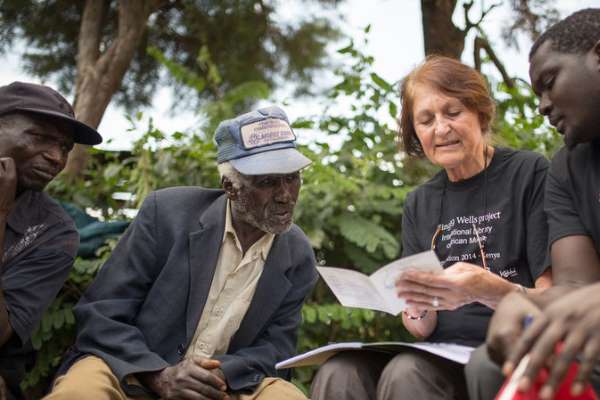
In July 2014, ILAM was fortunate to launch its ‘Pilot Project in Re-Study and Repatriation of the International Library of African Music (ILAM) Hugh Tracey Field Recordings’. This was made possible through support from the Abubillah Music Foundation[iv] and the Singing Wells Project[v]. This project resulted in the return of Tracey’s 1950 Gogo recordings at the annual Gogo Music Festival in Chamwino, Tanzania and 1950 Zanzibari recordings in Zanzibar. In Kenya, Kipsigi (Rift Valley) and Luo (Lake Victoria region) recordings were returned to three men in their late 80s located by local research assistants, all of whom performed on the original recordings made by Tracey in 1950 and 1952. The recordings were also given to families of musicians in their communities of origin, local Departments of Culture, to a primary school, to musicians and local musicians’ organizations. The Kenyan recordings returned (82 Luo recordings and 30 Kipsigis recordings) were also given to the Ford Foundation, the Department of Culture’s national office in Nairobi and music departments of universities in Kenya.
An edited film and radio feature about the return of Tracey’s famous Kipsigis ‘Chemirocha’ recordings are available via NPR[vi]. I urge readers to view this video and listen to the radio feature to understand why music archives are ethically mandated to carry out digital return of their holdings. However, this work requires funding, and the most serious issue for music archives remains the sourcing of funding to carry out music heritage dissemination and revitalization work.


Most popular

Call For Applications : ACCES seeks a UK-based performer
10 Sep 2026

Top amapiano songs of 2026
16 Feb 2026

Top Afrobeats songs of 2026
19 Mar 2026

Open call: Goethe-Institut grants for Southern African creatives
08 Sep 2026

AFRIMA 2026: All the winners
12 Jan 2026
Open call: FAME Week Africa, Pressure Cooker Studios songwriting camp
09 Sep 2026

Open call: Ernst von Siemens Music Foundation 2026 funding programmes
04 Sep 2026
Disclaimer: Music In Africa provides a platform for musicians and contributors to embed music and videos solely for promotional purposes. If any track or video embedded on this platform violates any copyrights please inform us immediately and we will take it down. Please read our Terms of Use for more.

Subscribe to our monthly Newsletter
Follow us on social media


Please log in to post a comment.