































































There are a lot of things Swazis hold dear to their hearts. Perhaps at the top of the list would be the sacred Swazi traditions of the annual Umhlanga Reed Dance and the Incwala ceremony. Just like most people who believe in a higher power, most Swazis are drawn to Biblical scripture and therefore view themselves as a Christian nation. This text provides an overview of the gospel music scene in Swaziland.
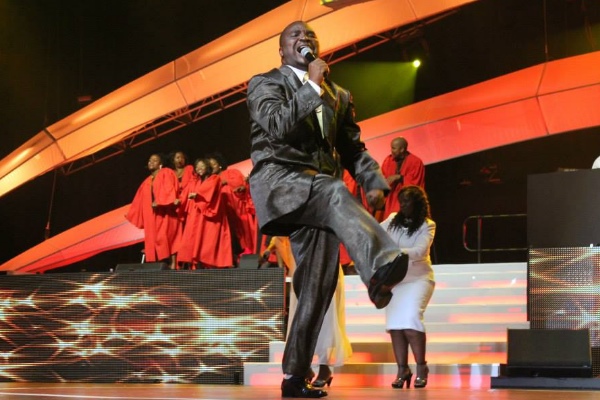
Origins
Christianity is the widely dominant religion in Swaziland. Other religions such as Islam, Judaism and the Baha'i faith are in the minority and conversion isn’t something Swazis are known to do. This has been the status quo since the 1800s.
King Somhlolo (aka Sobhuza II) had everything to do with the nation's Christian leanings. With the monarchy highly revered in the country, every Swazi child at some point in their lives gets to hear about King Sobhuza's vision in which God presumably gave the Swazi nation a choice between uMculu (popularly interpreted to mean the Bible) and, on the other hand, a button or coin said to represent money. According to legend, Sobhuza chose the Bible. Later, when the king took the oath of office upon ascending the throne, he declared that the Kingdom of Swaziland would follow the Bible. This is held as a very important occurrence in Swazi history and is commemorated annually on 22 July, the late king’s birthday.
So began the gospel music revolution from church hymns to what ultimately would become a meteoric rise of a gospel music empire. Although there are different denominations (from Catholic, Methodist, Evangelical, Anglican and Zionist to what you would call firebrand, charismatic, staunch 'speaking in tongues' Christians), no lines are drawn when it comes to the Swazi markets' general acceptance of gospel music. Despite every denominations' different ideals when it comes to 'worship', they seem to embrace anything that can be termed 'gospel'.
Swaziland’s current ruler, His Majesty King Mswati III, further ignites the gospel bonfire and continues his forefather's vision by making quite an occasion of the Easter holidays, which sees different denominations gather at the Somhlolo National Stadium every year.
Worth noting is that Swazis are generally a musical bunch of people, which has been an essential component of their cultural heritage. Traditional songs which Swazis hold sacred are sung during cultural ceremonies. Coupled with the fact that Swazis are a God-fearing nation, their religious devotion transcends into a high regard for gospel music. It is therefore absolutely true that the massive following gospel music enjoys is fueled by the population's religious backgrounds.
Artists
Most (if not all) gospel artists in Swaziland share a similar background. They grew up in Christian homes with parents involved in the church, whether devout followers if not men or women of the cloth. Most gospel artists in Swaziland have lived lives steeped in Christian doctrine and principles. They gravitated towards the music ministry because of their abilities. If they had not, they might well have landed behind the pulpit instead, just like the members of their respective families.
Swazi gospel artists haven't had to look far for inspiration: South Africa's similarly booming gospel ministry. South African gospel legends in Rebecca Malope, the late Vuyo Mokoena, G-Effect, Mthunzi Namba, Deborah Fraser, Family Factory, Lundi Tymara and Israel Mosehla are just some of the South African acts that Swazi gospel artists look up to.
Between the 1960s and 80s, there were no recording gospel artists or groups in Swaziland. This started to change in the late 1980s to early 90s, with the emergence of popular gospel groups such as the Swazi Gospel Singers (whose career dates back to 1979), Manzini Healing Waters and Manzini Crusade, among others. At the time the gospel scene was far less commercial. These group’s existence was not necessarily to make money out of their craft. These groups were relatively content with having their music circulating among their fellow believers and were not inspired by the cash register as much as simply having their music out there.
There has been a drastic change in the Swazi music industry over the past two decades. Now, over and above everything else, the main objective is simply to sell. This change came in the late 1990s with the emergence of acts such as Ncandweni Christ Ambassadors, who have gone on to become a multi award-winning group whose presence stretches beyond the Swazi borders into South Africa and even globally. The group has performed all over the world, earning numerous nomination nods and multiple awards - no small feat for a gospel group from Swaziland.
In a relatively short period of time, more and more gospel artists and groups began making names for themselves not just in Swaziland but also in South Africa. These acts include Shongwe & Khuphuka Saved Group, Shiba & the Travellers, Frans Dlamini, Phathwakahle Mabuza, Mduduzi Nezinceku Zamagawugawu, Nduduzo Matse, Nonhle Mthethwa and Nothando Hlophe. These artists have been featured on most major TV and radio stations in South Africa.
Contests and live events
Within Swaziland’s thriving gospel scene, numerous platforms, competitions and events exist to showcase local gospel talent. Started in 2014, the Women In Praise Talent Search is hosted by Leserato Events[i] (formerly known as Umvini Events) and South Africa's Spirit Music Group. The idea was scour all four regions of the kingdom for undiscovered female gospel talent[ii]. The project enabled the launch of the eventual winner Nothando Hlophe's gospel career. She later joined South African counterparts namely Zaza Mokhethi, Kate Nyamende and Kgomotso Kgomongwe for the Women in Praise live DVD recording, which was nominated for a SABC Crown Gospel Award for Best Collaboration. The 14 finalists of the project were given an opportunity to embark on a promotional campaign and have performed at corporate events as they prepare to work on a group in mid-2016[iii].
The Hlabelela Zion Competition was regarded as a golden opportunity for Zion gospel groups in Swaziland Launched in 2015 by Leserato Events[iv], the Hlabelela Zion Competition failed to take off again in 2016. With Leserato's decision to pull out of the event, there is still no telling when the competition, initially endorsed by the Swaziland National Council of Arts & Culture (SNCAC) will eventually kick off in earnest.[v]
With financial backing from local insurance giant Dups Direct, Swaziland's famed Zion gospel artist Gawuzela (aka Mduduzi Simelane of Umlilo Music) has managed to host what has become one of the biggest annual gospel events in Swaziland, the Umlilo/Dups Crossover Gospel Music Festival. Luring crowds of up to 20 000, the event is renowned for featuring some of the best acts in the local and international gospel industry.[vi]
Another regular feature on the Swazi entertainment calendar is the annual Swaziland International Trade Fair (SITF). Held during August and September with the aim to give local traders and artists a platform to promote themselves, the highlight of the expo is undoubtedly the entertainment lineup. The event, which ideally coincides with the annual Umhlanga National Reed Dance, lures music lovers to various entertainment options including Gospel Sundays, which are known to feature one or two big names in the South African gospel music scene as well as a countless number of local gospel acts commissioned by the Association of Christian Artists in Swaziland (ACASWA).[vii]
Awards
In 2014, under the helm of then President Mhlonishwa Motsa, the Association of Christian Artists in Swaziland (ACASWA) successfully hosted the Swaziland Gospel Music Awards (SGMA). Held in 2014, the event aimed at honoring local gospel musicians. Formerly known as the Glory Awards (whose patron was Inkhosikati Make LaMbikiza in 2009) the event evolved over the years to become known as the SGMA. Initially declared an annual event, the subsequent resignation of Motsa and his treasurer Gcina Zwane in 2015 were major curveballs for the association. The two were later accused of misappropriation of funds[viii]. Zakhele Ginindza was thereafter elected President of the association, but under his leadership no conclusive action has been taken on the SGMAs.[ix]
Aimed at showcasing the best Zion Gospel acts from Swaziland and the neighbouring South African province of Mpumalanga, the inaugural Mpumalanga and Swaziland Zion Gospel Music Awards in February 2016 were a resounding success[x]
Listenership
Gospel in Swaziland is not limited to churches, gospel concerts and festivals, crusades, all-night prayers and funerals. Gospel music receives an astounding level of airplay - not just for promotional reasons on national radio and TV, but also in the public sphere such as minibus-taxis, cabs, restaurants and healthcare facilities. Amazingly (but also really not a surprise) is the fact that gospel also receives its fair share of airplay at 'watering holes' such as taverns and pubs, especially those frequented by low-income earners, including individuals in the public transport industry and the retail industry, as well as street vendors, among others known to have sporadic moments of ‘repentance’ during nights on the town.
Gospel music's listenership in Swaziland is astounding and is every marketer or promoter’s dream. It is undeniably a national staple. Swazis are constantly bombarded with gospel music but they are unlikely to complain. Swazis just cannot seem to get enough of anything related to gospel.
Swazi and South African gospel music is particularly popular with the poorer classes in Swaziland. The middle and upper classes are more likely to listen to American Gospel, along with a bit of South African gospel.
Media
Although there are not any TV slots for dedicated gospel music programmes during the week on the national broadcaster Swazi TV, a number of local and international gospel music videos are given airplay during prime time. Airing every Sunday morning, the variety show Gospel Impact features music, interviews with gospel stars and news of gospel functions. DStv subscribers are fortunate to have a world of gospel music at their fingertips on channels such as Mzansi Magic Music, One Gospel, TBN and the DMX Gospel.
Labels and promoters
Muzi Masina at Dem Dem Studios[xi] is one of the 'go to' men when it comes to producing gospel in Swaziland. The studio has numerous chart-busters in varoious genres, including renowned Swazi gospel stars such as Mduduzi Nezinceku Zamagawugawu, Frans Dlamini, Youth Ablaze and Manzini Healing Waters.
Isambulo Music Production & Events Management[xii] is a local company led by former ACASWA head Mhlonishwa Motsa, a respected pastor and leader in the gospel fraternity, as well as an experienced journalist who is now respected in the field of events management, marketing and promotion. Motsa is also CEO of Zeeleon Consulting, which has hosted a number of events in the country, including the Night of Legends with South African gospel stars Benjamin Dube and Rebecca Malope in August 2015. Motsa has also been behind the Isambulo Crossover Gospel Music Festival, and oversees the careers of a number of artists signed to his company, such as Phiwokwakhe Dlamini, Isambulo Duet and Masikane.
Conclusion
Key decision-makers and stakeholders need to map out a way to deal with piracy, which has remained a major challenge within the music industry. Key decision makers within the Swaziland government need to realise the importance of protecting artists' intellectual property, strengthen the country’s anti-piracy laws and acknowledge Swazi gospel music as a potentially valuable export, in order for the local gospel music industry to thrive. If this is done, the gospel music industry in Swaziland can only go up.
Every day, new gospel musicians enter the fray, wishing to become the next gospel star. There is a seemingly never-ending pool of fresh gospel talent in Swaziland. The market experiences a relentless procession of new album releases from gospel artists. With a growing market, Swaziland’s gospel music industry is a goldmine, the benefits of which have not yet been fully realised.


Most popular

Top Naija songs of 2026
31 Mar 2026

Top Afrobeats songs of 2026
19 Mar 2026
Ghana: Mr Eazi and MOLIY’s ‘Comfort’ earns Urban Music Awards nomination
21 Oct 2026

Top amapiano songs of 2026
16 Feb 2026
Open call: CANEX Music Business Lab and Songwriting Camp
15 Oct 2026
Nigeria: CANEX WKND unveils 2026 programme
21 Oct 2026
Disclaimer: Music In Africa provides a platform for musicians and contributors to embed music and videos solely for promotional purposes. If any track or video embedded on this platform violates any copyrights please inform us immediately and we will take it down. Please read our Terms of Use for more.

Subscribe to our monthly Newsletter
Follow us on social media


Please log in to post a comment.