





















































Open call: Goethe-Institut training programme bid
31 Oct 2024 - 09:55


The Goethe-Institut invites civil society organisations (CSOs) in sub-Saharan Africa to bid for a service agreement for the design and implementation of a training programme(s) for young women and the organisation of a small-scale public event.
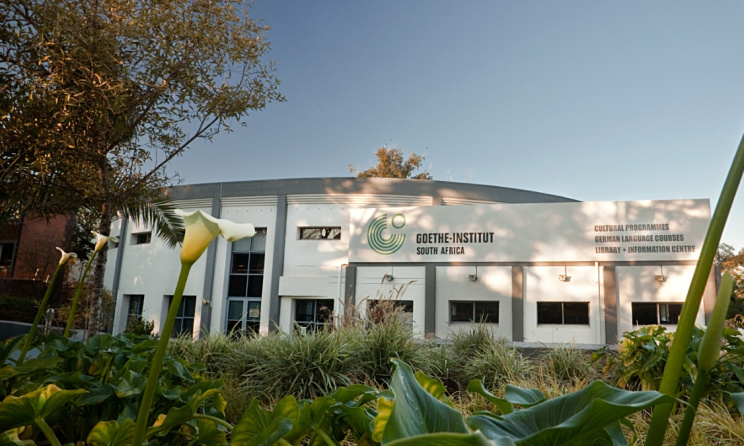
This initiative is part of the African Feminisms – Rights, Representation, Resources project. The project is implemented by the Goethe-Institut in Nigeria, Rwanda and South Africa, and is funded by the German Federal Foreign Office.
Taking feminism and intersectionality into consideration, the training can be in – but is not limited to – the themes of gender rights and advocacy, technical/educational training, feminist leadership, technology/digital space, access to resources and representation of young women in the political, economic and social sphere. The explicit target group is young women between 18 and 30 years.
Context
The project, African Feminisms – Rights, Representation, Resources, is based on the guidelines of the German feminist foreign policy and aims to explore feminisms on the African continent and in Germany. The aim of the project is to apply feminist practices in training and capacity-building programmes and to open new perspectives on feminisms through discursive and artistic work. The project is an initiative of the Goethe-Institut project ‘House of African Feminisms’.
The guidelines for feminist foreign policy focus on feminism as a global movement. In this approach, feminisms are to be understood as plural and their diversity and different histories are to be recognised. The policy offers the opportunity for a deeper understanding of feminisms, the application of feminist practice in training programmes and networking opportunities for young women. It also aims to encourage new perspectives on feminisms through artistic work and represent the outcome in Germany.
The African Feminisms project follows the triad formulated in the guidelines of the German feminist foreign policy which are:
- Women’s rights for feminist politics of the future.
- Representation of feminist positions in politics and civil society, and artistic contexts.
- Access to resources for feminist opinion-forming and projects (finance, knowledge, community).
Services required
The Goethe-Institut is seeking the services of Civil Society Organisations in Sub-Saharan Africa to deliver the following services:
- Planning and implementation of training programmes for young women, applying feminist practices in at least one of the following areas: rights, representation, and resources.
- Conceptualise and implement a small-scale public event aimed at engaging with a wider audience on their work as well as on feminist topics and approaches.
Guidelines
- The required services shall be implemented from December 2024 until latest May 2026.
- The activities can take place in any country in Sub-Saharan Africa.
- The activities shall follow approaches and practices in line with a feminist ethos (CSOs that may not explicitly identify as feminist are welcome, provided they subscribe to feminist principles and gender-sensitive or transformative approaches).
- The activities shall focus on young women between 18 and 30 years.
- The activities shall target strengthening young women from marginalised groups. This can be, but is not limited to, women from rural areas, women with disabilities, and women with limited access to education, among others.
Expected outcomes:
- CSOs have independently conducted training programmes and public events in the field of feminisms.
- CSOs have expanded their portfolio of services.
- Young women have gained knowledge about their rights, and have increased political, social and economic participation and/or access to resources in their respective countries.
- Young women have gained confidence and can make use of their acquired knowledge to bring about change through their activities and in their daily lives.
Eligibility criteria for bidding CSOs:
- Registered Civil Society Organisation in sub-Saharan Africa.
- At least two years of proven work experience in the fields of gender-justice, equality and feminism(s) across relevant themes.
- Track record of designing and implementing capacity-building programmes for young women in Sub-Saharan Africa: and
- Proven experience in project management and budget monitoring.
- Profiles of internal and external team members demonstrating competence for the conceptualisation and implementation of the training programme.
- Award criteria (criteria for selection): The project team of the Goethe-Institut will evaluate the different bids submitted based on the following award criteria:
- Proposed budget.
- Quality of the proposed concept for training programmes and public event.
- Responsiveness to the needs of the local context.
- Experimental/innovative ideas, such as new formats, new approaches, new methodologies and new activities within the organisation’s portfolio.
- Feasibility (timeframe, budget and capacity).
- Demonstrable feminist ethos through approaches and practices.
- CVs of the project team.
The proposals with the highest number of cumulative points across all sections will be awarded. The Goethe-Institut reserves the right to ask for additional information after submission.
Submission of offer
The organisation must submit the following:
- Registration document of the organisation (1 PDF).
- Profile or portfolio of the organisation, incl. track record of previously implemented similar projects (indicating the project budgets and incl. 2-3 references) (1 PDF).
- A detailed concept note of not more than 5 pages in total outlining the planned activities incl. a timeline and budget (up to 20.000 EUR per CSO over a maximum od 18 months), taking the selection criteria above into consideration (1 PDF).
- Profiles of internal and external project team members (1 PDF).
- A short description of how the organisation follows a feminist ethos (200 words) (1 PDF).
- Proposals can be submitted in English, French or Portuguese.
Proposals need to be submitted electronically with the above 5 PDFs as attachments to Julia Scheller ([email protected]) with the subject line “CSO Training programme – (Name of Country)” no later than 3 November 2024. Late submissions will not be considered.
View the original call here.







Disclaimer: Music In Africa provides a platform for musicians and contributors to embed music and videos solely for promotional purposes. If any track or video embedded on this platform violates any copyrights please inform us immediately and we will take it down. Please read our Terms of Use for more.

Subscribe to our monthly Newsletter
Follow us on social media


Please log in to post a comment.