












































Cape hip hop raps in the voices of the ‘less thans’
18 Jul 2018 - 13:46


By Quentin Williams
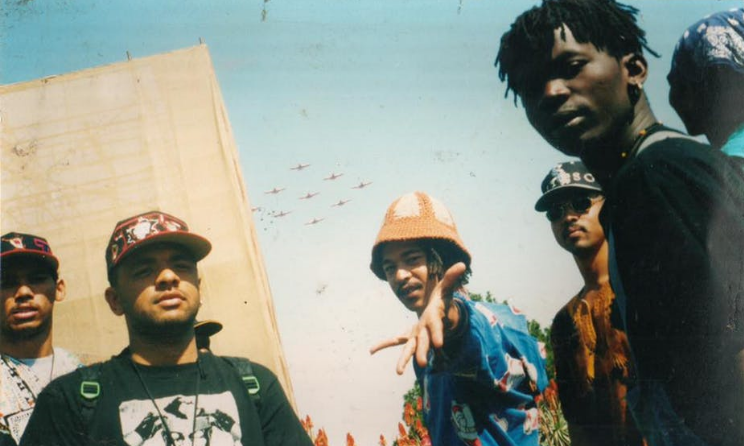
The Cape region of South Africa has long had a vibrant tradition of protest hip hop music. Cape hip hop culture has had much to protest about: colonialism, apartheid, inequality and monolingualism – the use of one, usually dominant, language. For rap groups like the deeply political 1990s crew, Prophets of da City (POC), the challenge was always to present an accurate picture of where they came from, and what their own and their people’s struggles were.
Since colonialism, monolingualism has been the preferred way to define communication in South Africa. This has been tied to the practice of racialising (mainly) black, coloured, and Indian citizens along lines of race, language purity and fealty to the state. The justification for this was that multilingualism – the use of more than two languages – would confuse and complicate everyday communication, particularly the linguistic goals of colonialism and the apartheid state.
POC became the first rap group on the Cape hip hop scene to sign a recording contract with a major South African record company, Teal Trutone. They came to prominence in the deeply violent late 1980s and early 1990s as the count down to the end of apartheid was beginning.
Early on, POC realised they had to make a strategic linguistic decision – to perform multilingual lyrics and music, versus monolingual lyrics and music, which at the time (and given the political climate of the apartheid government) would threaten to block out potential listeners.
As POC rapper Shaheen Ariefdien put it in an interview in the early 1990s with academic Adam Haupt: “Hip hop took the language of the ‘less thans’ and embraced it, paraded it and made it sexy to the point that there is an open pride about what constituted ‘our’ style… to express local reworkings of hip hop.”
POC embraced the multilingual practices of the 'less thans', the downtrodden. In particular they celebrated languages such as black South African English, Cape Flats English, Cape-coloured English and especially Kaaps, a black township version of Afrikaans. Kaaps is a working class tongue that stems from the same language roots but is distinctly different to the mainly white Algemeen Beskaafde Afrikaans, which was the official language of the ruling class under apartheid.
At first, the group’s rap music was set to Kaaps lyrics and a local variety of English but gradually expanded to Xhosa and Jamaican patois, peppered with various accents. This was an inclusive form of multilingualism, a signal what could be possible if the multilingualism of the 'less thans' was taken into consideration.
Apathied censorship
POC’s debut album was called Our World (1990), followed by Boomstyle (1991), Age of Truth (1993), Phunk Phlow (1994), Universal Souljaz (1995) and Ghetto Code (1997).
The group’s early music was produced under the turbulence of apartheid censorship. At the time POC revised their linguistic strategy and began in earnest to paint an authentic and truly multilingual picture of marginalisation in South Africa.
Take their song ‘Slang 4 Your Ass’ (from Universal Souljaz). Rapper Ariefdien takes his imagined listener on a lyrical journey as he draws different languages and cultural expressions of what it is like to live in a multicultural and multiracial township.
Alles in die haak broetjie, tjek ‘it ja. (Everything is in order brother, check it yes.)
Solang die ding ruk is dit tzits ounse (As long as its moving along, it’s ok guys)
Is mos soe my broe’! (Just like that my brother!)
Djy wiet dan (You know).
Phashaz, hola ghanzaan (I’m ok, how are you?)
Sien djy my broe (You see my brother)
Die bra kick ‘n ander flavou’ uit my broe’ (That brother kicks a different beat my brother).
The lyrics open up to the outsider how typically multilingual greetings are performed in the township. Multilingualism is celebrated and an array of voices, suppressed by the apartheid government (thankfully unsuccessfully), are given permanence, on wax and in song. It is the sound of inclusivity.
Language, lyric and rhyme
The main protagonist in the second section of the song, POC’s Ready D, then colours in the picture to the listener through language, lyric and rhyme:
I’m walking around with a head full of thought
Mixting it with my Township Talk
Like
Hoe issit? (how are you?)
Is djy alright? (Are you alright?)
Ek is (I am)
En tjek (Check it out)
Dialect into the mic
Djy kry? (You see?)
Then I flex it the other way
Making them wonder what is going on
Where could this man be from?
Well we get to that later.
With these lyrics Ready D takes the listener through the ghetto and showcases what multilingual skills were needed to interact with multilingual speakers. The message is that you can’t box identities that have been forged through multilingual living in the ghettos of South Africa. The lyrics celebrate ghetto culture but also protest stereotypes that seek to harm.
Variety of tongues
The multilingual tradition in Cape hip hop continues today. Like POC back in the 1990s, rappers still protest in a variety of tongues, often in the same song. It was heard when rap artists added their voices to the recent growing student protests and against the failings on democracy by the African National Congress government.
This music legacy goes unnoticed by mainstream media although it’s given a lot of attention on social media. An example is “20 Years of Democracy/ Demockery” featuring Crosby, Teba, Spencer, Youngsta CPT, Trenton, Mthunzi, Leandro, Mkosi, Cream, Hipe, Sammy Sparks, Whosane, Clem Reuben and Emile YX?. This release brought together a powerful multilingual ensemble of voices and styles of speaking. Add to that 'Must Fall' by Emile YX? featuring Java, Linkris the Genius, Black Athena, Daddy Spencer, Crosby and Khusta, and it’s clear Cape hip hop will continue to speak loudly to power.
Quentin Williams is a senior lecturer in linguistics at the University of the Western Cape. This article first appeared on The Conversation.


Most popular

Top amapiano songs of 2026
16 Feb 2026

Top Naija songs of 2026
31 Mar 2026

Top Afrobeats songs of 2026
19 Mar 2026

AFRIMA 2026: All the winners
12 Jan 2026
Open call: MTN One TV African film and television projects
16 Sep 2026
Open call: Goethe-Institut grants for Southern African creatives
08 Sep 2026
Disclaimer: Music In Africa provides a platform for musicians and contributors to embed music and videos solely for promotional purposes. If any track or video embedded on this platform violates any copyrights please inform us immediately and we will take it down. Please read our Terms of Use for more.

Subscribe to our monthly Newsletter
Follow us on social media


Please log in to post a comment.