












NEFCISA
NEFCISA

The Music In Africa Foundation (MIAF) is proud to announce its partnership with the Industrial Development Corporation (IDC) as a Strategic Implementing Partner (SIP) for its Social Employment Fund (SEF). Through this collaboration, MIAF is launching a new national programme designed to create jobs, address skills gaps, and strengthen South Africa’s creative industries — in line with the SEF’s overarching goal to generate work for the common good and build community value through employment, social contribution, and inclusive economic participation. Operating under the banner NEFCISA (National Employment Facility for Creative Industries in South Africa), the initiative will recruit and train participants, match them with host organisations, and place a minimum of 1 000 workers across the country. Key Objectives: Support employment and entrepreneurship in the creative industries. Offer skills development and training programmes. Foster partnerships between public and private creative sectors. Promote South African creativity at both provincial and national levels Foster community development through social contribution.

ACCES
ACCES

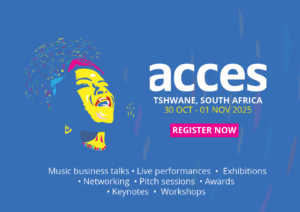
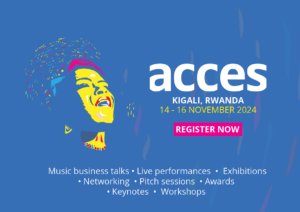
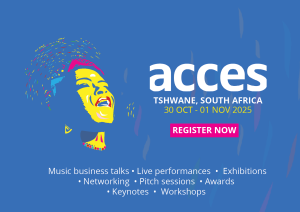
ACCES has stamped its authority as Africa’s leading music trade event. At the 2019 edition in Accra, the conference brought together more than 1 200 delegates from about 50 countries on the continent and beyond. The conference also hosted 76 showcasing artists from Africa and the diaspora, who got to perform for an influential audience at two top live venues in the Ghanaian capital. Apart from live showcases, the event features panel discussions, presentations, exhibitions, pitch sessions, Q&A sessions with prominent musicians and visits to key music industry hubs in the host city. Many of these activities will be planned for ACCES 2021, with the ACCES team already exploring a tailor-made programme that will cater for the specific needs of the local music industry amid the pandemic. ACCES is organised by the Music In Africa Foundation, a non-profit and pan-African organisation, in partnership with Siemens Stiftung and Goethe-Institut.

Gender@Work
Gender@Work

Music In Africa Gender @ Work is a three-year training programme aimed at upskilling and increasing the participation of female professionals in the African music sector. Launched by the Music In Africa Foundation (MIAF) in April 2019, the programme is connected to the MIAF’s ACCES music conference – a pan-African event held in a different African country every year. This connection enables the programme to reach new participants in a different African country every year. The programme marks the beginning of a more concerted effort by the Foundation to support the participation and inclusion of women in all facets of its programmes and the music sector in Africa as a whole. Over the three years, the programme will aim to address gender imbalances in the sector through training, lobbying, facilitating knowledge exchange and dialogues that foster the interest of women. The broader objectives of the programme are to: Provide industry training for women on critical music industry skills, focusing on: Stage management Electronic music production and recording Music business management Technical knowledge Provide an opportunity for both professional and aspiring women to benefit from the Music In Africa network and its broad range of activities in 2019, 2020 and 2021. Provide a solution-based platform in the form of a round table at ACCES with a view to identify challenges, discuss opportunities and lobby for the interests of female practitioners. Offer participants the opportunity to benefit from programmes offered by MIAF’s partners. Increase access to educational materials. Integrate participants in the broader ACCES programme to maximise experience and exposure to the industry. Record and present training materials on the www.musicinafrica.net, including but not limited to tutorials, templates and other best-practice materials. Communicate women-based themes that support the initiatives and messages of the programme. MAIN TRAINING ACTIVITIES Training in first country (Ghana): In the first year, participants will be trained on all aspects of stage management by a team of experienced stage managers from 10 to 17 November 2019. The programme will offer robust classroom training as well as practical, hands-on training in which participants will also be given the opportunity to manage various aspects of the ACCES performance programme. Training in second country: The second training iteration will take place at ACCES 2020 when the programme will diversify its course to include music production lessons and training on other music business topics. A round-table platform will also be introduced to coincide with the ACCES programme. Training in third country: The third training iteration will take place at ACCES 2021 in a different country, offering an advanced course. HOW DO YOU GET INVOLVED?  As a participant, facilitator or trainer: The programme enrolls up to 12 trainees every year. All opportunities are advertised publicly on this website, and will be added to this page. Please keep checking this page for new calls (below under UPDATES & CURRENT OPPORTUNITIES). As a partner Please contact Claire Metais at claire@musicinafrica.net. APPLY The call for applications for 2020 will be announced soon. The Music In Africa Gender @ Work programme is made possible with the support of the Prince Claus Fund, Siemens Stiftung and Goethe-Institut.

Sound Connects Fund
Sound Connects Fund

For cultural and creative practitioners and organisations operating in southern Africa, access to funding remains a major challenge. The COVID-19 pandemic has also had a massive impact on government policy, spending and the economy in general, and has seen spending on culture being moved further down the list of priorities. Further, the cultural and creative industries repeatedly cite four main areas where investment is needed for growth, which are increased visibility, mobility including access to new markets, finance and support structures.

Instrument Building And Repair Project

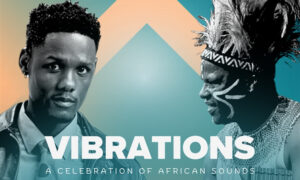
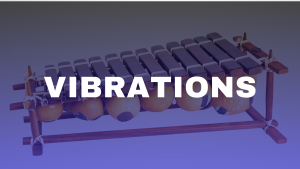
Experience the Vibrations African Instruments Exhibition online in 3D

Home / Artists & Industry / The Grammy Awards
The Grammy Awards

The Grammy Awards

Other regular events
linkedin

Profile added by Sisi Nkabinde on 08 Apr 2026

Claim this profile

flag-img

Los Angeles, United States

In operation since:

1 Jan 1950

Contact person:

The Grammy Awards

BIO

The Grammy Awards, established in 1959 by the Recording Academy, are widely regarded as the world’s most prestigious music honors, celebrating artistic and technical excellence across the global music spectrum. For decades, the Grammys reflected the dominance of Western music markets, with limited recognition afforded to artists whose work originated outside of Europe and North America. Over time, however, the awards have gradually broadened their lens, driven in large part by the explosive global influence of African sounds and performers.

In the early decades of the awards, African music traditions were visible only at the margins of the Grammys, often confined to categories like World Music (now Best Global Music Album). Pioneering figures such as Miriam Makeba and Hugh Masekela were among the first to break through internationally, but consistent mainstream Grammy recognition remained elusive.

A key turning point came in 2024 with the introduction of the Best African Music Performance category, created to spotlight music that “utilizes unique local expressions from across the African continent” and to elevate the voices driving some of today’s most vibrant musical movements.

At the 66th Grammy Awards, Tyla won this inaugural award for her global hit “Water,” becoming the first artist to receive the honor. Her blend of South African amapiano rhythms with pop and R&B elements not only marked a historic milestone for her country but also signaled a new era in which African artists could capture mainstream Grammy attention in their own right.

Tyla’s success continued in 2026 when she won the Best African Music Performance again for “Push 2 Start,” making her one of the first artists to claim the award twice since its inception. Her wins have been celebrated in South Africa as national achievements that elevate the continent’s musical voice on the world stage, and they reflect a broader trend of African genres like amapiano, Afrobeats, and Afro‑fusion reshaping contemporary pop music.

African artists such as Burna Boy, Davido, Ayra Starr, Tems, and long‑established global names like Angelique Kidjo have also featured prominently in Grammy nominations and wins, either within the continental category or through broader global recognition. This inclusion has diversified not only who is honored but also what musical styles are celebrated, broadening the Grammys’ cultural reach.

The expanding presence of African music at the Grammys has contributed to a more varied global soundscape, challenging traditional genre boundaries and encouraging collaborations that blend African rhythms with mainstream pop, hip‑hop, and R&B. This cross‑pollination has reshaped popular music and encouraged audiences worldwide to engage with a wider palette of styles and cultural influences.

At the same time, the Grammys’ efforts to include African music more comprehensively have sparked debate. Some observers argue that separate categories risk segregation rather than full integration into the major fields, while others see them as necessary platforms that acknowledge distinct musical heritages and help level a historically uneven playing field. Regardless of these debates, the presence of African artists and sounds in the Grammy narrative undeniably adds new dimensions of rhythmic diversity, language, and artistic innovation.

Today’s Grammys stand as more than a celebration of American or Western music alone; they are an evolving reflection of a global musical ecosystem in which African artists play a central and increasingly influential role—whether through award‑winning performances, genre‑shaping hits, or collaborations that blur borders and redefine the sound of contemporary music.

Photos

No photos available

Music

Videos

Coming soon

Social Networks and Websites

Disclaimer: Music In Africa provides a platform for musicians and contributors to embed music and videos solely for promotional purposes. If any track or video embedded on this platform violates any copyrights please inform us immediately and we will take it down. Please read our Terms of Use for more.

newsletter banner

Subscribe to our monthly Newsletter

Follow us on social media