











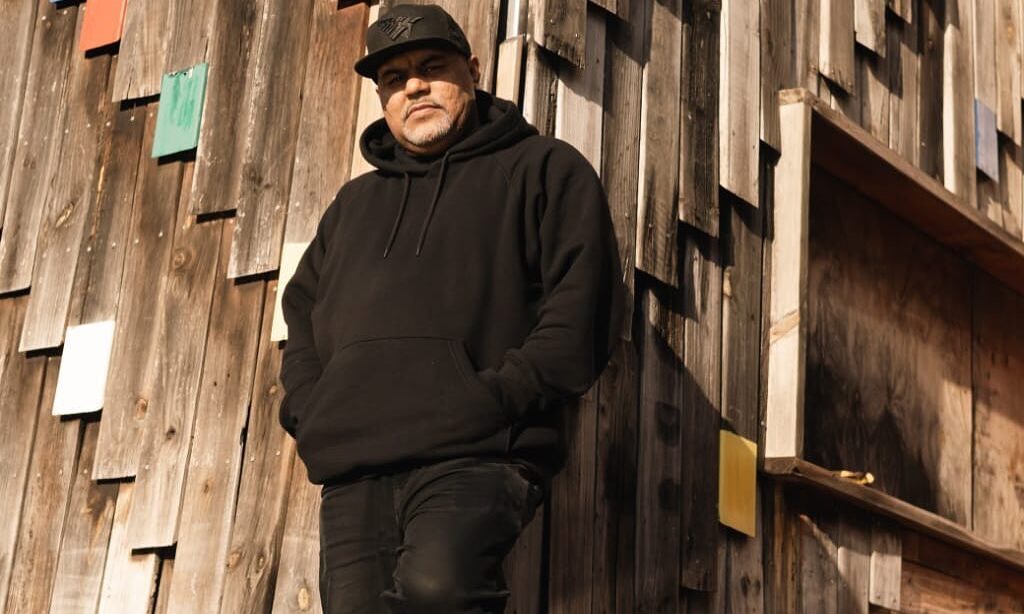





















































The acoustic guitar became popular in Africa during the 20th century, with musicians embracing and adapting the instrument. They used their musical traditions to create original styles that Africanised the acoustic sound across unique continental genres. While Portuguese sailors visiting Mozambique are likely responsible for the guitar’s introduction to Africa, they weren’t the only foreign visitors to promote the acoustic guitar’s journey across Africa.

Origins of the acoustic guitar in Africa
Popular belief is that Portuguese sailors visiting the port city of Lourenço Marques in Mozambique during the late 19th century introduced the acoustic guitar in Africa. As trade routes first developed along the Zambezi River into Angola and then via a railroad to South Africa’s Transvaal province in 1895 [1], the Portuguese followed the Zambezi River further inland from the African East Coast, trading with locals who adopted the instrument as a way of making music.
C.F. Martin, Jr. released the first Martin 00 acoustic guitar in the United States in 1898. It had a solid spruce top and a mahogany neck, back and sides providing a bright treble response and punchy mid-range [2]. The Martin 00 became a popular acoustic instrument choice because of its quality, size and louder sound. The popularity of the 00, along with Martin’s 1916 larger Dreadnought, the Gibson Dreadnought and other brands [3], prompted an influx of new guitar owners worldwide, including in Europe, Asia and the Middle East.
As a result, the increasing Muslim community settlements in Burkina Faso, Gambia, Ghana, Mali, Senegal and other West African countries in the early 20th century [4] spread guitar playing in the region. Existing Brazilian and Cuban communities in Nigeria [5] also accelerated the influx of acoustic guitars in Lagos and other centres.
The African acoustic revolution of the 20th century
With the acoustic guitar entering Africa in Mozambique in the Southeast and countries like Nigeria and Senegal in the West in the late 19th and early 20th centuries, its spread into Central and Southern Africa did not take long.
West African acoustic guitar music
In the early 1900s, members of the Liberian and Ivorian Kru ethnic groups working on European ships passed the time by playing instruments, including acoustic guitars. When stopping in Ghana, they mixed with the local Fante people and combined their diverse musical styles to create Osibisaaba music, a genre combining the guitar, harmonica and concertina. [6]
During the 1920s, these regular jam sessions, often while drinking in Ghana’s portside bars, resulted in a Ghanaian guitarist, Kwame Asare, learning the distinctive acoustic chords with the two-fingered plucking style from a Kru sailor. His adaptation produced Palm Wine, which grew in popularity across West Africa. Asare’s band, the Kumasi Trio, later recorded the genre’s first album during a performance at London’s Kingsway Hall. [6]
Early guitarists in Ghana also took established Akan music — using water and rectangular frame drums, side-blown horns and brass instruments — and traditional Ga — using drums, gongs, bells and rattles — and added acoustic guitar to create the European-influenced West African Highlife subgenre.
In the 1930s in Nigeria, Babatunde Abdulrafiu, better known as Tunde King, took the age-old Yoruba percussion style — a rhythmic style featuring the dundun (talking drum) and bata drums popular in Nigeria, Benin and Togo — and added acoustic guitar, gourd rattles and tambourines to create the Western-influenced Jùjú music. [7]
East African acoustic guitar music
Early East African guitar music evolved more slowly than in many other parts of the continent, characterised by the creative fusion of global and local musical elements. This fusion paved the way for an adaptation of the 1880s Taarab musical genre made popular in Tanzania and Benga, which became widely played in Kenya from the 1940s. Modern Taarab and Benga music incorporates electric guitar, but acoustic guitar was more prevalent early on.
Taarab — played initially with the oud, qanun, violin and various percussion instruments — originated in Zanzibar [8] and arrived in Tanzania with seamen who learned to play the guitar [9] using trade routes across the Indian Ocean. The sound had already picked up notable Arabic and Indian influences, with Tanzanians later incorporating acoustic guitar and other Western instruments to create an original sound distinctive to the region.
Unlike Taarab, Benga originated in Africa — specifically Kenya’s Lake Victoria region — with a decidedly Cuban rumba influence. It evolved from early use of Kenyan Luo traditional stringed instruments, like the nyatiti and oruto, to the use of acoustic guitars brought to the country by World War II soldiers. [10] Even today, it can still incorporate elements of acoustic rhythm guitar alongside an electric lead guitar, drums (including a kick drum) and hi-hat cymbals.
Central African acoustic guitar music
20th-century Central African music experienced heavy influences through colonial trade and labour migration in the 1940s and 1950s, which introduced guitars and other foreign instruments to countries like the Congo, the Belgian Congo (now the DRC), Gabon and Equatorial Guinea. [11] The acoustic guitar led to the development of unique styles blending the Western instrument with traditional African musical traditions. The acoustic guitar-based genres led to the development of Congolese rumba in the Congo.
The Congolese rumba, or Maringa, featured acoustic guitars alongside other instruments like bass, drums and percussion. While electric guitars are now also common, the acoustic version played a significant role in the genre’s foundation. The Maringa’s early musicians included Henri Bowane and Paul Kamba’s pioneering rumba group, Victoria Brazza. [12]
Southern African acoustic guitar music
The acoustic guitar arrived in Southern Africa with the Portuguese sailors landing in Mozambique. Later European settlers prompted its further popularity in regions like Rhodesia (now Zimbabwe) and South Africa. The discovery of gold and diamonds in the latter country, which brought large numbers of African labourers to urban areas, spurred its widespread adoption.
These workers used the instrument in their existing musical forms to create new styles like maskandi, incorporating elements of traditional music originally played on instruments like the Zulu musical bow. Maskandi music is firmly associated with South Africa’s Zulus, although its shift to the recognised guitar-based variant started in Rhodesia in the 1930s.
Zulu migrant workers from South Africa introduced the traditional form of Maskandi in Rhodesia. Inspired by Western movies, a group of musicians incorporated the acoustic sound. Other migrants then took it back over the border and developed it further. [13] John Bengu, or Phuzushukela, is commonly known as one of the genre’s first recording artists, releasing Maskandi albums from 1975, although by this stage, the guitar work was predominantly electric.
Another form of Southern African music is Boeremusiek, based on the accordion [14] and mainly played by Afrikaans Europeans in South Africa. The genre emerged with the early Afrikaner communities from a blend of European folk-dance forms, including the polka, waltz and mazurka, later influenced by American and British dance hall music. Acoustic guitars became more dominant in Boeremusiek’s development in the mid-20th century.
Acoustic guitars are everywhere in Africa today
While their electric cousins are very popular, acoustic guitars enjoy a special place in African music, both in its history and present. Like practically everywhere else worldwide, African musicians spend time strumming and plucking their acoustics in the presence of friends and relatives — in recreational and commercial settings like bars and restaurants. The acoustic guitar’s journey across Africa has been diverse, bringing a modern slant to music genres that have existed for centuries.
References and citations
[1] https://www.railwaysafrica.com/news/130th-anniversary-of-caminhos-de-ferro-de-mo%C3%A7ambique-cfm
[2] https://www.martinguitar.com/learn-wood-materials.html
[3] https://music.si.edu/story/early-southern-guitar-sounds-brief-history-guitar-and-its-travel-south
[5] https://guardian.ng/life/the-story-of-the-afro-cuban-heritage-in-lagos/
[6] https://www.citylifeaccra.com/features-accra/drink-in-palm-wine-music
[7] https://africanmusiclibrary.org/artist/Tunde%20King
[8] https://www.aramcoworld.com/articles/2025/the-heart-moving-sound-of-zanzibar
[9] https://modded.com/lifestyle/how-long-does-it-take-to-learn-guitar/
[10] https://africanmusiclibrary.org/blog/benga-music-kenyas-greatest-musical-export
[11] https://www.migrationdataportal.org/regional-data-overview/middle-africa
[12] https://www.aljazeera.com/news/2021/12/15/congolese-rumba-added-unesco-heritage-list
[13] https://creativesmagazine.co.zw/the-staunch-pan-african-maskandi-artist-nqamebomvu-2/
[14] https://goong.com/word/boeremusiek-meaning/
Disclaimer: Music In Africa's Overviews provide broad information about the music scenes in African countries. Music In Africa acknowledges that the information in some of these texts could become outdated with time. If you would like to provide updated information or corrections to any of our Overview texts, please contact us at [email protected] or [email protected].
Editing by Ano Shumba.


Most popular

Gambia: Suntou Susso announce UK tour for ‘The Path of a Griot’
09 Oct 2026

Top amapiano songs of 2026
16 Feb 2026

Top Afrobeats songs of 2026
19 Mar 2026
Open call: 2026 Gender@Work music industry training in Johannesburg
09 Oct 2026

Top Naija songs of 2026
31 Mar 2026

Call for applications: ACCES 2026 Emerging Artist Spotlight Competition
01 Oct 2026
Disclaimer: Music In Africa provides a platform for musicians and contributors to embed music and videos solely for promotional purposes. If any track or video embedded on this platform violates any copyrights please inform us immediately and we will take it down. Please read our Terms of Use for more.

Subscribe to our monthly Newsletter
Follow us on social media


Please log in to post a comment.