











































Bisola: Reality TV star wants to explore music for a long time

22 May 2018 - 14:54


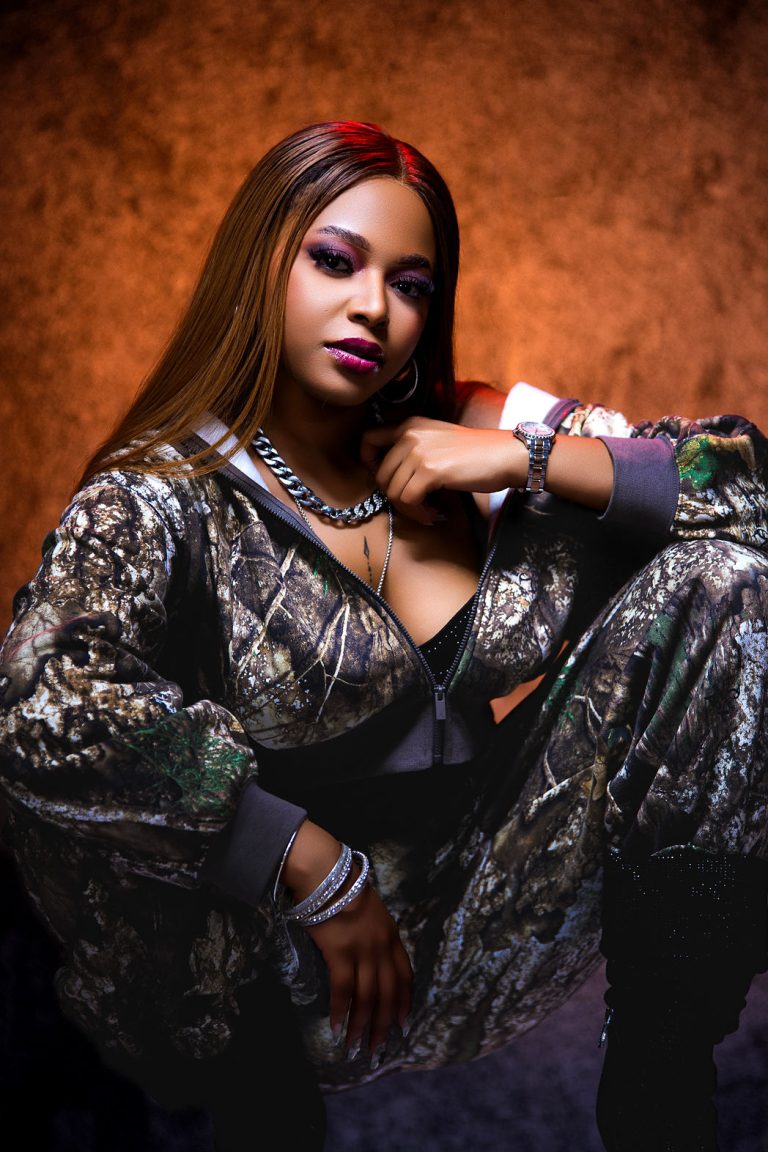
Bisola comes into the sun-streaked room humming something I don’t quite catch. It’s a tune as buoyant as the artist herself.

We are at the offices of Temple Management on Lagos Island. She greets a staff of the label warmly and sits, radiating the good-natured mischief fans of the Big Brother Nigeria reality show are familiar with. Throughout our interview she’ll speak in several voices.
Since leaving the famed house, Bisola has released music and starred in films. She has also appeared in an advert where she walks down a street talking about the instant recognition and clamour for selfies her presence evokes. It seems like success from every angle, but she checks my enthusiasm.
“I’m still on the journey,” she says with a smile. “I am not where I want to be.”
Tempted as I am to tell her she is where many people want to be, it seems more prudent to find out which of her talents—acting, singing and comedy—was noticed first. She says it's singing. “When I used to tell my mum as a child that I wanted to be an entertainer, that was what I saw myself doing.” As an adult she provided backup vocals for wannabe musicians on Lagos Mainland, working with artists in Surulere and Yaba. She finally got an opportunity on the national stage when she entered for the first edition of the Project Fame singing talent competition in 2008.
Although designed for singing, the show was responsible for her push to cinema. One of the show’s mentors, Nollywood actress Joke Silva, nudged her towards the screen. Now Bisola says, “Every singer is an actor. You have to emote so the listener can get what you’re saying. You will be surprised that someone singing a song, ‘I have arrived, I’m driving a Bentley’, is entering keke marwa but when you watch the music video you are like ‘Yo! This guy is living the life!’
“That’s acting,” she laughs. “He’s doing a good job with that. But music is my first love. It is like breathing.”
Not that her life has been as easy. After Project Fame, where she finished as part of the top five contestants, she tells me she said to herself, “Bisola, you have arrived. People will love me. People will say I am a fantastic singer. Oya where are the record labels? Where are the record deals?”
Short answer: there were no labels knocking on her door, no deals on the table. Project Fame had named a guy called Iyanya as winner. The following year he released an album. It failed commercially but one could expect that he had the consolation of the prize money. Bisola was in a different place. “I was really broke,” she says, “and not too long after that I had my daughter.”
To make ends meet, Bisola sold make-up materials and at some point did some trading in the notorious Lagos traffic. “I felt ashamed but at the same time”—she says before launching into high-pitched pidgin—“omo, mans must wack! I doff my hat for every man, woman that sells in traffic. It was an experience.” This road gig was to last a week but on the second day Bisola fell ill. When I call her ajebutter, the Nigerian slang for a rich softie, she offers some defence. “Normally when you walk under the blazing sun, you can have a headache, imagine chasing cars—this was not something I was used to.”
She presented a show on TV and took 'wakapass' roles, as brief appearances onscreen are called in Nigeria. “You are just in the scene…you are working in an office and you say, ‘Oga is coming’ and that’s the end.” Somehow she kept her humour about these situations.
From 2014, the situation got better. She found work on made-for-TV movies by Africa Magic. She also doggedly kept at Big Brother auditions for eight years. On one occasion she was invited for an audition when her baby was barely two weeks old. Her sister held the baby in a car outside of the building and Bisola would take breaks to breastfeed. “It was a struggle and I still didn’t get picked.”
The futile auditions ended last year when she appeared on the show and emerged first runner-up. This personal triumph and the travails leading to it are relayed in her single ‘Luchia’, which is named after her mother.
As a singer, Bisola claims a variety of influence. She tells me she loves Beyoncé and thinks Brandy has the best harmonies. She liked the music of a number of older Nigerian acts including Mike Okri, Junior & Pretty and Evi-Edna Ogholi. “Nel Oliver is not Nigerian,” she says, “but I taught I would marry him when I watched his videos.”
Among newer Nigerian acts, she likes Niniola. “I love her This Is Me album,” she says, adding that she likes ‘Oyin’ and ‘Maradona’.
This varied taste in music was fostered by her older brother. In secondary school she’d sing songs that he taught her, many of which she had never heard the original versions of. Suddenly she bursts into a quirky first verse of Dru Hill’s ‘How Deep Is Your Love’, an action that demonstrates her comedy, memory and mimicry. We laugh at Sisqo’s tics.
By now it is past noon and a staffer brings her lunch. She looks undecided; I say she can eat. But she objects, saying the food might get launched from her mouth to my face. The package is moved away.
In one of those unexpected turns life throws, Bisola has become reunited with her talent-show rival Iyanya at Temple Management. The company also signed Jeff Akoh. All three are Project Fame alumni. This is coincidental, she says, blaming it on Temple's drive to sign genuine talent. For her, it means working with these artists is easier than otherwise. She tells me an Iyanya collaboration is possible. And already she has recorded with Akoh. She has also recorded with Ghanaian star Samini. “He was so cool. You know he is the Tuface of Ghana.”
Clearly happy to have the record deal she wanted all of those years ago, for a relatively new artist, Bisola strikes a contrast to reports about the entertainment industry’s unfair treatment of women. What does she think of sexism in the music industry?
“Women have to work extra hard,” she says. “For any woman now in the entertainment business and who has been in the business for years and has a family—if men are putting in 100% she has to put in probably 450% more.
“Women are nurturers,” she adds. “So nature has a part to play, and for a woman to be really successful in entertainment and still have a family or raise children, you need a very strong support system. And at the same time you want your offspring to be close to you. You don’t want to destabilise them. For instance, you are traveling to so many countries, are you going to do that to a child, taking the child to every country? Children are like clay. You have to mould them very gently so they won’t turn out deformed.”
Bisola speaks highly of “women who have done it like Omotola [Jalade-Ekeinde]. She is someone I really admire. She somehow held it down. She is with her husband; her children have grown. She has been in the business even before she got married and she’s still there. Not very many women can do that. We hear of a lot of break-ups and all. But break-ups happen to the ordinary man but because celebrities are under the spotlight, they say”—and here, she assumes the voice of a whiny gossip—"‘celebrities’ marriage…spoil’. They should calm down.”
So the music industry is not to blame?
“No,” she says. “It's about priorities for women. And I have heard that it is a lot cheaper to manage men than women.” She explains that men can perform on a whim with one suitcase. “For women, there is money for beauty regimen. She has to sing with this. She has to sing with that. She moves with a team. So they feel she is more expensive. This is what the person said…from the business point of view.”
She admits there might be some bias. “But even if there is a bias, it is not intentional. These are just businessmen.” She gives a hypothetical illustration: If Temple wants her to tour this year and then she gets pregnant or married, “I have already disrupted the calendar. On the business side they’ll say this is not what we agreed.”
In reality, she would rather spend more time with her daughter. “I can’t do that because I am trying to get a better life for all of us, so it’s hard.” But that may be the only person Bisola is willing to make space for. “I have craved this for so many years and now I am getting there. Now because”—this time her voice goes Disney—“'I feel in love / I want a man / he has come to me / let’s have babies,' I throw it all away?”
No way, apparently. She mentions some of Nigerian pop’s top women: Tiwa Savage, Simi and Niniola. “If they want to have their marriages, lovers and all, that man has to be super understanding.”
I tell her the popular idea is that such men are not exactly available in Nigeria. Bisola disagrees. “There are such men in Nigeria. A lot of people say men are scum, men are scum. Abeg, we are human beings. All of us get k-leg. No woman is perfect. No man is perfect.” What she thinks is needed is understanding between couples. “If you know that your partner has insecurities that means you need to put in more effort in reassuring them. Don’t get tired.”
She delivers this response solemnly, so I ask if she is speaking from experience. Yes, she says, but in her case both parties decided they were better as friends.
So far Bisola has recorded different types of songs—‘Boda Luku’ is a cool ode to a monogamous man; the trap tune ‘Luchia’ is autobiographical and subtly gospel; ‘Water & Fire’, her duet with Jeff Akoh, is for the dancefloor. But wouldn’t it have been good to be known for one sound at first? She seems to think about this for some time and says, “Maybe because I am an actor I feel like there is no need for me to be stereotyped as one thing. Different people with different tastes will love different songs you put out.” She deploys a Yoruba proverb which translates to "It is not one road that leads to the market". In time she may stick to one sound, she says. For now, “let me at least try”.
When I ask about potential collaborators, she immediately names Waje and Omawumi, as though she expected the question. She then names other artists and producers including Maleek Berry, Johnny Drille, Dija, Nonso Amadi, Baby Fresh, Don Jazzy and Tekno.
But isn’t that a lot of names?
She laughs again. “I plan on being in the music industry for a long time. The music that I wasn’t able to explore when I got out of Project Fame, I want to do that now.”


Most popular

Ringing cancer’s bell: How Umjondi became a story of friendship, grief and hope
26 Jun 2026

Dwin, The Stoic: Master of ballads, architect of connection – part 2
26 Jun 2026

Tycoon releases ‘Art of Love III’ ft. Kabza De Small, Kelvin Momo
26 Jun 2026

Morocco: ElGrandeToto expands ‘SALGOAT Vol. 2’ with extended edition, new international collabos
26 Jun 2026

Kabza De Small tops 2026 SAMAs nominations
26 Jun 2026

Deezer launches Remix Lab, allowing fans to create authorised song remixes
25 Jun 2026





Disclaimer: Music In Africa provides a platform for musicians and contributors to embed music and videos solely for promotional purposes. If any track or video embedded on this platform violates any copyrights please inform us immediately and we will take it down. Please read our Terms of Use for more.

Subscribe to our monthly Newsletter
Follow us on social media


Please log in to post a comment.