



































NEFCISA
NEFCISA

The Music In Africa Foundation (MIAF) is proud to announce its partnership with the Industrial Development Corporation (IDC) as a Strategic Implementing Partner (SIP) for its Social Employment Fund (SEF). Through this collaboration, MIAF is launching a new national programme designed to create jobs, address skills gaps, and strengthen South Africa’s creative industries — in line with the SEF’s overarching goal to generate work for the common good and build community value through employment, social contribution, and inclusive economic participation. Operating under the banner NEFCISA (National Employment Facility for Creative Industries in South Africa), the initiative will recruit and train participants, match them with host organisations, and place a minimum of 1 000 workers across the country. Key Objectives: Support employment and entrepreneurship in the creative industries. Offer skills development and training programmes. Foster partnerships between public and private creative sectors. Promote South African creativity at both provincial and national levels Foster community development through social contribution.

ACCES
ACCES

ACCES has stamped its authority as Africa’s leading music trade event. At the 2019 edition in Accra, the conference brought together more than 1 200 delegates from about 50 countries on the continent and beyond. The conference also hosted 76 showcasing artists from Africa and the diaspora, who got to perform for an influential audience at two top live venues in the Ghanaian capital. Apart from live showcases, the event features panel discussions, presentations, exhibitions, pitch sessions, Q&A sessions with prominent musicians and visits to key music industry hubs in the host city. Many of these activities will be planned for ACCES 2021, with the ACCES team already exploring a tailor-made programme that will cater for the specific needs of the local music industry amid the pandemic. ACCES is organised by the Music In Africa Foundation, a non-profit and pan-African organisation, in partnership with Siemens Stiftung and Goethe-Institut.

Gender@Work
Gender@Work

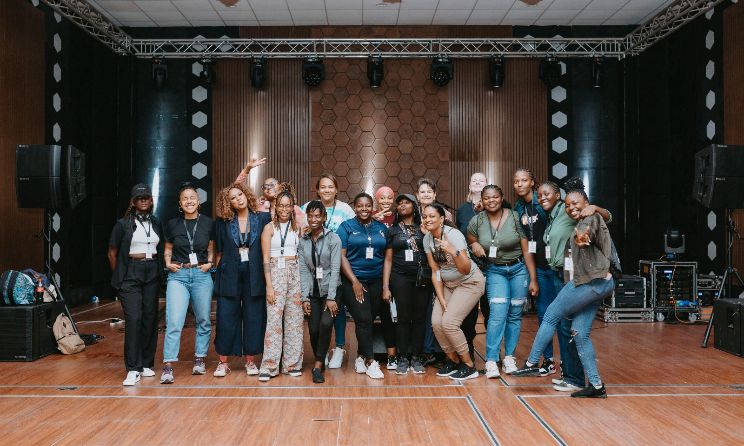
Music In Africa Gender @ Work is a three-year training programme aimed at upskilling and increasing the participation of female professionals in the African music sector. Launched by the Music In Africa Foundation (MIAF) in April 2019, the programme is connected to the MIAF’s ACCES music conference – a pan-African event held in a different African country every year. This connection enables the programme to reach new participants in a different African country every year. The programme marks the beginning of a more concerted effort by the Foundation to support the participation and inclusion of women in all facets of its programmes and the music sector in Africa as a whole. Over the three years, the programme will aim to address gender imbalances in the sector through training, lobbying, facilitating knowledge exchange and dialogues that foster the interest of women. The broader objectives of the programme are to: Provide industry training for women on critical music industry skills, focusing on: Stage management Electronic music production and recording Music business management Technical knowledge Provide an opportunity for both professional and aspiring women to benefit from the Music In Africa network and its broad range of activities in 2019, 2020 and 2021. Provide a solution-based platform in the form of a round table at ACCES with a view to identify challenges, discuss opportunities and lobby for the interests of female practitioners. Offer participants the opportunity to benefit from programmes offered by MIAF’s partners. Increase access to educational materials. Integrate participants in the broader ACCES programme to maximise experience and exposure to the industry. Record and present training materials on the www.musicinafrica.net, including but not limited to tutorials, templates and other best-practice materials. Communicate women-based themes that support the initiatives and messages of the programme. MAIN TRAINING ACTIVITIES Training in first country (Ghana): In the first year, participants will be trained on all aspects of stage management by a team of experienced stage managers from 10 to 17 November 2019. The programme will offer robust classroom training as well as practical, hands-on training in which participants will also be given the opportunity to manage various aspects of the ACCES performance programme. Training in second country: The second training iteration will take place at ACCES 2020 when the programme will diversify its course to include music production lessons and training on other music business topics. A round-table platform will also be introduced to coincide with the ACCES programme. Training in third country: The third training iteration will take place at ACCES 2021 in a different country, offering an advanced course. HOW DO YOU GET INVOLVED?  As a participant, facilitator or trainer: The programme enrolls up to 12 trainees every year. All opportunities are advertised publicly on this website, and will be added to this page. Please keep checking this page for new calls (below under UPDATES & CURRENT OPPORTUNITIES). As a partner Please contact Claire Metais at claire@musicinafrica.net. APPLY The call for applications for 2020 will be announced soon. The Music In Africa Gender @ Work programme is made possible with the support of the Prince Claus Fund, Siemens Stiftung and Goethe-Institut.

Sound Connects Fund
Sound Connects Fund

For cultural and creative practitioners and organisations operating in southern Africa, access to funding remains a major challenge. The COVID-19 pandemic has also had a massive impact on government policy, spending and the economy in general, and has seen spending on culture being moved further down the list of priorities. Further, the cultural and creative industries repeatedly cite four main areas where investment is needed for growth, which are increased visibility, mobility including access to new markets, finance and support structures.

Instrument Building And Repair Project

Experience the Vibrations African Instruments Exhibition online in 3D

Features

Bra Hugh was ‘last man standing’

23 Jan 2018 - 16:14

cc-img flag-img

Hugh Masekela, or Bra Hugh as he was affectionately known, was a compassionate musician who blew into a horn and made magic. It was a combination of his musical genius and political activism that made him a legend in the eyes of many. Not only did he inspire people to get up and dance, he also stimulated conversations about current affairs in both pre- and post-apartheid South Africa.

Hugh Masekela at the 1967 Monterey International Pop Music Festival. Photo: Michael Ochs Archives

Masekela, who was born in the northeastern town of Witbank, became a member of the Huddleston Jazz Band after receiving his first trumpet from Anglican priest and human rights activist Trevor Huddleston. Masekela’s love for the trumpet was inspired by the 1950 musical drama Young Man With a Trumpet and he went on to to perfect his skills under the mentorship of Johannesburg Native Municipal Brass Band leader Uncle Sauda.

Masekela’s propensity for the wind instrument saw him take part in multiple collaborative projects in the 1950s. In 1959 he was cast as a band member in the musical King Kong alongside future greats such as Miriam Makeba, Caiphus Semenya, Letta Mbulu, Jonas Gwangwa, Kippie Moeketsi and Thandi Klaasen.

Bra Hugh went into self-exile in New York in 1960, a year before King Kong went to London. He enrolled in the Manhattan School of Music and immersed himself in the spirit of the New York jazz scene by watching and mixing with jazz greats such as John Coltrane, Thelonious Monk and Miles Davies.

Masekela went on to release his debut album Trumpet Africaine in 1962. In 1967, he made a notable appearance at the Monterey Pop Festival, where he shared the stage with Otis Redding, Ravi Shankar, The Who and Jimi Hendrix. During this time he befriended Harry Belafonte. While in the US in 1964, Masekela was married to his King Kong co-star Makeba, but the union lasted only two years.

The flugelhornist’s was propelled further into worldwide fame after he released the acclaimed song ‘Grazin’ in the Grass’ in 1968. The single reached No 1 on the Billboard Hot 100 chart.

As an activist, Masekela was well known for his devotion to the unification of Africa. This shaped him as an advocate of African Renaissance across the continent. He co-organised the Zaire 74 festival with American record producer and close friend Stewart Levine. The festival coincided with the Rumble in the Jungle boxing match between Mohammed Ali and George Foreman.

Masekela was also known for collaborating with African artists in his pursuit to shape a pan-African music vision. He performed covers of songs by other African artists such as Fela Kuti.

“Papa Hugh Masekela was a brother from another mother to Fela and I used to love watching him and listening to him at Fela’s Shrine whenever he came in to sit with us,” former Fela Kuti band member Dele Sosimi told Music In Africa from London.

“Fela had a lot of time for him and was very supportive during his exile, which led to Hugh doing a version of Fela’s ‘Lady’. He was revered for his music, politics and social comments. We all loved him and the stance he chose. He was the last man standing.”

Also speaking to Music In Africa, Malawian singer Lucius Banda said: “I am saddened by the death of Hugh Masekela. He was one of the standing pillars of African music. We were looking up to Bra Hugh as a pioneer. He paved the way for African music. It’s very sad to hear that he has passed away.”

Masekela’s dedication to the development of music is still evident today. In 1985 he set up the Botswana International School of Music (BISM), an event that still takes place in the southern African country. It offers workshops and a collaborative space for artists.

Masekela returned to his homeland in 1990 after the unbanning of the African National Congress. Four years prior to his return, he released the song ‘Bring Him Back Home’ dedicated to Nelson Mandela, who was imprisoned on Robben Island for 27 years until 1990. It's as if both great men returned to South Africa at the same time.

Back in South Africa, Masekela found a way of adapting his sound to younger audiences. He collaborated with Afro-pop singers such as Thandiswa Mazwai as well as hip hop sensation Riky Rick.

He continued his efforts to bring Africans together through his project No Borders on which he featured Zimbabwean legend Oliver Mthukudzi and many others.

“Working with Bra Hugh was a tremendous honour and an unimaginable experience,” Masekela’s sound engineer of seven years, Garrick Van Der Tuin, told Music In Africa. “I learnt some of the most important lessons of my trade and laughed more than ever. He gave us everything he had, show after show, album after album, and he transcended many borders to do so. I take my hat off to you, Bra Hugh.”

Please log in to post a comment.

Most popular

Disclaimer: Music In Africa provides a platform for musicians and contributors to embed music and videos solely for promotional purposes. If any track or video embedded on this platform violates any copyrights please inform us immediately and we will take it down. Please read our Terms of Use for more.

newsletter banner

Subscribe to our monthly Newsletter

Follow us on social media