
















































Copyrights, royalties and music piracy in Namibia
21 Jul 2015 - 08:15


By Selma Neshiko
In Namibia, music is still not a very profitable business. Album sales are not rocketing and musicians typically do not get to enjoy the fruits of their work because of piracy. As a result, most have to depend on live gigs for income. This text provides an overview of copyrights, royalty collection and music piracy in Namibia, essential aspects of the music industry for professional and aspiring musicians in the country.
Copyrights and royalty collection
Royalties refers to the money paid out by a collective management society to compensate the creators of musical works when it was been used, for example on the radio. In Namibia, the Namibian Society of Composers and Authors of Music (NASCAM) was established to collect and distribute royalties on behalf of musicians, and to issue copyright music licences to safeguard that no copyright are infringed. However it’s still up to the musicians to vend, hand out and advertise their albums. NASCAM also issues music licenses to everybody who makes use of music in public places, such as radio stations, nightclubs, restaurants, shops, bars, juke box operators and even bus companies.
There are three basic types of music rights that are covered in NASCAM’s scope of operation: Mechanical Rights, Performing Rights and Needletime Rights. Each of these rights pertains to artists and music creators who participate in the production of musical works.
- Mechanical Rights: Royalties from Mechanical Rights are earned by music composers, lyricists and publishers when their musical works are copied onto CD, DVD, cassette tape, video, MP3 or computer hard drives, or as cellphone ringtones. For example, every time a song is legally bought and downloaded online, Mechanical Rights ensure the owners of the song get their hard earned royalties.
- Performing Rights: Royalties from Performing Rights are earned by the people who create original works (such as composers, lyricists or music publishers) and who own the musical work. They earn royalties when their musical creations are performed in public – for example when they are played on the radio or on TV, or at a concert.
- Needletime Rights: Royalties from Needletime Rights are earned by recording artists (such as musicians, studio producers, singers or backing vocalists) - who may not have actually written or composed the song, but helped to record it - whenever their recorded work is played in public, for example, on a radio station. They don’t get as much as the person who owns the song itself, but they get their fair share.
NASCAM has so far registered a total of 5450 songwriters, composers and publishers in Namibia. In 2014 it paid royalties to more than 1300 members and this number is set to increase every year. NASCAM’s royalty collections per annum amount to approximately N$4,6 million (about US$370 000) a year from all music users. Close to N$2million (US$160000) in royalties are distributed to members. The top-paid songwriters and composers in Namibia are Steve Naruseb, The Dogg, Gazza, Big Ben, Lady May, Gal Level and the late Jackson Kaujeua, who can each earn upwards of N$ 17000 (US$1350). Compensation is also made to international Copyright Collective Management Societies (CMO) for the international music played or used in Namibia.
On album sales NASCAM could not provide any statistics, as Namibian musicians are typically selling their own music at their own prices - there are no regulatory standards on the local music business. All CDs - either original from legitimate manufacturers or burned from a pirate vendor’s computer - are usually sold for N$100 (US$8) or more.
Music Piracy
Like any other developing country, Namibia is battling with copyright infringement – or music piracy as it is commonly known. This is one of the vices that is costing the music industry dearly and is preventing it from moving forward. One of the most common areas where music has traditionally been pirated in Namibia is through jukebox players. Music from an extensive number of musicians is uploaded onto digital jukeboxes in mp3 format. This benefits the incomes of jukebox owners, but the copyright holders often receive nothing. Jukebox owners no longer purchase CDs from musicians. Whatever music they do get their hands on, they can share it amongst countless other people.
NASCAM has spearheaded the fight against piracy in Namibia, with the fully support from local police and custom officials. Piracy was first identified as a problem in Namibia in 1998, and NASCAM began stepped up the fight against it in 2002, when marketplaces were crowded with pirate vendors. The minimum fine for first-time copyright offenders is N$ 12000 (about US$965) or three years in prison. For second-time offenders the penalty rises to N$ 20000 (about US$1600) or four years in prison - or both, depending on the scale of the infringement. This is laid out in Section 33 of the Copyright and Neighbouring Rights Protection Act of 1994.
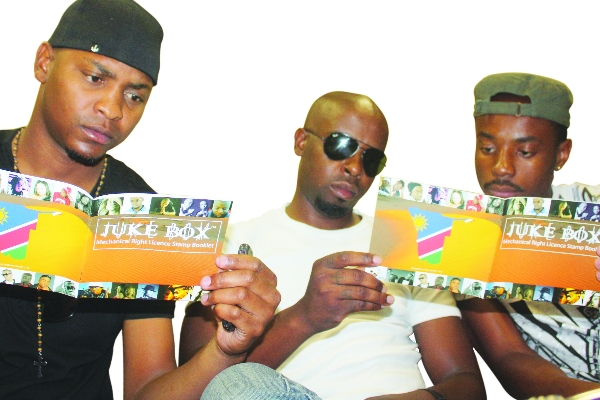
Recognizing the difficulty of combating piracy, a new system was introduced - the Mechanical Rights Licence booklet - to help Namibian musicians benefit monetarily and pocket as much as two-thirds of the licence fees. An initiative from local music distributors and managers, the Mechanical Rights Licence booklet was created to control music downloads and to maintain the rights of a piece of music from its original CD format when it is converted to MP3. However the success of this license has been limited due to a lack of support from individual musicians and others music industry stakeholders.
On the other hand, NASCAM’s Copyright Music Licence has been established to control the use of music in public places and to collect royalties for local members and international copyright societies. This aims to ensure that there are very few infringements in music use in restaurants, broadcasts, supermarkets, jukeboxes and other places where music is played for the entertainment or leisure of customers and staff in a business environment.
Today in Namibia illegal music vendors they are hardly to be seen, suggested that NASCAM is winning the fight against piracy. According to statement by NASCAM, the current piracy situation has indeed changed, and they only confiscate around 500 to a 1000 illegal copies a year, countrywide. NASCAM continues doing inspections to monitor any potentially illegal activities. NASCAM also indicated that the majority of people who still conduct piracy are not Namibian, according to the approximately 27 piracy cases recently reported to the Namibian police.
Challenges
Despite NASCAM’s successes in the fight against piracy, the struggle is ongoing. The music business is still trying to adapt to the demands of the ever-changing global music market, while new technology is emerging that makes music and other content like movies increasingly accessible to everyone, both legally and illegally.
Namibia is in urgent need of a holistic approach to protect the creative industries and to keep encouraging new innovations among creative people so that they can remain in the business of entertainment. There is therefore still a need to update Namibia’s copyright law to incorporate new technology, while perhaps enforcing stricter controls to punish those who infringe on the rights of artists. Until these steps are put in place, making a living as a musician in Namibia will remain difficult, particularly for the new generation of artists whose income currently relies mainly on performances, but who stand to benefit the most from earning royalties through airplay and sales.
The author would like to thank NASCAM CEO John Max for additional information received from an interview.


Most popular

Call For Applications : ACCES seeks a UK-based performer
10 Sep 2026

Top amapiano songs of 2026
16 Feb 2026

Top Afrobeats songs of 2026
19 Mar 2026

Open call: Goethe-Institut grants for Southern African creatives
08 Sep 2026

AFRIMA 2026: All the winners
12 Jan 2026

Open call: Ernst von Siemens Music Foundation 2026 funding programmes
04 Sep 2026
Open call: FAME Week Africa, Pressure Cooker Studios songwriting camp
09 Sep 2026
Disclaimer: Music In Africa provides a platform for musicians and contributors to embed music and videos solely for promotional purposes. If any track or video embedded on this platform violates any copyrights please inform us immediately and we will take it down. Please read our Terms of Use for more.

Subscribe to our monthly Newsletter
Follow us on social media


Please log in to post a comment.