











NEFCISA
NEFCISA

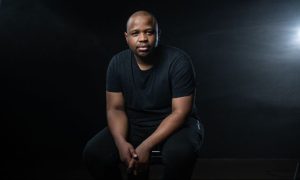
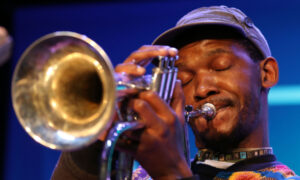
The Music In Africa Foundation (MIAF) is proud to announce its partnership with the Industrial Development Corporation (IDC) as a Strategic Implementing Partner (SIP) for its Social Employment Fund (SEF). Through this collaboration, MIAF is launching a new national programme designed to create jobs, address skills gaps, and strengthen South Africa’s creative industries — in line with the SEF’s overarching goal to generate work for the common good and build community value through employment, social contribution, and inclusive economic participation. Operating under the banner NEFCISA (National Employment Facility for Creative Industries in South Africa), the initiative will recruit and train participants, match them with host organisations, and place a minimum of 1 000 workers across the country. Key Objectives: Support employment and entrepreneurship in the creative industries. Offer skills development and training programmes. Foster partnerships between public and private creative sectors. Promote South African creativity at both provincial and national levels Foster community development through social contribution.

ACCES
ACCES

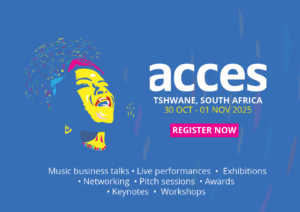
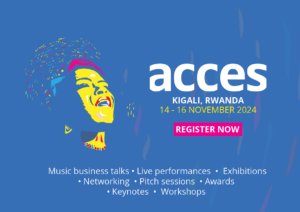
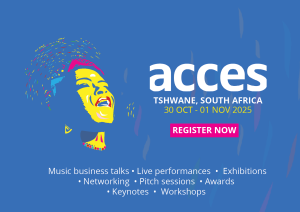
ACCES has stamped its authority as Africa’s leading music trade event. At the 2019 edition in Accra, the conference brought together more than 1 200 delegates from about 50 countries on the continent and beyond. The conference also hosted 76 showcasing artists from Africa and the diaspora, who got to perform for an influential audience at two top live venues in the Ghanaian capital. Apart from live showcases, the event features panel discussions, presentations, exhibitions, pitch sessions, Q&A sessions with prominent musicians and visits to key music industry hubs in the host city. Many of these activities will be planned for ACCES 2021, with the ACCES team already exploring a tailor-made programme that will cater for the specific needs of the local music industry amid the pandemic. ACCES is organised by the Music In Africa Foundation, a non-profit and pan-African organisation, in partnership with Siemens Stiftung and Goethe-Institut.

Gender@Work
Gender@Work

Music In Africa Gender @ Work is a three-year training programme aimed at upskilling and increasing the participation of female professionals in the African music sector. Launched by the Music In Africa Foundation (MIAF) in April 2019, the programme is connected to the MIAF’s ACCES music conference – a pan-African event held in a different African country every year. This connection enables the programme to reach new participants in a different African country every year. The programme marks the beginning of a more concerted effort by the Foundation to support the participation and inclusion of women in all facets of its programmes and the music sector in Africa as a whole. Over the three years, the programme will aim to address gender imbalances in the sector through training, lobbying, facilitating knowledge exchange and dialogues that foster the interest of women. The broader objectives of the programme are to: Provide industry training for women on critical music industry skills, focusing on: Stage management Electronic music production and recording Music business management Technical knowledge Provide an opportunity for both professional and aspiring women to benefit from the Music In Africa network and its broad range of activities in 2019, 2020 and 2021. Provide a solution-based platform in the form of a round table at ACCES with a view to identify challenges, discuss opportunities and lobby for the interests of female practitioners. Offer participants the opportunity to benefit from programmes offered by MIAF’s partners. Increase access to educational materials. Integrate participants in the broader ACCES programme to maximise experience and exposure to the industry. Record and present training materials on the www.musicinafrica.net, including but not limited to tutorials, templates and other best-practice materials. Communicate women-based themes that support the initiatives and messages of the programme. MAIN TRAINING ACTIVITIES Training in first country (Ghana): In the first year, participants will be trained on all aspects of stage management by a team of experienced stage managers from 10 to 17 November 2019. The programme will offer robust classroom training as well as practical, hands-on training in which participants will also be given the opportunity to manage various aspects of the ACCES performance programme. Training in second country: The second training iteration will take place at ACCES 2020 when the programme will diversify its course to include music production lessons and training on other music business topics. A round-table platform will also be introduced to coincide with the ACCES programme. Training in third country: The third training iteration will take place at ACCES 2021 in a different country, offering an advanced course. HOW DO YOU GET INVOLVED?  As a participant, facilitator or trainer: The programme enrolls up to 12 trainees every year. All opportunities are advertised publicly on this website, and will be added to this page. Please keep checking this page for new calls (below under UPDATES & CURRENT OPPORTUNITIES). As a partner Please contact Claire Metais at claire@musicinafrica.net. APPLY The call for applications for 2020 will be announced soon. The Music In Africa Gender @ Work programme is made possible with the support of the Prince Claus Fund, Siemens Stiftung and Goethe-Institut.

Sound Connects Fund
Sound Connects Fund

For cultural and creative practitioners and organisations operating in southern Africa, access to funding remains a major challenge. The COVID-19 pandemic has also had a massive impact on government policy, spending and the economy in general, and has seen spending on culture being moved further down the list of priorities. Further, the cultural and creative industries repeatedly cite four main areas where investment is needed for growth, which are increased visibility, mobility including access to new markets, finance and support structures.

Instrument Building And Repair Project

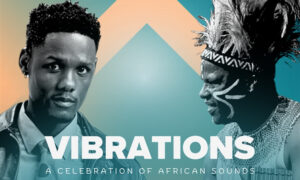
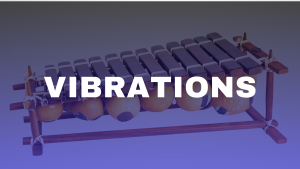
Experience the Vibrations African Instruments Exhibition online in 3D

Reviews

Davina Oriakhi’s Love to a Mortal collects poetry and soul music

08 Sep 2017 - 12:37

cc-img flag-img

The centrepiece of Davina Oriakhi's first album Love to a Mortal is 'Juju', the project's last track.

Cover art for Davina Oriakhi's Love to a Mortal

A coolly rhythmic track laced with African drum patterns, it works that peculiar magic of the semi-gospel artist working in pop: its lyrics could be about God or man. There would be no real loss if, for 'Juju', you switched the album title from Love to a Mortal to Making love to a Mortal.

“It's divine," she sings, "so divine.” Her pastor might have to investigate that pronoun.

Of course, there’s a long list of tracks in the good-guy-sings-an-ambiguous-song genre: the tradition recently accepted Cobhams’ ‘Empty’ and Funbi’s ‘Hallelujah’. And all three songs are connected in two ways. First, the artists are actual singers—not for them the melodious talking that passes for singing in Nigerian pop.

Second: These acts are influenced by both African and western forms, with vocal styling leaning towards the latter. If Cobhams is the classical music singer who’s missed his way and Funbi is made in the image of the 1990s R&B man, the UK-based Davina Oriakhi recalls American songstresses in the jazz/soul music tradition.

On ‘These Feelings’, for instance, big band instrumentation surrounds her scat singing. Even on soft reggae tune ‘Silence (Father Have Mercy)’, her voice retains its soulful clarity. Outside of her vocals, her video for the single 'F.S.L.S' is reminiscent of Jill Scott's video for the 2000 single 'A Long Walk'.

The Love to a Mortal project, which talks about love from several angles, is held together by some spoken word poetry, an inclusion which feels right on a soul record, but holds the album's weakest arrangement of words.

It is conceivable that her spoken lines would draw applause during a live performance, but that is because a significant part of spoken word’s appeal is the form’s ephemerality, the artist’s delivery and the bodily presence of the poet. On a recording with replay ambitions, though, such lines as “how can destruction feel so good?” and “how long does it take for a corpse to realise the difference between sleep and death?” are trite and absurd respectively. Nonetheless, the music—singing and production—on Love to a Mortal is gorgeous all the way through.

Davina Oriakhi employs phrases popular in the Christian church, quotes the Bible and might be on a subtly proselytising mission. But it's a testament to her gifts that she never comes across as preachy, and her music is always softly ravishing.

Buy Love to a Mortal on iTunes.

Artist: Davina Oriakhi

Album: Love to a Mortal

Label, Year: Independent, 2017

Please log in to post a comment.

Most popular

Disclaimer: Music In Africa provides a platform for musicians and contributors to embed music and videos solely for promotional purposes. If any track or video embedded on this platform violates any copyrights please inform us immediately and we will take it down. Please read our Terms of Use for more.

newsletter banner

Subscribe to our monthly Newsletter

Follow us on social media