
















































NEFCISA
NEFCISA

The Music In Africa Foundation (MIAF) is proud to announce its partnership with the Industrial Development Corporation (IDC) as a Strategic Implementing Partner (SIP) for its Social Employment Fund (SEF). Through this collaboration, MIAF is launching a new national programme designed to create jobs, address skills gaps, and strengthen South Africa’s creative industries — in line with the SEF’s overarching goal to generate work for the common good and build community value through employment, social contribution, and inclusive economic participation. Operating under the banner NEFCISA (National Employment Facility for Creative Industries in South Africa), the initiative will recruit and train participants, match them with host organisations, and place a minimum of 1 000 workers across the country. Key Objectives: Support employment and entrepreneurship in the creative industries. Offer skills development and training programmes. Foster partnerships between public and private creative sectors. Promote South African creativity at both provincial and national levels Foster community development through social contribution.

ACCES
ACCES

ACCES has stamped its authority as Africa’s leading music trade event. At the 2019 edition in Accra, the conference brought together more than 1 200 delegates from about 50 countries on the continent and beyond. The conference also hosted 76 showcasing artists from Africa and the diaspora, who got to perform for an influential audience at two top live venues in the Ghanaian capital. Apart from live showcases, the event features panel discussions, presentations, exhibitions, pitch sessions, Q&A sessions with prominent musicians and visits to key music industry hubs in the host city. Many of these activities will be planned for ACCES 2021, with the ACCES team already exploring a tailor-made programme that will cater for the specific needs of the local music industry amid the pandemic. ACCES is organised by the Music In Africa Foundation, a non-profit and pan-African organisation, in partnership with Siemens Stiftung and Goethe-Institut.

Gender@Work
Gender@Work

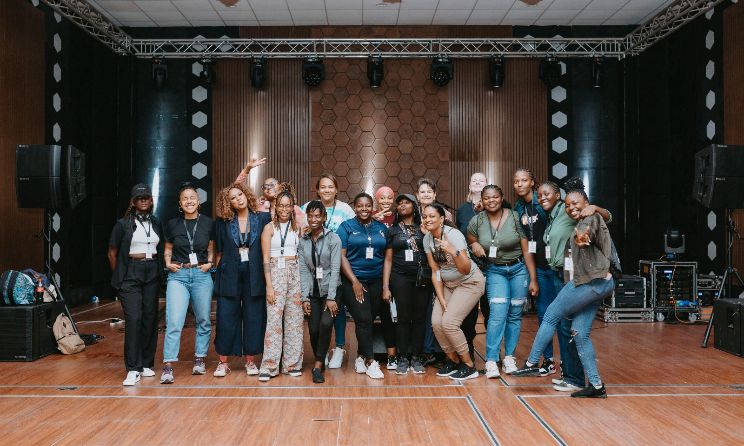
Music In Africa Gender @ Work is a three-year training programme aimed at upskilling and increasing the participation of female professionals in the African music sector. Launched by the Music In Africa Foundation (MIAF) in April 2019, the programme is connected to the MIAF’s ACCES music conference – a pan-African event held in a different African country every year. This connection enables the programme to reach new participants in a different African country every year. The programme marks the beginning of a more concerted effort by the Foundation to support the participation and inclusion of women in all facets of its programmes and the music sector in Africa as a whole. Over the three years, the programme will aim to address gender imbalances in the sector through training, lobbying, facilitating knowledge exchange and dialogues that foster the interest of women. The broader objectives of the programme are to: Provide industry training for women on critical music industry skills, focusing on: Stage management Electronic music production and recording Music business management Technical knowledge Provide an opportunity for both professional and aspiring women to benefit from the Music In Africa network and its broad range of activities in 2019, 2020 and 2021. Provide a solution-based platform in the form of a round table at ACCES with a view to identify challenges, discuss opportunities and lobby for the interests of female practitioners. Offer participants the opportunity to benefit from programmes offered by MIAF’s partners. Increase access to educational materials. Integrate participants in the broader ACCES programme to maximise experience and exposure to the industry. Record and present training materials on the www.musicinafrica.net, including but not limited to tutorials, templates and other best-practice materials. Communicate women-based themes that support the initiatives and messages of the programme. MAIN TRAINING ACTIVITIES Training in first country (Ghana): In the first year, participants will be trained on all aspects of stage management by a team of experienced stage managers from 10 to 17 November 2019. The programme will offer robust classroom training as well as practical, hands-on training in which participants will also be given the opportunity to manage various aspects of the ACCES performance programme. Training in second country: The second training iteration will take place at ACCES 2020 when the programme will diversify its course to include music production lessons and training on other music business topics. A round-table platform will also be introduced to coincide with the ACCES programme. Training in third country: The third training iteration will take place at ACCES 2021 in a different country, offering an advanced course. HOW DO YOU GET INVOLVED?  As a participant, facilitator or trainer: The programme enrolls up to 12 trainees every year. All opportunities are advertised publicly on this website, and will be added to this page. Please keep checking this page for new calls (below under UPDATES & CURRENT OPPORTUNITIES). As a partner Please contact Claire Metais at claire@musicinafrica.net. APPLY The call for applications for 2020 will be announced soon. The Music In Africa Gender @ Work programme is made possible with the support of the Prince Claus Fund, Siemens Stiftung and Goethe-Institut.

Sound Connects Fund
Sound Connects Fund

For cultural and creative practitioners and organisations operating in southern Africa, access to funding remains a major challenge. The COVID-19 pandemic has also had a massive impact on government policy, spending and the economy in general, and has seen spending on culture being moved further down the list of priorities. Further, the cultural and creative industries repeatedly cite four main areas where investment is needed for growth, which are increased visibility, mobility including access to new markets, finance and support structures.

Instrument Building And Repair Project

Experience the Vibrations African Instruments Exhibition online in 3D

Features

The Fuji Diaries: Sikiru Ayinde Barrister’s ‘Reality’

20 Sep 2016 - 16:26

cc-img flag-img

That Sikiru Ayinde Barrister is the doyen of fuji music has never been in doubt.

Sikiru Ayinde Barrister on an album cover

In the household of fuji, Barrister played the role of torch bearer. He took the music to international audiences in the late 1980s, touring Europe and America, having successfully developed his art from the crude were and apala sounds. He introduced new instruments to the genre, notably the piano. He created bridges of piano sounds and in the process invented the softer melody that is part of the genre today.

Fuji was originally a music of drums and gongs which explains the depth of its rhythm. Perhaps, this depth makes the average length, which stretches from fifteen to thirty minutes, go by quickly for fuji musicians and fans—they vigorously dance through these explosions of sounds.

Another major reason Sikiru Ayinde is regarded as the most influential of all fuji musicians is the message packed into his music. He was a conscious artist. While his only contemporary, Ayinla Kollington, made pablum as music, Barry Wonder (as he was also called) took on national and international issues.

Perhaps, this was what earned him the Member of the Order of the Federal Republic honour. The late civil war veteran could break into the English language, a style he adopted just to show had western education to his only rival, Kollington Ayinla. Western education was a rarity that his contemporaries and predecessors could not claim to possess. Atnd a the time, it was seen as an edge. Barrister is perhaps still the most enlightened of fuji musicians, past or present, in that regard.

On 'Reality', the title track of his 38th studio album, Barry, however, dwells on a domestic topic: a feud between him and his siblings, the reality of his life at the time.

His status as the most successful in his family had become overburdened with financial demands from family members who, as it appeared, did not appreciate his efforts. Instead, they sought to start a war with against. Barrister responds by singing his biography and setting down his misgivings in melody.

In Yoruba tradition, important discussions are always preceded with proverbs. So Ayinde starts with a proverb that translates to "what concerns one, concerns all.”

True, Barry’s story isn’t any different from that of an average Nigerian then than now. In many families, there comes a time when parents may subject their children to domestic abuse in order to sustain the family. It was and is still a huge economic question, but Barry, who was known to be mouth-piece for the masses on socio-political issues, didn’t mean his message that way. His song was personal, and strictly a family affair.

He grew up hawking pepper, working as a bus conductor, and eating his meal without meat or fish. And over the length of the twenty-two minute track he tells how he survived great hardship growing up.

In today's Nigeria, most artists in the limelight tell this story. But there is an extra dimension to Barrister's: The fuji maestro was sick, and accusing his siblings of diabolically attacking him. As the song reaches its end, Barrister calls on God, as he cites the Quran.

Barrister's fans enjoyed his music as always, welcoming both song and album with the same fanfare they accorded previous releases. Perhaps, they recognised that by telling of his own experience of family problems, Barrister gave one of the popular issues of Nigerian life its proper context.

Please log in to post a comment.

Most popular

Disclaimer: Music In Africa provides a platform for musicians and contributors to embed music and videos solely for promotional purposes. If any track or video embedded on this platform violates any copyrights please inform us immediately and we will take it down. Please read our Terms of Use for more.

newsletter banner

Subscribe to our monthly Newsletter

Follow us on social media