









































NEFCISA
NEFCISA

The Music In Africa Foundation (MIAF) is proud to announce its partnership with the Industrial Development Corporation (IDC) as a Strategic Implementing Partner (SIP) for its Social Employment Fund (SEF). Through this collaboration, MIAF is launching a new national programme designed to create jobs, address skills gaps, and strengthen South Africa’s creative industries — in line with the SEF’s overarching goal to generate work for the common good and build community value through employment, social contribution, and inclusive economic participation. Operating under the banner NEFCISA (National Employment Facility for Creative Industries in South Africa), the initiative will recruit and train participants, match them with host organisations, and place a minimum of 1 000 workers across the country. Key Objectives: Support employment and entrepreneurship in the creative industries. Offer skills development and training programmes. Foster partnerships between public and private creative sectors. Promote South African creativity at both provincial and national levels Foster community development through social contribution.

Gender@Work
Gender@Work

Music In Africa Gender @ Work is a three-year training programme aimed at upskilling and increasing the participation of female professionals in the African music sector. Launched by the Music In Africa Foundation (MIAF) in April 2019, the programme is connected to the MIAF’s ACCES music conference – a pan-African event held in a different African country every year. This connection enables the programme to reach new participants in a different African country every year. The programme marks the beginning of a more concerted effort by the Foundation to support the participation and inclusion of women in all facets of its programmes and the music sector in Africa as a whole. Over the three years, the programme will aim to address gender imbalances in the sector through training, lobbying, facilitating knowledge exchange and dialogues that foster the interest of women. The broader objectives of the programme are to: Provide industry training for women on critical music industry skills, focusing on: Stage management Electronic music production and recording Music business management Technical knowledge Provide an opportunity for both professional and aspiring women to benefit from the Music In Africa network and its broad range of activities in 2019, 2020 and 2021. Provide a solution-based platform in the form of a round table at ACCES with a view to identify challenges, discuss opportunities and lobby for the interests of female practitioners. Offer participants the opportunity to benefit from programmes offered by MIAF’s partners. Increase access to educational materials. Integrate participants in the broader ACCES programme to maximise experience and exposure to the industry. Record and present training materials on the www.musicinafrica.net, including but not limited to tutorials, templates and other best-practice materials. Communicate women-based themes that support the initiatives and messages of the programme. MAIN TRAINING ACTIVITIES Training in first country (Ghana): In the first year, participants will be trained on all aspects of stage management by a team of experienced stage managers from 10 to 17 November 2019. The programme will offer robust classroom training as well as practical, hands-on training in which participants will also be given the opportunity to manage various aspects of the ACCES performance programme. Training in second country: The second training iteration will take place at ACCES 2020 when the programme will diversify its course to include music production lessons and training on other music business topics. A round-table platform will also be introduced to coincide with the ACCES programme. Training in third country: The third training iteration will take place at ACCES 2021 in a different country, offering an advanced course. HOW DO YOU GET INVOLVED?  As a participant, facilitator or trainer: The programme enrolls up to 12 trainees every year. All opportunities are advertised publicly on this website, and will be added to this page. Please keep checking this page for new calls (below under UPDATES & CURRENT OPPORTUNITIES). As a partner Please contact Claire Metais at claire@musicinafrica.net. APPLY The call for applications for 2020 will be announced soon. The Music In Africa Gender @ Work programme is made possible with the support of the Prince Claus Fund, Siemens Stiftung and Goethe-Institut.

Sound Connects Fund
Sound Connects Fund

For cultural and creative practitioners and organisations operating in southern Africa, access to funding remains a major challenge. The COVID-19 pandemic has also had a massive impact on government policy, spending and the economy in general, and has seen spending on culture being moved further down the list of priorities. Further, the cultural and creative industries repeatedly cite four main areas where investment is needed for growth, which are increased visibility, mobility including access to new markets, finance and support structures.

Instrument Building And Repair Project

Experience the Vibrations African Instruments Exhibition online in 3D

News

Ghanaian highlife legend Ebo Taylor dead at 90

09 Feb 2026 - 06:27

cc-img flag-img

Ghanaian highlife musician and composer Ebo Taylor died on 7 February at the age of 90. His family confirmed the news, although the cause of death had not been disclosed at the time of publication.
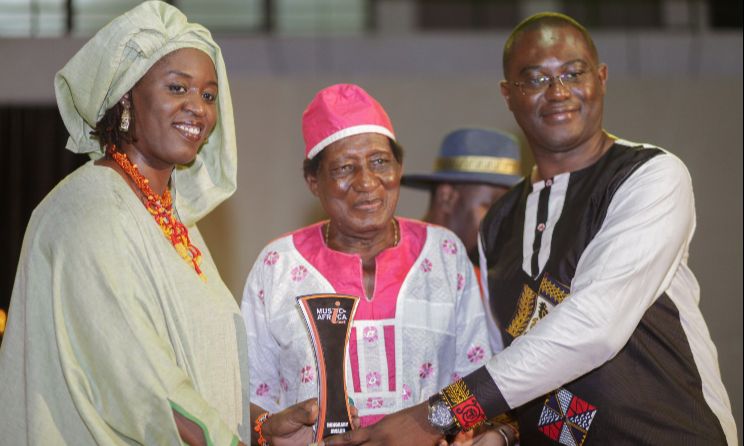
The late Ebo Taylor during the presentation of the Music In Africa Honorary Award in Accra, Ghana, in 2019. Photo: Paul Addo Photography

Taylor’s passing comes six years after he received the Music In Africa Honorary Award at the opening of the Music In Africa Conference for Collaborations, Exchange and Showcases (ACCES) in Accra on 28 November 2019. He was honoured alongside fellow Ghanaian musician Bibie Brew. The award, presented by the Music In Africa Foundation, recognises musicians whose work has made a significant contribution to their national industries and to African music more broadly.

Tributes from artists and cultural figures followed news of his death. Former Sauti za Busara festival director Yusuf Mahmoud wrote on social media: “Africa has lost another musical giant. Sad to hear of yesterday's passing of Ebo Taylor from Ghana, age 90, who was Sauti za Busara's headline artist at the 2014 edition.”

Musician Rocky Dawuni described Taylor as “a great African music legend” and added: “We salute the works of this great teacher who has inspired generations and brought the heartbeat of Ghanaian highlife to the world.”

Singer Black Sherif said: “We lost a legend whose contribution to music has created worldwide ripples,” while Kye Kye Ku posted: “Thank you, Ebo Taylor. Exacly nine years ago in Paris. Condolences.”

Born Deroy Taylor in 1936, Ebo Taylor had a career spanning more than six decades. He was a central figure in the development of Ghanaian highlife, playing key roles in bands such as the Stargazers and the Broadway Dance Band in the late 1950s. His influence extended beyond Ghana in 1962, when he relocated to London with the Black Star Highlife Band and collaborated with a range of African musicians, including Afrobeat pioneer Fela Kuti.

Taylor also contributed to the careers of several prominent Ghanaian artists, producing musicians such as Pat Thomas and CK Mann. He later collaborated with Germany-based saxophonist Ben Abarbanel-Wolff on the album Love and Death. His music gained renewed international attention in the 2000s through sampling, including in 2009 when US singer Usher sampled Taylor’s track ‘Heaven’ for the song ‘She Don’t Know’, featuring Ludacris.

In recent years, Taylor’s recordings have continued to reach global audiences through samples used in hip-hop and R&B. Songs such as ‘Heaven’, ‘Odofo Nyi Akyiri Biara’ and ‘Love & Death’ have been sampled by artists including the Black Eyed Peas, Kelly Rowland, Jidenna, Vic Mensa and Rapsody, introducing his work to new generations of listeners.

Ebo Taylor is widely regarded as one of the most influential figures in Ghanaian music history, with a legacy that shaped highlife and connected African popular music to audiences around the world.

Please log in to post a comment.

Most popular

Disclaimer: Music In Africa provides a platform for musicians and contributors to embed music and videos solely for promotional purposes. If any track or video embedded on this platform violates any copyrights please inform us immediately and we will take it down. Please read our Terms of Use for more.

newsletter banner

Subscribe to our monthly Newsletter

Follow us on social media