



































By Matseliso Motsoane
As in most areas of the world, the hip hop that has emerged from Lesotho boasts its own distinct characteristics and displays a unique take on the genre. This article provides a condensed look into the evolution of hip hop in Lesotho and some of its key proponents.

The early years
There is uncertainty regarding exactly when hip hop first arrived in Lesotho and when it became an integral part of the country's youth and urban culture. There was wave of hip hop spearheaded by the likes of Papa Zee in the early 1990s, but it wasn’t until the latter part of that decade that hip hop truly emerged and dominated contemporary culture in Lesotho[1].
In the early years, the country’s hip hop culture was entirely influenced by the American hip hop scene. Every aspect of the culture was adopted, from the fashion sense to the mannerisms and behaviour. According to Nkati Tsotleho, to announce yourself as a true hip hop head (lehipi) in Lesotho at the time, “in addition to being able to spit a few bars, it was common to wear a bandana, baggy pants and fresh sneakers”[2].
The late-1990s and early-2000s can be considered the instrumental years in the rise of contemporary hip hop culture in Lesotho, informing much of what we know of it today. Many of hip hop’s earliest proponents in Lesotho say that the culture began with small rap battles in schools and in the streets. Battles and cyphers (circular gatherings where hip hop artists would meet to jam with each other) were hosted at Lesotho High School around the early 2000s, and this is when some rappers, such as Sadon, remember falling in love with the genre. Sadon says that in this era, being a rapper was more about street cred than fame or fortune – and although he didn’t previously have much interest in the culture or the music, describing himself as a 'pantsula', it was during this time that his passion for hip hop was cemented. He is now a popular recording artist with two albums under his belt[3].
Other hip hop proponents at the turn of the millennium, such as Thulo Monyake (T-Mech), Emcee Conundrum and others, agree that it was the cypher and battle scene that launched the culture of rapping in and around Lesotho’s capital Maseru. Around the year 2000, local radio station PC FM hosted the Sprite Activity Jam, a talent-search competition where upcoming emcees would compete for the title of best rapper in town[4].
Tseliso Monaheng, an author and founding member of Corporate Nemiscis (CN), a popular crew at the time, characterises hip hop as a “safe space, a place where the non-archetypal could fit in”. CN was founded in 2001 along with Mokhethi Rampeta and other “rap dudes who were dope”. Monaheng, who sometimes goes by the pseudonym Core Wrekah, says hip hop in Lesotho is “no different to hip hop anywhere else. At the core it is an ego-centred form of expression, a quest to become and remain cool”[5].
Cliques and crews
With Maseru being the central hub and by far the most developed area of the country, rappers were drawn to the capital and often interacted with one another, which eventually led to collaborations. Crews emerged in Maseru from all parts of the country, each of them with a discernable aesthetic: a style and influence that helped them embody a specific identity[6].
Most rappers who form part of the current hip hop fraternity started off as members of a crew. They include the likes of Kislev, Skebza D, Sadon, Core Wrekah and T-Mech, who were influential in the emergence of crews such as Raw SAW and OGC. In 2001, the same year that CN was formed, Sehlabaka Rampeta, alongside Kislev and Charles Alvin, formed a crew known as Cuts on Raps.
When asked about the importance of being a member of a crew in those days, Rampeta says it was “just how things were at that time, and what the hip hop culture entailed”. The crew came together to enter the Sprite Activity Jam, which Rampeta says was his first truly competitive encounter with hip hop in Lesotho. From there, Cuts on Raps took a sabbatical before evolving into a kind of a lifestyle movement, hosting hip hop events and selling T-shirts and other merchandise that made them an integral part of Maseru’s street culture[7].
Other prominent hip hop crews of the time included Hipnotica, Anonica and Corybantics, which was a large collective of students from the National University of Lesotho. Some of these musicians – like Chocolate Soul, Pasco and Skebza D – continue to make music today. According to T-Mech, one of the founding members of Anonica, although the culture of crews and cliques has faded out with time, there are still remnants of this element in Lesotho hip hop. Most existing crews double as recording labels or media houses, such as T-Mech’s Magic In Progress (MIP), Kommanda Obbs’s D2AMAJOE, Penya Play and Jenuine Hype[8].
Beef: Hip hop rivalries
An intrinsically competitive genre, where ego and street credibility are necessary components of the artist’s image, hip hop is often characterised by the phenomenon of ‘beef’, or high-profile, public feuds between artists who represent different aspects of the market. The hip hop scene in Lesotho is no different. In the early 2000s, there was tension between Cuts on Raps and Hypnotica, followed by more enmity between Cuts on Raps and Corybantics. Even Sehlabaka Rampeta is not sure what the exact cause of this ‘beef’ was, although he acknowledges there was a difference in the groups’ style of rapping, with Hypnotica, for example, being more experimental in their lyrical content by dabbling in Sesotho rap[9].
The period from 2007 to the present (2018) can be considered another ‘wave’ of hip hop in Lesotho, with artists like L-Tore, Megahertz, Robocop, OG Skillz and Yemba Shungu dominating the scene[10]. This next generation of hip hop stars in Lesotho have also been involved in public spats. Some of these rappers have long-standing positions in the hip hop scene, having been members of the aforementioned crews, or winners of competitions like Vodacom Superstars. This has given rise to entertaining feuds in recent years, such as between Megahertz and Rifle 3, and more recently between Robocop and Megahertz[11].
Resources and citations:
[1] http://www.mahala.co.za/music/lesotho-hip-hop-from-the-ground-up-part-i
[2] Interview with Nkati Tsotleho (2017)
[3], [7] & [9] Interview (2017)
[4] http://www.okayafrica.com/maseru-lesotho-hip-hop-scene
[5] Interview with Tseliso Monaheng (2017)
[6] http://www.haveplentymusic.com/lesotho-hip-hop-the-rise-and-rise
[8] Interview with Thulo Monyake [T-Mech] (2017)
[10] https://africasacountry.com/2013/01/lesotho-hip-hop-the-new-breed
[11] http://www.kingdomtunez.co.ls/gloves-off-robocop-vs-megahertz
Disclaimer: Music In Africa's Overviews provide broad information about the music scenes in African countries. Music In Africa understands that the information in some of these texts could become outdated with time. If you would like to provide updated information or corrections to any of our Overview texts, please contact us at info@musicinafrica.net.
Editing by David Cornwell


Most popular

Ringing cancer’s bell: How Umjondi became a story of friendship, grief and hope
26 Jun 2026
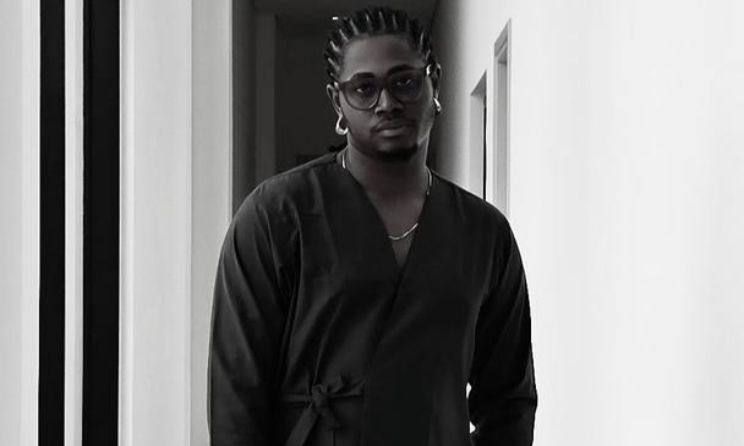
Dwin, The Stoic: Master of ballads, architect of connection – part 2
26 Jun 2026

Tycoon releases ‘Art of Love III’ ft. Kabza De Small, Kelvin Momo
26 Jun 2026

Morocco: ElGrandeToto expands ‘SALGOAT Vol. 2’ with extended edition, new international collabos
26 Jun 2026

Kabza De Small tops 2026 SAMAs nominations
26 Jun 2026

Deezer launches Remix Lab, allowing fans to create authorised song remixes
25 Jun 2026





Disclaimer: Music In Africa provides a platform for musicians and contributors to embed music and videos solely for promotional purposes. If any track or video embedded on this platform violates any copyrights please inform us immediately and we will take it down. Please read our Terms of Use for more.

Subscribe to our monthly Newsletter
Follow us on social media


Please log in to post a comment.