
























































By Jean Fabrice Ngbwa
Makossa isn’t only a type of dance or a tradition; it is one of Cameroon’s many faces.

The Makossa dance was created by Nelle Eyoum between 1952 and 1962 and was inspired by ambassbey, assiko bassai, essewe and bolobo. The word makossa comes from ‘M’akossa’, which means ‘contortions’, and ‘Kossa’, which are exhortations or screams aimed to rouse musicians and dancers.[i]
Popular makossa artists
The main makossa players are divided into four periods. 1956 to 1966 saw the first days of this genre thanks to Nelle Eyoun, Lobe Lobe Rameau and Mouelle Guillaume. 1966 to 1976 was a period of orchestral maturation with artists such as Manu Dibango, Francis Bebey, Ekambi Brillant, Toto Guillaume, Ebanda Manfred and Eboa Lottin.[ii] 1976 to 1986 revealed the supremacy of ‘the National Makossa Team’ represented by Manu Dibango, Slim Pezin, Jean Dikoto Mandeng, Vincent Nguini and Toto Guillaume, Aladji Touré, Jean Claude Naimro, Ebeny Donal Wesley, Jimmy Mvondo Mvele, Belinga Ben’s, Freddo and Jean-Marie Ahanda. This era produced new artists such as Dina Bell, Ben Decca, Nkotti François and Bella Njoh.
The 1990s and 2000s saw the rise of influential musicians like Toto Guillaume and Aladji Touré. Computerized music then took the lead with Albert Broeuk’s (a songwriter and engineer who moved his studio Dobell 16 from Paris to Douala); along with famous bassists such as Etienne Mbappé, Noel Assolo and Richard Bona; and singers such as Jean Pierre Essome, Hugo Nyame, Séba Georges, Petit Pays, Charlotte Mbango, Rachelle Tsoungui, Bébé Manga, Nadia Ewande, Coco Mbassi, Sissi Dipoko, Rosy Bush, Nguéa la Route, Charlotte Dipanda, Samy Diko, Sergeo Polo, Njohreur, Jacky Kinguè and Guy Manu.[iii]
Rise to mainstream popularity in Cameroon
Television made makossa even more popular in Cameroon and with a hint of foreign influences, it soon became highly prominent. Gospel and classical songs in Baptist churches of Douala greatly influenced Doumbé Eyango and Lottin A Samé, who themselves inspired Manu Dibango and Eboa Lottin. Highlife music, which appeared in Ghana between 1920 and 1930, gave makossa a guitar-driven structure, ahead of the the Dominican merengue trend between 1950 and 1960. In neighbouring Congo, rumba took over the whole continent and transformed makossa through Nico, Franco and Brazzaville’s Cercul Jazz orchestra. James Brown’s funky disco brought something new to makossa, with new bass sounds and drum rhythms. This fusion of styles led to local artists taking American stage names such as Black Styles and Georges Dickson.[iv]
By 1985, this foreign influence, combined with the rise of radio and television (specifically CRTV, with its broacasting monopoly until the 1990s), resulted in the dominance of makossa on a national scale. Makossa’s National Team played a major role promoting new artists such as Ben Decca (Artist of the Year in 1987) and Bell à Njoh, whose hit ‘Mambo Penya’ won Best Video in the late 80s.
International success
Makossa’s international success is largely due to its quality, its expatriation to France and the growth of radio broadcasting. Between 1976 and 1986, makossa stopped being a mere rhythm stuck on two- or three perfect chords played on a major scale (preferably in the key of G)[v]. Foreign influences brought in the ‘finger-picking’ technique, popularized in Cameroon by the likes of Vicky Edimo. Three guitars, a drumset, percussion, keyboard and brass come together in a new sort of orchestra. Makossa was even taught at the Berklee College of Music in the USA between 1970 and 1980.
International success was also due to the increase of record labels in France, such as Awards International Record, Afro Vision Paris, Bbz production, Disques Jojo, Disques Tourena, Dragon Phénix, Eddy’son, Ebeny Record Production, Eyab’s and Fiesta.[vi]. Africa n°1, Gabon’s first international radio station, created in 1981, also played a great part in makossa’s success story by broadcasting it throughout Africa, Europe and North America through a radio show named ‘African sound’.[vii]
Makossa today and tomorrow
Unfortunately, makossa’s success in Europe was also a curse. Local rhythms were soon replaced by foreign melodies. The Makossa National Team, which once produced major stars, declined and disappeared after a dispute between Aladji Touré, who wanted to promote a modern version of makossa, and Toto Guillaume, who was in favour of staying true to makossa’s ‘roots’. The disagreement resulted in the rise of deeply contradictory trends. This situation was followed by a steep drop in makossa productions, mostly because of a crisis in royalty management.[viii]. Makossa did not lose its momentum entirely, however. Some artists such as Richard Bona, André Manga, Vincent Nguini, Etienne Mbappé, Charlotte Dipanda, Henry Dikongue and Coco Mbassi helped it to regain some of its past prestige.
Makossa’s socio-cultural influence
Makossa enriched other music styles, such as bikutsi through the influence of ‘guitaristic’ music. Mangabolo, bikutsi-makossa, ambassbey-makossa and assiko-makossa are all similarly derived styles[ix]. Likewise, international rhythms brought about soul-makossa, salsa-makossa, reggae-makossa, disco-makossa, funky-makossa, makossa-pop, makossa-zouk, soukous-makossa, makossa-jazz, zingué and Afro-pop.
Makossa also inspired fashion trends, such as the traditional kabangondo. Dina Bell’s hat became a must-have and Ekambi Brillant became the name of popular polyester shoes. Manu Dibango’s 'Soul Makossa’, which was sampled by Michael Jackson in his 1982 album Thriller, led to the promotion by the famous saxophonist of a new Japanese car brand in Cameroon.[x]. Some of the major makossa albums released in Cameroon include Manu Dibango’s African Soul (1972), Petit Pays’ Salamalekum (1988), Ben Decca’s Bwangabwan (1995), Henry Dikonguè’s C’est la vie (1997), Richard Bona’s Scenes from my Life (1999) and Charlotte Dipanda’s Mispa (2008). In conclusion, makossa has left a vital cultural legacy in Cameroon and elsewhere in Africa. Some Cameroonian artists may be forced to play and sing other styles for commercial reasons, but deep down most remain faithful to their roots - and to makossa.


Most popular

Top Naija songs of 2026
31 Mar 2026

Top Afrobeats songs of 2026
19 Mar 2026
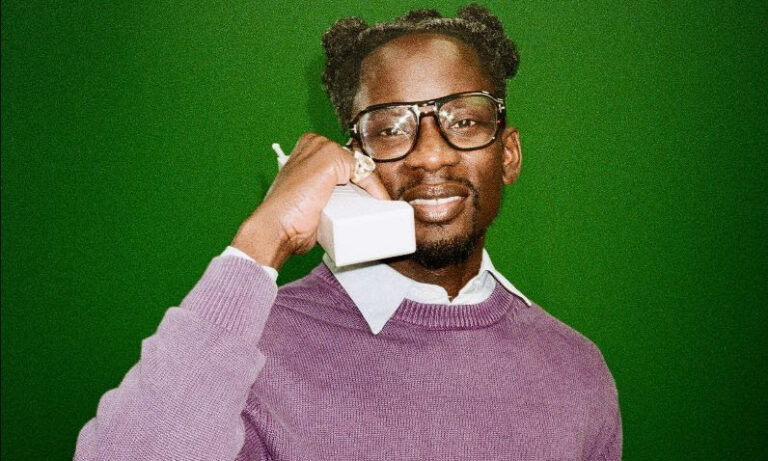
Ghana: Mr Eazi and MOLIY’s ‘Comfort’ earns Urban Music Awards nomination
21 Oct 2026

Top amapiano songs of 2026
16 Feb 2026
Open call: CANEX Music Business Lab and Songwriting Camp
15 Oct 2026
Nigeria: CANEX WKND unveils 2026 programme
21 Oct 2026
Disclaimer: Music In Africa provides a platform for musicians and contributors to embed music and videos solely for promotional purposes. If any track or video embedded on this platform violates any copyrights please inform us immediately and we will take it down. Please read our Terms of Use for more.

Subscribe to our monthly Newsletter
Follow us on social media


Please log in to post a comment.