














NEFCISA
NEFCISA

The Music In Africa Foundation (MIAF) is proud to announce its partnership with the Industrial Development Corporation (IDC) as a Strategic Implementing Partner (SIP) for its Social Employment Fund (SEF). Through this collaboration, MIAF is launching a new national programme designed to create jobs, address skills gaps, and strengthen South Africa’s creative industries — in line with the SEF’s overarching goal to generate work for the common good and build community value through employment, social contribution, and inclusive economic participation. Operating under the banner NEFCISA (National Employment Facility for Creative Industries in South Africa), the initiative will recruit and train participants, match them with host organisations, and place a minimum of 1 000 workers across the country. Key Objectives: Support employment and entrepreneurship in the creative industries. Offer skills development and training programmes. Foster partnerships between public and private creative sectors. Promote South African creativity at both provincial and national levels Foster community development through social contribution.

ACCES
ACCES

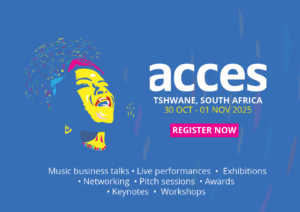
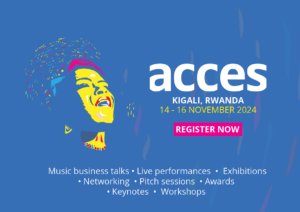
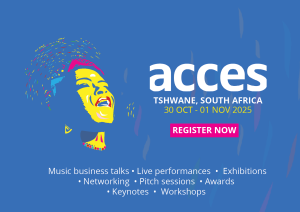
ACCES has stamped its authority as Africa’s leading music trade event. At the 2019 edition in Accra, the conference brought together more than 1 200 delegates from about 50 countries on the continent and beyond. The conference also hosted 76 showcasing artists from Africa and the diaspora, who got to perform for an influential audience at two top live venues in the Ghanaian capital. Apart from live showcases, the event features panel discussions, presentations, exhibitions, pitch sessions, Q&A sessions with prominent musicians and visits to key music industry hubs in the host city. Many of these activities will be planned for ACCES 2021, with the ACCES team already exploring a tailor-made programme that will cater for the specific needs of the local music industry amid the pandemic. ACCES is organised by the Music In Africa Foundation, a non-profit and pan-African organisation, in partnership with Siemens Stiftung and Goethe-Institut.

Gender@Work
Gender@Work

Music In Africa Gender @ Work is a three-year training programme aimed at upskilling and increasing the participation of female professionals in the African music sector. Launched by the Music In Africa Foundation (MIAF) in April 2019, the programme is connected to the MIAF’s ACCES music conference – a pan-African event held in a different African country every year. This connection enables the programme to reach new participants in a different African country every year. The programme marks the beginning of a more concerted effort by the Foundation to support the participation and inclusion of women in all facets of its programmes and the music sector in Africa as a whole. Over the three years, the programme will aim to address gender imbalances in the sector through training, lobbying, facilitating knowledge exchange and dialogues that foster the interest of women. The broader objectives of the programme are to: Provide industry training for women on critical music industry skills, focusing on: Stage management Electronic music production and recording Music business management Technical knowledge Provide an opportunity for both professional and aspiring women to benefit from the Music In Africa network and its broad range of activities in 2019, 2020 and 2021. Provide a solution-based platform in the form of a round table at ACCES with a view to identify challenges, discuss opportunities and lobby for the interests of female practitioners. Offer participants the opportunity to benefit from programmes offered by MIAF’s partners. Increase access to educational materials. Integrate participants in the broader ACCES programme to maximise experience and exposure to the industry. Record and present training materials on the www.musicinafrica.net, including but not limited to tutorials, templates and other best-practice materials. Communicate women-based themes that support the initiatives and messages of the programme. MAIN TRAINING ACTIVITIES Training in first country (Ghana): In the first year, participants will be trained on all aspects of stage management by a team of experienced stage managers from 10 to 17 November 2019. The programme will offer robust classroom training as well as practical, hands-on training in which participants will also be given the opportunity to manage various aspects of the ACCES performance programme. Training in second country: The second training iteration will take place at ACCES 2020 when the programme will diversify its course to include music production lessons and training on other music business topics. A round-table platform will also be introduced to coincide with the ACCES programme. Training in third country: The third training iteration will take place at ACCES 2021 in a different country, offering an advanced course. HOW DO YOU GET INVOLVED?  As a participant, facilitator or trainer: The programme enrolls up to 12 trainees every year. All opportunities are advertised publicly on this website, and will be added to this page. Please keep checking this page for new calls (below under UPDATES & CURRENT OPPORTUNITIES). As a partner Please contact Claire Metais at claire@musicinafrica.net. APPLY The call for applications for 2020 will be announced soon. The Music In Africa Gender @ Work programme is made possible with the support of the Prince Claus Fund, Siemens Stiftung and Goethe-Institut.

Sound Connects Fund
Sound Connects Fund

For cultural and creative practitioners and organisations operating in southern Africa, access to funding remains a major challenge. The COVID-19 pandemic has also had a massive impact on government policy, spending and the economy in general, and has seen spending on culture being moved further down the list of priorities. Further, the cultural and creative industries repeatedly cite four main areas where investment is needed for growth, which are increased visibility, mobility including access to new markets, finance and support structures.

Instrument Building And Repair Project

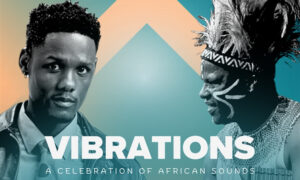
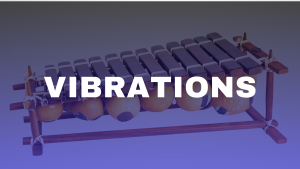
Experience the Vibrations African Instruments Exhibition online in 3D

Features

New hope for Sudan after sanctions lift

25 Oct 2017 - 15:44

cc-img flag-img

By Lucy Ilado and Carlos Ncube

Sudan’s media and music industry is expected to show improvement after the US lifted economic sanctions on 12 October, although human rights infringements are still rife in the country.

Sudanese President Omar al-Bashir has been in power since 1989.

The end of Sudan’s 20-year embargo from the global economy could now bring investors back to the country and prop up its media and entertainment industry, which would be good news for music professionals in the war-torn northeastern African nation.

Sudan was embroiled in two civil wars from 1955 to 1972 and between 1983 and 2005. Many Sudanese were displaced and fled to countries such as Uganda, Ethiopia, Kenya, Chad and the US, among others.

In 1997, the US imposed sanctions that were predicated on allegations that the country was backing Islamist militant groups. Former US president Bill Clinton, who at the time signed the sanctions, described Sudan as “an unusual and extraordinary threat to the national security and foreign policy of the US”.

Earlier this year, the US State Department praised Sudan for “enhanced interagency and international cooperation to address the threat from Isis and other terrorist organisations”. Sudan had also improved humanitarian access, it said.

But the entertainment sector is still underdeveloped due to limited support and a lack of platforms for new talent. The Sudanese government has also been criticised for restricting freedom of expression.

In 1994, a number of Sudanese artists’ music was banned for being non-Islamic and for openly criticising the government. Abu Araki al-Bakheit is one such artist. The singer was arrested in the early 1990s for speaking out against President Omar al-Bashir’s regime. Bakheit retired from music following the arrest but made a comeback due to popular demand.

Bashir’s 28-year rule has been defined by the suppression of the media, artists and popular culture. The 73-year-old autocrat is also sought by the International Criminal Court for genocide, crimes against humanity and war crimes in Darfur.

“Another target of censorship during Bashir’s regime has been popular music, dancing and traditional celebrations considered un-Islamic,” author Diana Childress writes in her book Omar al-Bashir's Sudan. “Radio stations erased tapes of popular singers or simply taped over the songs with sermons and Islamist propaganda.”

But the censorship of the ‘90s has carried over into the new millennium. According to a report by The Guardian, Sudanese religious police used the sanctions as an excuse to exercise control over nightlife and music. Last month, they raided a café in Khartoum where a number musicians were arrested.

“The revellers were thrown into a truck on the grounds that there was no permit for a guitar,” musician and graphic designer at Capital FM Eltayeb Hajo told the UK publication. “One man was charged with singing in English. They just came up with this stuff on the spot.”

Capital Radio owner Taha Elroubi said: “I would love to set up a nightclub but that’s not possible. The station cannot hold public events or invite musicians from abroad.”

Capital Radio began operating five years ago despite the government’s initial refusal to give Elroubi a licence to run the station. The station was started with the objective to inspire Sudanese citizens to stay in the country and to encourage those who fled to return.

“I found that there was this vacuum here,” Elroubi said. “The idea of a radio station just playing pop music wasn’t very accepted. The government told me very bluntly: ‘You’re not going to get this licence’.”

But Elroubi says he expects the media industry to improve because people are curious about Western culture and music. He told The Guardian there was hope that more radio stations would broadcast in English and play music from abroad.

“We’re not into politics, we’re not into religion, we’re not into regime change,” he said about the vision of his station. “We’re good for them. They want foreigners to see that Sudan has English radio. It’s good for the new image.”

The end of US-instated sanctions in Sudan has brought optimism for the socio-economic outlook of the country. However, some say Bashir’s almost three-decade rule has created a general sense of apathy among the citizens of the country.

Please log in to post a comment.

Most popular

Disclaimer: Music In Africa provides a platform for musicians and contributors to embed music and videos solely for promotional purposes. If any track or video embedded on this platform violates any copyrights please inform us immediately and we will take it down. Please read our Terms of Use for more.

newsletter banner

Subscribe to our monthly Newsletter

Follow us on social media