




























































OliveTheBoy talks Ghanaian identity and Afrobeats adventure
03 Jul 2024 - 13:17


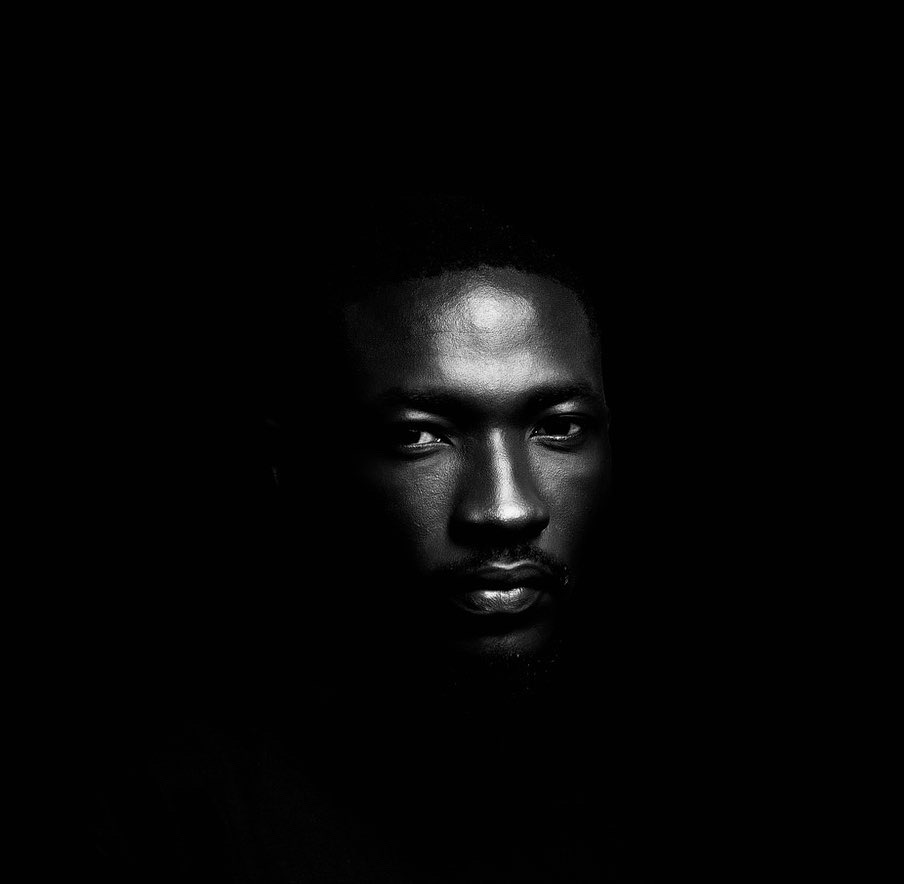
OliveTheBoy’s height surprises me. He is taller in person and chuckles at my comment about his stature when he pops into the waiting area to say hello. I’m familiar with his singing voice: gentle and fervid – a great apparatus for love songs. It is what has brought me here in the first place. Still, when he speaks, his voice has the newly broken vigour of adolescence.

He is in the middle of shooting a music video in East Legon, Accra, and we manage to chat between takes. I’m permitted to observe a scene in a dusky upstairs studio where the artist, who catapulted to stardom through the fleshly ‘GoodSin’ is simulating a recording session. Before putting on his headphones, he runs his hand through his short, green-dyed hair, which is a nod to his stage name.
The song, an Afrobeats track, is layered with amapiano-style log drums. I can’t catch every lyric he’s singing into the microphone. Even if he hails from Kumasi, his Lagos-flavoured sound is a key part of his appeal, and his lyrics often demand multiple listens to decode. On the hook, he points at the camera and flips off detractors. What’s a Gen Z star without a touch of conceit?
“This is where he recorded his verse for King Promise’s ‘Favourite Story’”, Hakim, an associate of his occasionally taking behind-the-scenes photos with an iPhone, confides. “He recorded it around 4am.” ‘Favourite Story’, taken from King Promise’s just-released third album True to Self, also features rapper Sarkodie.
When the director asks him to take a break, OliveTheBoy requests fruit juice, wearing the embarrassed expression of someone who doesn’t want to inconvenience anyone.
“So what would you say is the OliveTheBoy formula?” I ask when we can finally talk.
“Just trying to be different and not being afraid of being different,” he says. “I’m not afraid of learning from other people. I’m not afraid of the backlash or what people will say because I try to incorporate somebody else’s culture. I feel like we’re trying to push Ghana, but then, we’re also trying to push Africa. So, trying to be different all the time is my thing.
“Some say I sound Nigerian,” he remarks casually, “but why should that matter? Music transcends borders. I’m proud to weave elements from different cultures into my sound. It’s about enriching the narrative of Ghanaian music while also contributing to the broader African music space.”
I find this view particularly interesting, and OliveTheBoy immediately recognises that I have a follow-up. He goes on, even before the request exits my lips.
“Well, you find all these Nigerians also using the word ‘odo’, for instance.” (‘Odo’ means ‘love’ in the Ghanaian language Twi.) “They’re trying to also get into our market. So as much as I’m trying to make a global sound and African sounds, I should not be afraid of incorporating stuff from elsewhere, you know? When you try to do that, you’re different.”
OliveTheBoy acknowledges the commentary that labels him as a puzzle, neither purely Ghanaian nor distinctly Nigerian. “It’s a challenge,” he admits, “but it’s also an opportunity to challenge perceptions. I’m not here to fit neatly into a box. The music I create, the way I express myself – it’s all a reflection of my identity as a Ghanaian artist navigating a global stage.”
Afrobeats is commonly associated with Nigeria – and rightfully so, as the country’s acts have championed its global rise. It is a recognition OliveTheBoy attributes to established norms rather than any individual’s influence. But Ghanaian artists are making their mark too, he believes. “It’s in the beats, the lyrics, the collaborations. There’s a deliberate effort to showcase where I come from while embracing the world’s musical influences. That’s the balance I strive for.”
OliveTheBoy also enthuses that we’re witnessing a renaissance in this mission. “Young artists are stepping up, blending traditional sounds with contemporary influences. There’s a sense of pride and possibility that’s driving us forward.”
Of course, on the one hand, it will take multiple listens to pin down where OliveTheBoy is coming from, but on the other, his strategy opens up Nigeria, a stubborn pop market for aliens, for him. Is this something that has happened organically or is it something strategic?
“It was, as you say, and it’s still organic.”
Usually the stereotype – and he can correct me if I’m using the word wrongly – for new digital superstars is that they have one hit and then fade to black. We can’t seem to be able to apply that to OliveTheBoy, whose consistency with viral songs is gradually ensuring a firm footing within Afrobeats. In August 2023, following his inclusion in Apple Music’s Up Next programme, he signed with Sony Music’s Columbia Records through subsidiary Bu Vision. Weeks ago, ‘GoodSin’ won him Afrobeats Song of the Year at the Telecel Ghana Music Awards (TGMAs). He currently boasts over a million monthly listeners on Spotify, and his new single ‘Asylum’, which he describes as a cowardly way to get a romantic interest to stay, is among the most streamed tracks in the country. ‘Favourite Song’, too, is picking up steam.
OliveTheBoy admits to the pressure of early success but stresses an ardent work ethic and strategic marketing efforts as key to maintaining momentum. “When I had my first hit, people didn’t really know me,” he explains. “I kept pushing, using social media, engaging with fans relentlessly. That dedication paid off.”
Collaborations with industry heavyweights like Sarkodie and King Promise have also proved advantageous. “They are mentors to me,” he says about the two. Indeed, in his estimation, appearing on ‘Favourite Story’ was very important to him. “Being on that track was a big opportunity to showcase myself, and I think I did that.”
I ask about hidden gems like ‘NBA’, off the deluxe edition of his Avana EP, which boasts a remix of ‘GoodSin’ featuring King Promise and Nigeria’s Oxlade and Reekado Banks. I quickly find out that ‘NBA’, which I consider OliveTheBoy’s best song, is also close to his heart. “When I want to get in my feelings sometimes, I listen to it,” he says. Unlike. ‘GoodSin’, which is purely the product of his imagination, ‘NBA’, also a love song, is based on personal experience.
And so, what does he feel about his best song turning out to be something to be discovered? Due to fiscal expectations, a project’s focus track, often chosen based on its commercial potential, will always take precedence even over an artist’s most preferred track.
“We knew ‘GoodSin’ was going to blow, so we all put energy behind it, even though it was not our favourite song. We just knew it was going to catch at least 80% of listeners. If that 80% catch the fever, the rest will eventually join in.”
Whether he was thrust into sudden fame or not, OliveTheBoy remains composed, crediting his faith and self-awareness for keeping the pressure at bay. “God won’t give me something I’m not prepared for. As long as there’s love for OliveTheBoy, the projects will fly.”
At this point, with instructions to change into a different costume for the pool scene, he instructs me to keep my recorder rolling. He proposes to answer my last few questions during the costume change.
The next OliveTheBoy project will be another EP – not an album – as widely speculated. “I haven’t really thought of an album yet,” he explains. “I don’t think I have any reason to drop an album yet. Maybe I’ll be hit by something in life, and then I’ll start thinking of making an album about that particular thing, but right now, everything is calm, thus, an EP is more likely.”
It feels good to be an award winner now, he says, referencing his TGMAs triumph. “You know you asked me a question about me being afraid or
being afraid of people not realising I’m Ghanaian. Yeah, you see, the whole award I won has made people happy. Now they know that, oh, that Afrobeats guy is Ghanaian. That ‘GoodSin’, ‘Asylum’ guy is Ghanaian. And they’re appreciating me more. You know, I see that on my socials and digital streaming platforms. Even if I had not won it, it would still mean something because the fact that I was nominated alone was big for me, you know, just to make people feel like, yes, he’s part of us.
In a way, that award crowned one chapter of his life and opened the next chapter of his story. What’s that next chapter, I ask?
“To just make the whole of Ghana proud, like I said. We have Afrobeats artists here, too. That’s the next phase for me. “I want aspiring Afrobeats acts from here to be inspired by the fact that OliveTheBoy has been able to do it. There are a lot of talents down here that need to also shine.”


Most popular
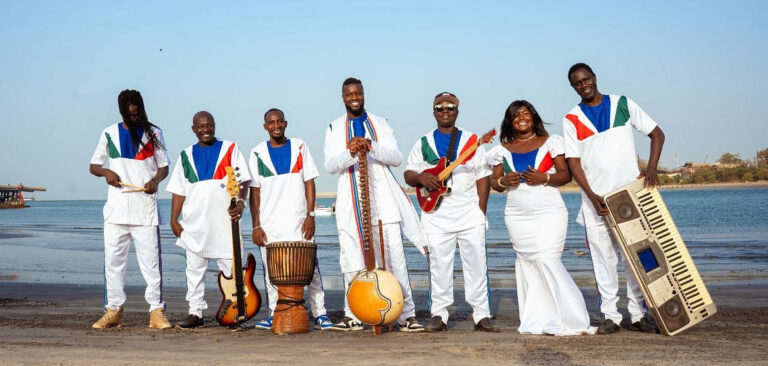
Gambia: Suntou Susso announce UK tour for ‘The Path of a Griot’
09 Oct 2026

Top amapiano songs of 2026
16 Feb 2026

Open call: 2026 Gender@Work music industry training in Johannesburg
09 Oct 2026

Top Afrobeats songs of 2026
19 Mar 2026

Call for applications: ACCES 2026 Emerging Artist Spotlight Competition
01 Oct 2026

Top Naija songs of 2026
31 Mar 2026
Disclaimer: Music In Africa provides a platform for musicians and contributors to embed music and videos solely for promotional purposes. If any track or video embedded on this platform violates any copyrights please inform us immediately and we will take it down. Please read our Terms of Use for more.

Subscribe to our monthly Newsletter
Follow us on social media


Please log in to post a comment.