






















































By Bamuturaki Musinguzi
This text provides an overview of reggae music in Uganda. Uganda’s airwaves and nightclubs are dominated by international artists. Local reggae musicians - some of whom have attained global fame – still struggle to find regular live gigs. Nevertheless, reggae still enjoys a loyal following in Uganda.

According to Tshaka Mayanja[i], one of leading reggae artists in Uganda, the genre first became popular in the country in the early 1980s as a result of famous global icons such as Jimmy Cliff, Bob Marley & The Wailers, Third World, Gregory Isaacs, Eric Donaldson, Sandra Cross, Boris Gardner, Judy Boucher, Ginger Williams, UB40, Maxi Priest, King Yellowman and Aswad, among others.
“Most of the popular songs then were Lovers Rock reggae songs. It was only a few who were Roots reggae and dancehall, till the late 80s. Reggae dancehall then took over from the 1990s. But I must say, both Roots and Lovers Rock are still growing and going strong in Uganda,” says Tshaka. “In Kenya though, classic Roots reggae has the upper hand, from time immemorial to this day,” he says.
Key artists
The major Ugandan reggae artists are David Ssemanda Ssematimba[ii] (aka Madoxx), Tshaka, Blood Brothers band, Bebe Cool (real name Moses Ssali) and Daniel Kyeyune Kazibwe (aka Ragga Dee). The list also includes Peter Miles, Red Banton, Mega Dee, Coco Banton, Ssuuna, Fireman, Mad Tiger and Weatherman. There is also a new band Roots Rockers headed by Ras B. Ssali and Jenkins Mukasa, among others. Among these it is only Madoxx and Tshaka that write, record, release and publish complete reggae albums.
Arguably Uganda’s best reggae star Madoxx was born in Kampala in 1971. He relocated to Sweden in 1991, where he arguably recorded his best music to date. He returned home in 2009. He is a popular Roots reggae musician with two albums under his belt, Tukolagane (2001) with tracks like ‘Namagembe’, ‘Omukwano Gwafe‘ and ‘Eddembe‘; and the 12-track Abato (2006), which has tracks such as ‘Kampala’, ‘Come let’s rock‘, ‘Leka Nkulage’ and ‘Nakatudde‘. He sings in English and Luganda but most of his reggae ballads are in Luganda. Tukolagane was the most popular album of the year 2002; and his hit ‘Namagembe‘ was named Song of the Year in Uganda.
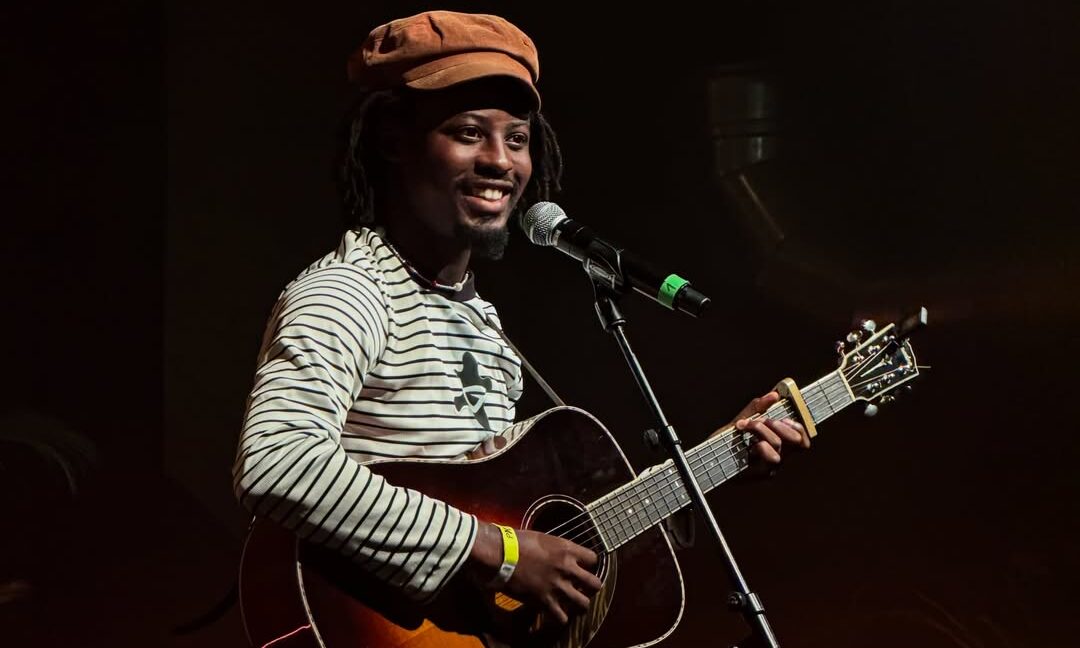
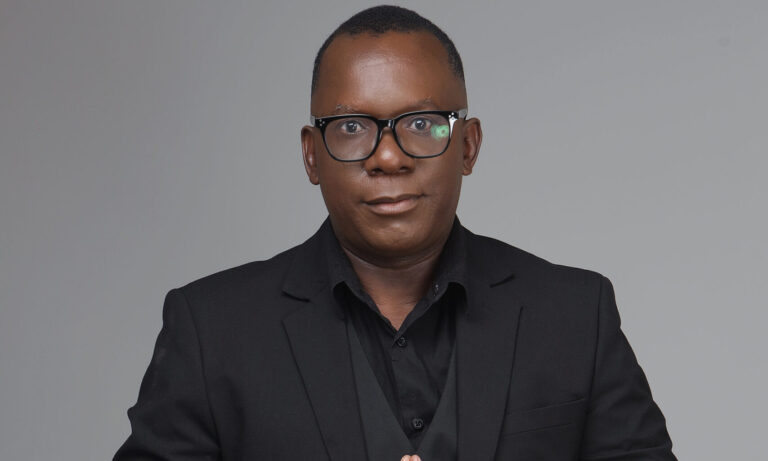
With more than 500 of his own compositions and arrangements, 43-year-old Tshaka Mayanja has made his mark in Uganda, as a reggae singer and lately a jazz artist, songwriter, producer and promoter. Tshaka’s music is an amalgamation of jazz, funk, soul, salsa and the blues, with Roots and Lovers Rock reggae providing the foundation of a career that has made him one of the most prolific and multi-talented artists to emerge on the live scene in Uganda. He performs with a band called Black Roots Unlimited. Tshaka wrote, arranged and played all the music on his 12-track album Dark Chocolate (Blackroots Muzik, 2005). It was followed by Reggaeology - Chapter 1: Bass after Dark (2006), The Pragmo'tive Is "II" Chill Out (2007) and The Enfunkclopedia of Jazz (2008).
“I love the blues, jazz and soul for the raw sensuality and passion they provide. Reggae, my foundation, is borne out of the above forces,” says Tshaka, who plays several instruments including bass, piano, drums and percussion.
Founded in 1993, Blood Brothers is Uganda's oldest reggae band. The band is headed by Ras B. Ssali, who was born in Kampala in 1968. He started his music career in 1989 at the Uganda National Cultural Centre in Kampala. The band released its first eight-track album, Peace In the World, in 1992. It was recorded by Andrew Crawford in Nairobi. The album was followed in 1996 by Mwedemu, recorded at various studios in Kampala.
Bebe Cool[iii] (aka Moses Ssali) was born on 1 September 1977 in Kampala. He started his music career around 1997 in Nairobi, Kenya as one of the first artists affiliated with the Kenyan record label Ogopa DJs. His rise to stardom began with his collabo with Ugandan star Bobi Wine in the hit single ’Funtula‘ and later ‘Mambo Mingi‘ with Halima Namakula. Bebe Cool sings in Swahili, English and Luganda and has released a number of albums such as Maisha and Senta. His popular singles include ‘Fitina‘, ‘King of the Jungle‘ and ’Never Trust No People‘.
Together with Kenyan duo Necessary Noize, Bebe Cool formed a reggae group known as the East African Bashment Crew. They have released one album, Fire, and two hit singles, ’Africa Unite‘ and ‘Fire‘. Bebe Cool has won several prizes, including numerous Pearl of Africa Music (PAM) Awards. He was nominated for the Kora All-African Awards in 2003 and 2005 and has toured in the UK, the US and South Africa, among others.
According to Tshaka, “Bebe Cool is very eclectic, with lots of other genres mixed in with his album releases: Afro-pop, dancehall and reggae, among others. This has helped him to cut across several music tastes, which is commendable.”
Born in 1973, Ragga Dee’s[iv] musical journey started in 1988. He became popular in the mid-1990s for producing hits like ’Bamusakata‘ and ’Mukwano‘ while he was part of a group called Da Hommies. Ragga Dee’s music is an amalgamation of reggae, ragga, hip-hop and Lingala. He has released 18 albums to date. He won the PAM award in 2004 for Best Ragga Artist of the Year. In 2005 he won Best Album at the Golden Awards in Uganda.
The state of Ugandan reggae today
Today Uganda’s typical style of reggae is made up of mainly ballads delivered with bouncy Roots reggae tunes, fused with Afro-pop, dancehall, funk and Afro-Cuban music, for example.
As to the current state of reggae in Uganda, Tshaka observes: “As far as local or indigenous reggae is concerned, it's virtually non-existent, especially Roots and Lovers Rock reggae. Local artists have a bias towards dancehall, mainly because its beat-oriented. However, reggae from international artists is very much alive and popular here at the moment.”
Tshaka has been credited with popularizing reggae in Uganda. Under his promotion company Yohannes Ham Inxs, Tshaka has brought the popular international reggae stars like Lucky Dube (RIP) from South Africa and numerous Jamaican musicians, including Chaka Demus and Pliers, Spanner Burner, Aswad, Buju Banton, Third World, Shabba Ranks, Papa San, Cedella Marley- Booker, Red Rat and many others, all in a bid to popularize reggae on the African continent. The latest was UK reggae stars UB40 in 2008.
Another reggae artist, Ras B. Ssali (real name Godfrey Ssali) notes that reggae’s popularity is slowing down in Uganda. “Reggae is not popular but it's known,” he says. Acknowledging that Uganda has only managed to produce a handful of ‘serious’ reggae artists, Ras B. Ssali observes: “Roots reggae isn't mainstream music. It’s not the kind for a businessman. No one can ever popularize it.”
Ras B. Ssali says he had started a regular reggae gig dubbed ‘Reggae Platform’, which he would not sustain due to lack of funds. He adds that although he is not so active at the moment, a group of DJs like the Ras Clan still rock bars in Kampala. Tshaka agrees: “Due to lack of live reggae bands and clubs in Uganda, reggae has suffered. However, reggae is the genre that has had the longest run in nightclubs. Reggae is here to stay!”
Ras B. Ssali is also optimistic on the future of reggae in Uganda, saying: “Reggae has a future in Uganda that cannot be ruled out. Uganda just needs full-time reggae musicians and not guys who just drop one or two tracks.”


Most popular

Top Naija songs of 2026
31 Mar 2026

Top amapiano songs of 2026
16 Feb 2026

Top Afrobeats songs of 2026
19 Mar 2026

Call for applications: ACCES 2026 Emerging Artist Spotlight Competition
01 Oct 2026
AFRIMA 2026: All the winners
12 Jan 2026
CAPASSO backs global principles for fair generative AI music licensing
06 Oct 2026
Disclaimer: Music In Africa provides a platform for musicians and contributors to embed music and videos solely for promotional purposes. If any track or video embedded on this platform violates any copyrights please inform us immediately and we will take it down. Please read our Terms of Use for more.

Subscribe to our monthly Newsletter
Follow us on social media


Please log in to post a comment.